
Green Hydrogen: Rio Grande do Sul Debuts First Green Hydrogen & Ammonia Plant
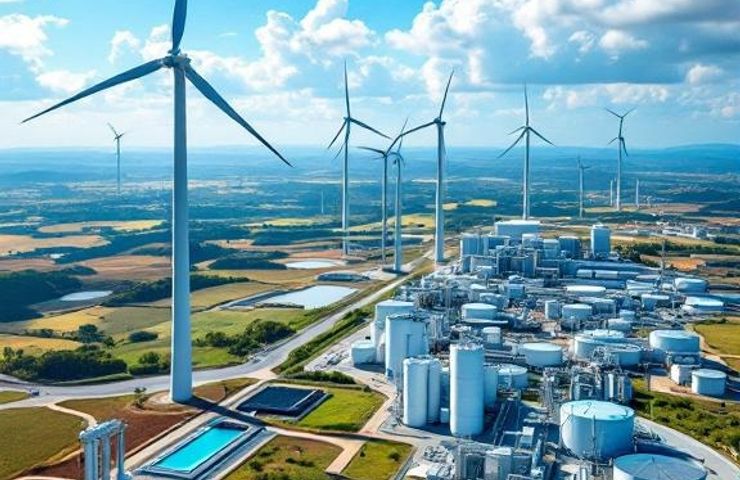
January 20, 2026As part of its push for industrial decarbonization, Rio Grande do Sul just flipped the switch on its very first fully operational green hydrogen and ammonia production plant. Tucked away in Brazil’s wind-swept southern tip, this facility is a bold step toward zero-emission tech and a leaner industrial future.
From Wind to Molecules
This plant grabs power straight from nearby wind farms to run its electrolysis units, splitting water into hydrogen and oxygen without a whiff of CO₂. That hydrogen then hops into a renewable-powered Haber–Bosch setup to churn out green ammonia, which doubles as fuel and a fertilizer building block.
Key Highlights
- First-of-its-kind: It’s the state’s maiden venture into green hydrogen and ammonia production, backed by Sema (Secretariat of Environment and Infrastructure).
- Strategic investment: Around R$220 million (roughly $44 million USD), though we’re still waiting on the final tally.
- Policy alignment: Ticks all the boxes of Brazil’s PL 725/2022, setting up sweet incentives for renewable hydrogen adoption.
Why This Matters
Swapping out gray hydrogen for green is a serious game-changer for heavyweight industries. Think fertilizer giants, steel plants, even shipping lines eager to shrink their carbon footprint. By tapping into abundant wind power, coupling it with smart hydrogen production and hydrogen storage, and shipping ammonia overseas, Rio Grande do Sul is carving out a spot on the global clean fuels map.
Strategic and Economic Impact
Beyond slashing emissions, this plant is a growth engine for the region. Similar projects hint at:
- Avoiding up to 400,000 tons of CO₂ every year.
- Generating tens of thousands of jobs across the hydrogen value chain by 2030.
- Pumping up export revenue as Europe and Asia snap up green ammonia.
Anchoring Brazil’s Energy Transition
Since 2023, Rio Grande do Sul has been busy signing MOUs, including a headline deal with EN.IT for a 250,000 t/year ammonia plant. Turning those paper promises into reality is proof that Brazil’s climbing the ranks in global hydrogen production. And with PL 725/2022 offering tax breaks and credit lines, the momentum’s only picking up steam.
Challenges and Next Steps
- Intermittency: Wind’s great—but when it dips, you need solid storage and grid smarts.
- Infrastructure: Pipelines, ports, rail links—all have to scale up to keep the ammonia export train rolling.
- Capital intensity: These plants aren’t cheap up front, so we’ll need steady policy backing and fresh financing models.
Looking forward, Brazil’s got to fine-tune regulations, fast-track infrastructure, and deepen public–private teamwork. But make no mistake: Rio Grande do Sul’s plant is proof that green hydrogen and ammonia production can stand tall—not just as experiments, but as the backbone of a zero-carbon economy. Now the real question is: can Brazil harness its renewable edge to outshine competitors and lock in its place as a top exporter of green fuels?

 With over 15 years of reporting hydrogen news, we are your premier source for the latest updates and insights in hydrogen and renewable energy.

Does this Green H2 plant feed the Solar and Wind into a Battery and then feed Reliable AC to the plant to remove the Intermittency? Is there ever a case where Wind and Solar produce too much power for the Electrolyzers to handle?