
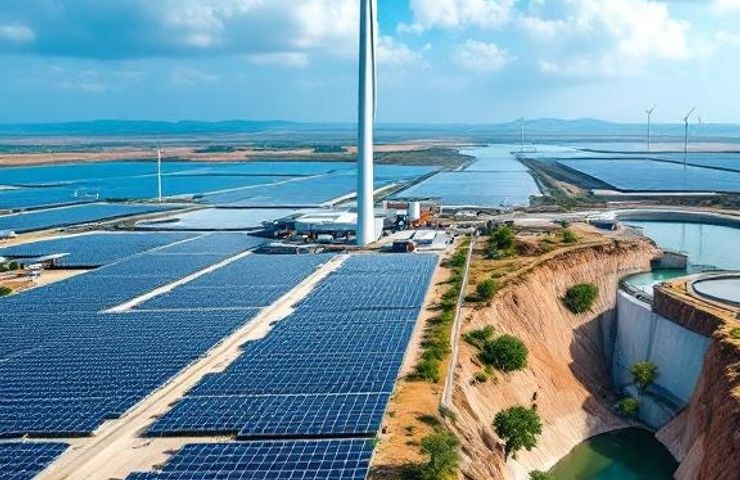
Gujarat Supercharges Hydrogen Production with Bold 100 GW Renewable Targets
January 5, 2026IMHO Gujarat just threw the gauntlet down with a bold clean energy bet: shooting for 100 GW of renewable capacity by 2030 and churning out 3 MMTPA of green hydrogen by 2035. It’s Good Governance Day, and Chief Minister Bhupendra Patel isn’t content with just ribbon-cutting. He’s pushing Gujarat as a real Indian heavyweight in global sustainable energy arenas. India, for its part, is eyeing 500 GW of non-fossil generation by 2030 and zero emissions by 2070 under the Panchamrit pledge. Gujarat’s already at 30 GW, so the kicker is whether it can keep up a 13 GW-per-year pace.
Come December 25, 2025, Patel teamed up with Energy Minister Rushikesh Patel and MoS Kaushik Vekariya in Gandhinagar to unleash three game-changing policies that cover the entire clean power value chain. The Integrated Renewable Energy Policy-2025 is all about ramping up solar, wind, and hybrid projects. Next, the Green Hydrogen Policy-2025 lays out a clear path for electrolyzer rollout and hydrogen production storage. And the Pump Storage Project Policy? It finally opens up pumped hydro storage to smooth out those pesky generation spikes. Together, these three build on Gujarat’s 30 GW base in 2024, its 50% renewable purchase mandate, and previous efforts aimed at attracting ₹5 lakh crore by 2030.
Breaking it Down
If you squint, the Integrated Renewable Energy Policy-2025 is Gujarat’s no-excuses play for “more clean electrons.” It’s got a 100 GW by 2030 target, forces DISCOMs to source 20–50% renewables, and carves out special zones for solar, wind, and hybrid parks. Developers snag 25-year PPAs with price indexation, cheap grid access, zero transmission fees, and land at sweet rates. Plus, the new Akshay-Urja-Setu portal is like a one-stop express lane for permits—what used to take months now happens in weeks.
On the flip side, the Green Hydrogen Policy-2025 stakes a national-leading 3 MMTPA goal by 2035, anchoring electrolysis capacity at 30 GW to drive green hydrogen production. There are subsidies on capex, interest subventions, and duty waivers for electrolyzers, compressors, and storage gear. And get this—hydrogen producers get must-run status on the grid, which helps balance the system. Early adopters in steel, fertiliser, and refining can lock in supply through flexible PPAs.
Then there’s the Pump Storage Project Policy, carving out 75 GWh of pumped hydro by 2035—think of it as turbocharging the grid’s lifeline. Investors get 40-year perks, state duty exemptions, and a fast lane for river regulator approvals. It’s the backup plan for when batteries alone just won’t cut it.
Tech Spotlight
Gujarat’s roadmap mixes proven winners and high-stakes pilots:
• Electrolysis Plants: Planning 30 GW to split water into hydrogen using solar and wind, feeding refineries and ammonia units. They’re even eyeing export lanes to EU hydrogen infrastructure hubs.
• Battery Energy Storage Systems (BESS): Lightning-fast (sub-1-second) units parked at renewables sites for frequency response, black-start support, voltage regulation, and peak shaving. GEDA’s already mapped prime spots to fast-track land deals.
• Pumped Storage: Reservoir-based setups that gulp down cheap midday juice and pour it back out during peak times. It’s the only tech that can reliably handle multi-day storage for true 24×7 power.
• Emerging RE Experiments: Trials for concentrated solar thermal (CST), wave energy, agrivoltaics, geothermal in the Cambay basin, and rooftop PV integration. It’s a bet-the-farm approach to future-proof against tech surprises.
Money, Jobs and Caveats
Gujarat’s pitch deck promises a whopping ₹5 lakh crore in capex and over 2 million jobs by 2035—including roughly 600,000 roles directly tied to green hydrogen manufacturing and its entire supply chain. They’re banking on local fabrication of electrolyzers, big EPC contracts, O&M services, plus new R&D centres popping up across the state. On top of that, there’s a serious push to boost women’s participation in the workforce, which could drive broader social dividends.
If everything clicks, these policies could chop India’s expensive LNG imports by about 2 MMTPA and shave off 5 million tonnes of CO₂ every year. They dovetail neatly with viability gap funding and green bond frameworks. But let’s be honest—where’s Gujarat going to find 400,000 acres for solar farms, billions of litres of water for electrolysis and pumped hydro reservoirs, and rock-solid long-term PPAs when coal still undercuts renewables on price?
And don’t forget the external headwinds: currency swings, steel and nickel price hikes, and global supply chain snags. Consistency is king—Gujarat’s track record (30 GW of RE by 2024) is solid, but flip-flops in other states have spooked investors before. Can they keep the narrative tight and the execution even tighter? That’s the ₹5 lakh crore question.
The Real Play
This isn’t just PR fluff—it’s a full-scale challenge to other states and foreign energy giants. Gujarat’s dangling sweeteners like 10–40 year tax carve-outs, a major port infrastructure push at Mundra and Kandla for smooth hydrogen export, plus a one-stop digital portal to hack away at red tape. Little wonder global heavyweights—think Germany’s Siemens, Japan’s JGC, even Western majors hunting for new hydrogen infrastructure corridors—are circling like buzzards.
Peel back the layers, and you’ll see a strategic playbook: pair heavy industry decarbonisation with local job creation, stack solar and wind with hybrid agrivoltaics, and blend batteries, pumped hydro, and green hydrogen storage to build what they’re pitching as an ironclad grid. It dovetails neatly with the Viksit Gujarat@2047 dream and slots right into New Delhi’s 2070 net-zero timeline.
But let’s be real: grand pronouncements don’t guarantee megawatts on the ground. The real test is nailing land titles in regions where farmers hold sway, securing billions of litres of water for electrolysis and reservoirs, lining up long-term PPAs at bankable tariffs, and drafting auction rules so airtight investors don’t freak out. Get even one lever wrong, and banks will slam the brakes—no questions asked.
What’s Next?
In 2026, expect tenders for the first 5 GW of electrolyizers, fresh BESS auctions, and pumped storage bids. By mid-decade, Gujarat plans dedicated pipelines for H₂ and ammonia export corridors, aiming for 2028. We might also see trial blends of hydrogen into natural gas grids and a wider rollout of building-integrated PV (BIPV).
Come 2030, the state aims to lock down long-term offtake deals with heavy industries—steel, fertiliser, refineries—and big utilities. Hit that milestone, and Gujarat could rewrite India’s industrial decarbonisation playbook. Miss the mark, though, and you’ll be left with unused plots, idle permits, and dusty incentives.
Behind the scenes, regulatory tweaks are critical. The Gujarat Electricity Regulatory Commission must spin up clear tariff frameworks for hydrogen production and storage. DISCOMs will need policy and financial support to absorb more than 60% variable renewables. Other water-challenged states will be watching: scaling up electrolysis and pumped hydro demands serious water planning.
International lenders—from the ADB and World Bank to European development banks—are already eyeing Gujarat’s auction rules and offtake guarantees. They’ll jump in once credit risk is tamed and revenue models are bulletproof. Nail these details, and Gujarat could set the global pace for emerging hydrogen infrastructure hubs.
So keep an eye on groundwater levels, land-acquisition timelines, auction schedules, and those post-Good Governance Day MoUs. In the high-stakes sprint for sustainable energy, sometimes the devil really is in the details.

 With over 15 years of reporting hydrogen news, we are your premier source for the latest updates and insights in hydrogen and renewable energy.