
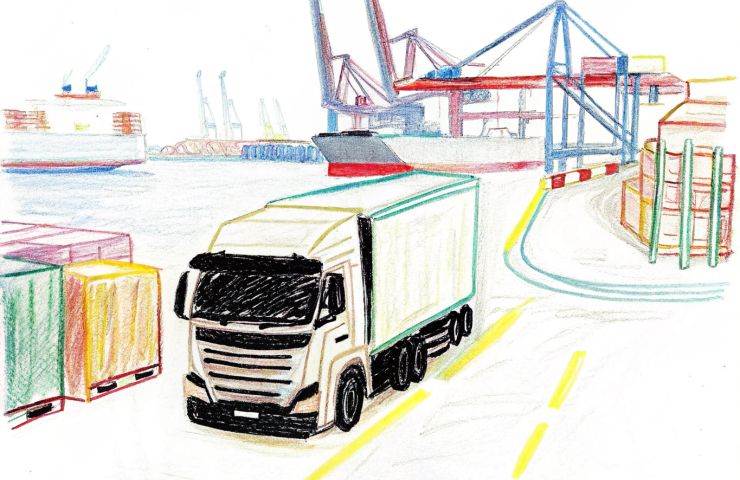
Hydrogen Fuel Cells Drive Hyundai XCIENT Trucks at US Seaport Pilot
December 15, 2025Hyundai Motor Company has kicked off a pilot for industrial decarbonization at one of the country’s busiest maritime hubs. They rolled out their XCIENT Fuel Cell electric trucks to see how hydrogen fuel cells hold up under the day-to-day grind of port work. Hyundai hasn’t said which port yet, but make no mistake—this is the first big test of zero-emission technology in U.S. seaport logistics. With over 13 million kilometers logged across 13 countries and two decades of hydrogen R&D behind it, the XCIENT’s performance here could shake up how ports tackle emissions as regulations tighten.
Key Insights
- Proven track record: The XCIENT fleet has already racked up 13 million kilometers worldwide, including a 750,000 km stint in Switzerland that shaved off some 585 tons of CO₂.
- Fast refueling: An 8–20 minute hydrogen top-up keeps these trucks moving almost as quickly as diesel rigs, perfect for high-throughput port shifts.
- Zero emissions: Twin 90 kW fuel cell stacks power a 350 kW motor, delivering pure electric drive with no tailpipe CO₂ or NOₓ.
- Strategic environment: Ports are ideal testing grounds, with centralized refueling hubs and concentrated operations to support expanding hydrogen infrastructure.
- Regulatory alignment: Federal and state decarbonization mandates are pushing maritime logistics toward clean alternatives.
- Market signal: Hyundai’s bold move upends the narrative that battery electric solutions have a monopoly on heavy-duty sustainable transport.
Background and Track Record
Back in 2020, Hyundai introduced the world’s first mass-produced heavy-duty hydrogen truck, the XCIENT Fuel Cell. The pilot fleet of 46 units in Switzerland ran 750,000 km and cut roughly 585 tons of CO₂. Fast forward to late 2025, and XCIENTs are hauling in 13 countries with over 13 million kilometers on the clock. Building on the success of the Nexo passenger FCEV and 20 years of fuel cell innovation, Hyundai has fine-tuned the XCIENT for the toughest jobs. Now, this seaport trial will put North American readiness to the test.
Inside the XCIENT Fuel Cell System
- Fuel cell output: Two 90 kW stacks combine for 180 kW of steady power, converting hydrogen into electricity on demand.
- Storage solution: Ten carbon-fiber tanks at 700 bar hold up to 70 kg of H₂, all monitored by advanced leak-detection systems.
- Electric drivetrain: A 350 kW motor delivers 2,237 Nm of torque, backed by a 72 kWh battery for those sudden power demands.
- Range capacity: Drivers can expect up to 450 miles on a full tank—though payload, weather, and duty cycle will affect the final tally.
- Safety suite: ADAS features include Forward Collision-Avoidance, Lane Departure Warning, and Blind-Spot Collision Warning.
Challenges on the Horizon
- Hydrogen sourcing: Scaling up green hydrogen via electrolysis still carries a hefty price tag compared to conventional methods.
- Infrastructure gaps: There aren’t many high-pressure hydrogen stations at U.S. ports—this pilot’s success may depend on adding new refueling points.
- Operational training: Handling 700 bar tanks and new refueling protocols means port crews need specialized training and strict safety procedures.
- Competitive landscape: Battery-electric trucks are also making strides, so hydrogen has to prove its edge in uptime and payload capacity.
Why Hydrogen vs. Battery Electric?
In the nonstop hustle of port drayage, every minute counts. Battery electric rigs excel on short hops, but long charging times and extra battery weight can slow things down under heavy loads. That’s where hydrogen fuel cells shine: rapid refueling and consistent performance, even at full tilt. Still, with battery costs dropping and charging networks growing, both camps have strong cases in the race for sustainable transport.
Environmental and Economic Impacts
Diesel trucks at seaports don’t just guzzle fuel—they pollute, too, spewing CO₂, NOₓ, and particulate matter. Swapping in fuel cell trucks nixes those tailpipe emissions, clearing the air for portside communities. If U.S. trials mirror European results, each truck could cut out hundreds of tons of CO₂ per year. Plus, a successful pilot can unlock more funding for hydrogen infrastructure—from production and storage to distribution—creating new jobs and revenue in the clean energy economy.
Regulatory Momentum
Ports across the U.S. face tightening emissions standards from state and federal agencies. Though Hyundai isn’t naming this specific hub, similar terminals are racing to meet decarbonization targets. The data from this pilot could shape permitting, funding eligibility, and long-term plans for on-site hydrogen plants or shared refueling depots.
Strategic Significance
By lending XCIENT trucks to this trial, Hyundai Motor Company is sending a clear market signal: hydrogen fuel cells are ready for prime time in North America. If these trucks pass with flying colors, hydrogen will stand shoulder-to-shoulder with battery-electric options—especially where quick turnarounds and heavy payloads are non-negotiable. Carriers and port operators will be watching closely, using these insights to guide future fleet investments, energy partnerships, and compliance strategies in an era of industrial decarbonization.
The big question now is how XCIENT measures up on key metrics: kilometers per fill, station uptime, maintenance cycles, and overall operating expenses. Hit or beat the targets, and hydrogen could speed into ports, terminals, and beyond. Regardless of the outcome, this pilot underscores the growing role of fuel cells in zero-emission technology and sets the stage for the next chapter in heavy-duty sustainable transport.
About Hyundai Motor Company
Headquartered in South Korea, Hyundai has been pioneering hydrogen fuel cells for over 20 years. Its XCIENT Fuel Cell truck remains the first mass-produced heavy-duty hydrogen vehicle, tallying more than 13 million kilometers of operation worldwide.
Sources: CleanTechnica (2025-12-12), Hyundai official specifications, industry reports.

 With over 15 years of reporting hydrogen news, we are your premier source for the latest updates and insights in hydrogen and renewable energy.
There are several companies like IMC Logistics that have already been running Nikola Fuel Cell rigs in the ports of Los Angeles and Long Beach.