Hydrogen Fuel Cells Take Center Stage at APEC Summit: $110 Billion Commitments, 100% Hydrogen Transport
December 1, 2025Hyundai Motor Group has teamed up in Seoul for a chat on hydrogen at the APEC CEO Summit Korea 2025, fittingly dubbed “Bridge, Business and Beyond.” With over 200 hydrogen movers and shakers—government hotshots and industry bigwigs alike—the session “Hydrogen, Beyond Mobility, New Energy for Society” made one thing crystal clear: hydrogen is stepping out as a major player in sustainable energy and the push for carbon neutrality.
Key Highlights
- Debuted the Global Hydrogen Compass 2025, which spotlights a whopping USD 110 billion already earmarked for 510 projects past the financial green light.
- Rolled out 56 hydrogen vehicles exclusively—50 Hyundai NEXO fuel cell SUVs plus hydrogen-powered buses—making it the first big event powered entirely by hydrogen transport.
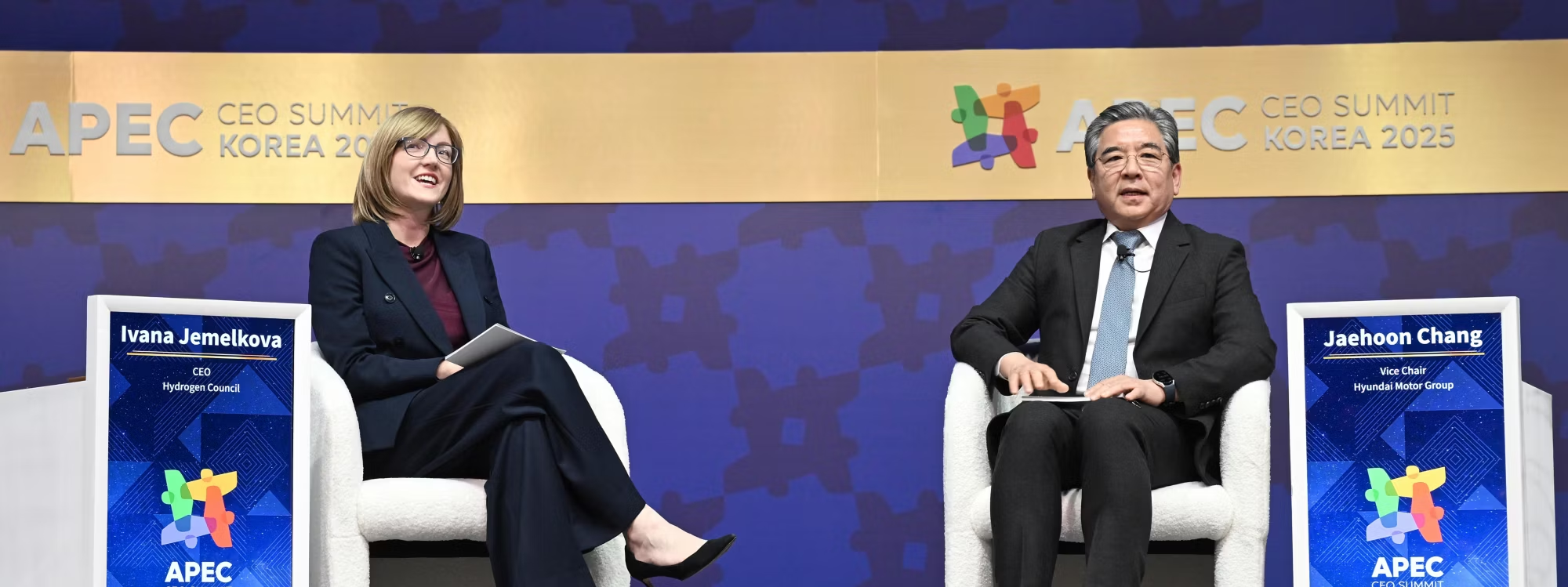
- Dove deep into dialogue with Jaehoon Chang, Hyundai’s Vice Chair and Co-Chair of the Hydrogen Council, alongside Ivana Jemelkova, CEO of the Hydrogen Council.
- Welcomed officials from France, Germany, Australia, Indonesia and beyond, underlining the global spirit of collaboration.
Scaling Hydrogen Mobility
Seeing a fleet of vehicles powered by hydrogen fuel cells in action was the real deal. Each Hyundai NEXO runs on a fuel cell stack that turns hydrogen into electricity, puffing out nothing but water vapor. They refuel as quickly as gas-powered cars and cruise over 600 km on a full tank—proof that robust hydrogen infrastructure can back zero-emission transport for both commuters and shuttles.
Financial and Strategic Implications
Hearing “USD 110 billion” in committed capital—ten times what the 2020 report showed—was a mic-drop moment. These funds are earmarked for green hydrogen plants, fancy high-pressure storage, and slick distribution networks. Analysts reckon this could spark hundreds of thousands of jobs in construction, manufacturing and operations by 2030. The catch? Technology and finance are sprinting ahead, but actual market traction depends on clear-cut policies and strong public-private teamwork.
Three Decades of Hydrogen Leadership
Hyundai Motor Group has been in the hydrogen game for nearly 30 years, from early fuel cell labs in the ’90s to rolling out the NEXO. Meanwhile, the Hydrogen Council has been rallying top firms worldwide to speed up green hydrogen adoption. Their Global Hydrogen Compass is now tracking 510 projects that have crossed the financial finish line across five continents.
Electrolysis and Green Hydrogen Production
One hot topic was cranking up green hydrogen via water electrolysis powered by renewables. By splitting water into hydrogen and oxygen, you get a zero-carbon fuel. Sessions highlighted mega projects in Australia and Saudi Arabia aiming for gigawatt-scale electrolysis by 2030. With production costs dropping and electrolyser efficiency hitting over 70%, this form of hydrogen production is poised to undercut grey hydrogen—if we can ramp up electrolyser manufacturing fast enough.
Storage and Distribution Challenges
Of course, moving and storing hydrogen isn’t a walk in the park. Experts showed off everything from high-pressure tanks and cryogenic setups to advanced composite pipelines designed to cut losses and keep things safe. The plan is to build decentralized hydrogen storage hubs in ports and industrial parks, feeding both transport and heavy industries. Pulling this off will take tight coordination among utilities, engineers and regulators.
Beyond Mobility: Energy Resilience and Decarbonization
The buzz was that hydrogen isn’t just a transport fuel—it’s a powerhouse energy carrier. You can stash extra renewable power through electrolysis and drop hydrogen into microgrids or industrial processes, smoothing out those renewable ebbs and flows. For places like South Korea that lack big fossil reserves, hydrogen offers a path to energy security and true carbon neutrality.
Policy and Collaboration
Ivana Jemelkova didn’t mince words: “Demand is the next big test.” Without rock-solid rules on safety, consistent standards and real incentives, all the fancy tech and deep pockets risk gathering dust. Governments from the Asia-Pacific, Europe and the Gulf region all agreed it’s high time for long-term roadmaps and harmonized regs to turn pilot projects into mainstream reality.
Regional Leadership and Competition
Hosting the summit put the spotlight on South Korea’s bid to be a hydrogen heavyweight. Despite slim fossil reserves, it’s gone all-in on manufacturing, aiming for 6 GW of electrolyser capacity by 2025. Jeju Island’s wind-powered hydrogen demos are already a hit, and plans are in motion to expand microgrids for zero-emission ferries and local communities—proof that public and private players can set the pace.
What’s Next
With R&D winding down and commercialization ramping up, eyes are on rolling out big electrolysis plants, extending high-pressure pipelines and cranking up fuel cell production. Everyone’s watching for national hydrogen blueprints with real targets, green hydrogen joint ventures, and more hydrogen-fueled fleets in buses and logistics.
Momentum’s building, and the APEC CEO Summit has set the stage for hydrogen’s next big leap. The real question is whether policymakers and investors can keep pushing until hydrogen goes mainstream.
About Hyundai Motor Group: Headquartered in Seoul, Hyundai Motor Group is a global automotive powerhouse and hydrogen pioneer, active in hydrogen fuel cells, hydrogen production and hydrogen infrastructure development for nearly 30 years. Under Vice Chair Jaehoon Chang, the group champions sustainable energy and carbon-neutral innovation.

 With over 15 years of reporting hydrogen news, we are your premier source for the latest updates and insights in hydrogen and renewable energy.