Hydrogen Infrastructure Expansion: Sylvan Group’s $270M Investment in SK Hyverse Liquefied H₂ Network
January 15, 2026As the year wound down, The Sylvan Group grabbed headlines by buying out Plug Power’s 49% share in SK Hyverse. This Hyundai-family-backed move is stirring up Asia’s hydrogen infrastructure scene, signaling that it’s not just about cranking out green hydrogen but also building the refuelling network these fleets crave. By pumping in roughly $270 million to grow from 20 to 29 cryogenic hubs, they’re betting big on liquefied hydrogen refuelling—the secret sauce for zero-emission buses running round the clock.
At its heart, The Sylvan Group used its special-purpose arm, Korea Liquefied Hydrogen Network Co., Ltd., to pick up Plug Power’s stake, while SK Innovation keeps the lion’s share. The plan is simple: add nine more liquefied hydrogen stations to serve about 6,000 fuel-cell buses by 2029, sidelining the earlier gigafactory dream in favor of real-world network growth. It’s a pragmatic pivot, focusing on rolling out infrastructure instead of chasing blueprints.
Acquisition and Investment Plan
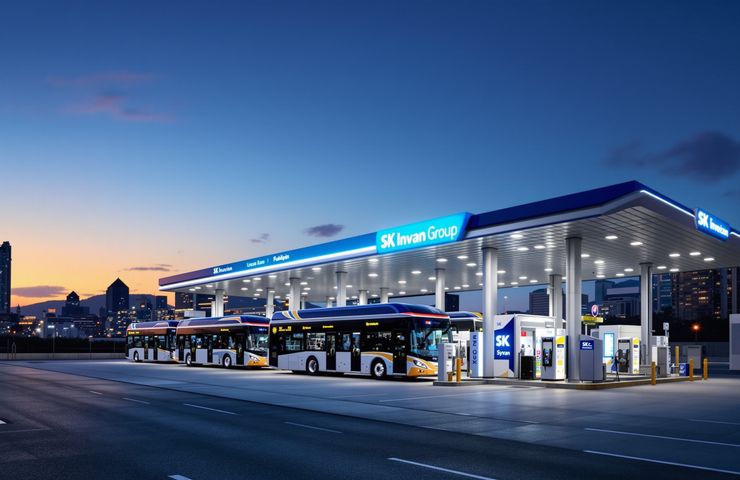
Through Korea Liquefied Hydrogen Network Co., The Sylvan Group snapped up 73,476 shares—about 49% of SK Hyverse—from U.S.-based Plug Power. They haven’t spilled the exact price tag, but local chatter pegs the multi-stage investment at around $270 million. That cash will expand the current 20 stations to 29 by 2029, tapping SK Innovation’s Incheon hydrogen production and liquefaction hubs for feedstock. Bottom line: more stations mean more miles on hydrogen fuel cells, and fewer stops at diesel pumps.
Technical Deep Dive: Cryogenic Refuelling Systems
Storing liquefied hydrogen at a frosty –253°C cranks up its volumetric punch, perfect for heavy-duty buses that need both range and speed at the pump. Each station uses advanced cryo-pumps and sub-zero piping to load liquid H₂ into tanks in just 5–10 minutes, with vacuum-insulated storage tanks and refrigeration loops slashing boil-off losses. Given that a typical fuel-cell bus burns about 8 kg of H₂ per 100 km, these hubs can fuel dozens of vehicles daily, delivering 400–500 km on a single fill—ideal for urban and intercity runs alike.
Infrastructure Footprint and Network Strategy
Originally a JV between SK Innovation and Plug Power, SK Hyverse kicked off by dotting major cities and industrial corridors with around 20 stations. Now, with Sylvan on board, attention’s shifting from building electrolysers to scaling operational networks. The roll-out zeroes in on bus depots in Seoul, Busan, and Daegu, all tied together via real-time digital platforms that track uptime and schedule maintenance before things go sideways. It’s a blueprint for a robust hydrogen infrastructure that can handle the daily grind of high-use fleets.
Strategic and Financial Angle
For The Sylvan Group, this isn’t a typical PE gamble on unbuilt gigafactories. Instead, they’re pouring money into live assets that already earn revenue from bus operators—an approach that marries ESG goals with clear financial visibility. The $270 million capex pledge shows they believe hydrogen has a spot on the clean mobility roster, even as battery-electric tech vies for attention. Meanwhile, SK Innovation keeps its hands on the steering wheel, fueling growth without surrendering control or diluting equity.
Comparative Context in Asia
In Asia’s hydrogen showdown, China, Japan, and South Korea each have their playbook. Japan bets on ammonia carriers and refinery conversions. China’s chasing gigawatt-scale electrolysis. Korea? It’s laser-focused on mobility hubs fed by its homegrown natural gas and industrial clusters. Sylvan’s deal could be the template for regional roll-outs, with India and Vietnam eyeing similar liquefied hydrogen refuelling corridors for short-haul passenger and light freight traffic.
Economic and Collateral Effects
With 29 refuelling stations in the pipeline, South Korea could see around 6,000 hydrogen buses cruising by 2029, cutting some 4,000 tons of CO₂ per station annually versus diesel. On the flip side, shelving that planned electrolyser gigafactory is a missed shot at local manufacturing jobs and tech innovation. Plus, Plug Power’s earlier $49.8 million input was already stirring debate over risk. But by doubling down on infrastructure, the partners may dodge the supply-chain hiccups and market swings that dog hardware factories.
South Korea’s Hydrogen Roadmap
Seoul’s aiming for 21,200 hydrogen buses by 2030, sweetening the pot with incentives for fleet operators and public funding for refuelling sites. The government also wants to blend H₂ into existing gas networks and ramp up green hydrogen via electrolysis. In the near term, though, most of the juice will come from SK Innovation’s Incheon liquefaction plant. By betting on liq-H₂, policymakers sidestep the headaches of on-site compression and fast-track fueling for high-mileage vehicles.
Perspectives and Forward Look
All told, Sylvan’s stake in SK Hyverse feels like a coming-of-age moment for hydrogen mobility, where infrastructure beats speculative manufacturing. As those new stations pop up, everyone—from bus operators to city planners—will be watching utilization rates and pricing models like hawks. Will liquefied hydrogen stick, or will battery-electric and compressed H₂ solutions nibble away at market share? And can this South Korean playbook get exported to other markets? One thing is clear: private capital is stepping up, and the race to build out a resilient, scalable sustainable energy network has only begun.
 With over 15 years of reporting hydrogen news, we are your premier source for the latest updates and insights in hydrogen and renewable energy.