
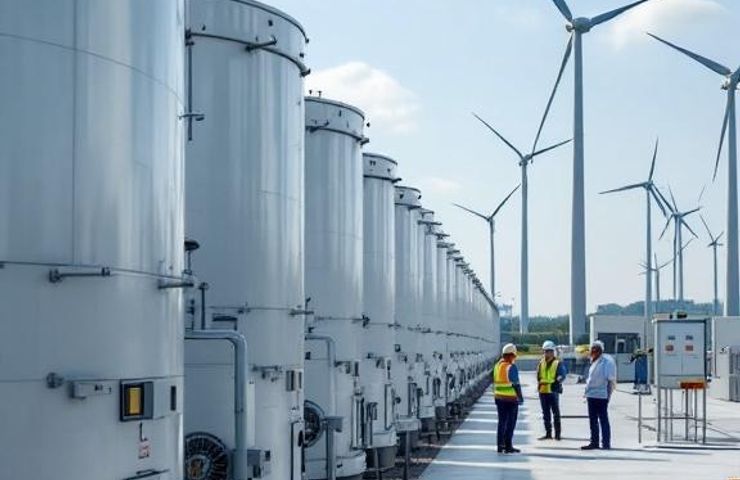
Hydrogen Production Boosted by UK HAR1 Subsidy Agreements
January 30, 2026If you’ve been keeping an eye on the UK’s hydrogen production scene, here’s something to celebrate: the government’s Hydrogen Allocation Round 1 (HAR1) has just sealed subsidy deals for up to 11 green hydrogen projects—making it Europe’s biggest electrolytic cohort yet. Contracts rolled out from late 2024 into July 2025, supporting 125 MW of capacity with over £2 billion in revenue support across 15 years plus £90 million in capital grants.
Historical Context
Back in July 2022, DESNZ kicked off HAR1 with a bold goal: hit 1 GW electrolytic hydrogen capacity by 2025. By December 2023, eleven projects across England, Scotland and Wales had made the shortlist—together eyeing 125 MW. The evaluation dug into renewable electricity sourcing, grid upgrades and greenhouse-gas cuts versus grey hydrogen. Projects promising to build new renewables just for their electrolysers scored extra points on additionality. After thorough technical and financial checks, the Low Carbon Contracts Company (LCCC) began signing contracts in late 2024, launching the UK’s first subsidy-backed green hydrogen deals.
Government Support and Policy Framework
In a savvy move, the UK Department for Energy Security and Net Zero (DESNZ) created HAR1 under its Hydrogen Production Business Model to smooth out volatile revenue for early electrolytic plants. It works much like the power sector’s Contracts for Difference: when wholesale prices dip, the government tops up producers to an average strike price of £241 per MWh; when prices climb above that, excess gets paid back. On top of that, £90 million in capital grants from the Net Zero Hydrogen Fund help cover initial costs, making it easier for developers to lock in financing and partner up for engineering, procurement and construction.
Financial Impact and Private Investment
HAR1 has already sparked around £413 million in private capital between 2024 and 2026. The first LCCC contracts cover 31.8 MW of capacity, unlocking equity and debt pipelines that didn’t exist before. Investors agree that guaranteed revenue is key when you’re backing first-of-a-kind plants without long track records. And this is just the start: HAR2 is slated for April 2025, HAR3 in 2026 and HAR4 in 2028. As electrolysers scale up and financing costs fall, we’ll likely see strike prices head south. Banks and infrastructure funds are watching HAR1 closely to judge hydrogen project bankability.
Technology Spotlight: Electrolytic Hydrogen
Every HAR1 project leans on electrolysis, splitting water into oxygen and hydrogen using renewable power from wind and solar. Two main electrolyser types—alkaline and proton exchange membrane (PEM)—are duking it out for market share. A recent UK & Platts study pegs levelised costs at about $6.90 per kg for alkaline and $7.15 per kg for PEM, including capital expenses and near-term grid prices. As supply chains mature and factories ramp up, those figures keep falling. Future HAR rounds may even mandate UK-made kit, boosting domestic manufacturing and cutting dependence on imports.
Industry Reaction
Hydrogen UK, formerly the Hydrogen Energy Association, cheered HAR1 as a massive confidence boost. CEO Emma Guthrie said these awards underscore the UK’s commitment to green hydrogen and will unlock early project pipelines. Meanwhile, the Low Carbon Contracts Company tapped its CfD experience to ink the first three deals in late 2024 across Wales, Scotland and the Midlands—proof that regions and sectors far and wide are keen on industrial decarbonization.
Business and Strategic Angle
For developers and offtakers, HAR1 lays out a clear playbook for taming risk in green hydrogen ventures. With strike prices locked in and capital grants on the table, negotiating better terms with equipment suppliers and financiers becomes far easier. Offtakers—from refineries to chemical plants—are lining up long-term offtake agreements alongside subsidy deals. While the exact volumes and prices stay under wraps, industry insiders agree that securing reliable demand is the linchpin for decarbonising those hard-to-abate sectors.
Collateral Benefits
- Mobilises £413 million in private investment over 2024–26
- Supports 760 direct jobs in construction and operations by 2026
- Channels £90 million in capital grants for upfront project costs
- Accelerates emission reductions in refining, chemicals and manufacturing
- Enhances UK energy security through domestic hydrogen supply
- Drives £500 million investment in hydrogen transport and storage infrastructure
- Sets the stage for potential £11 billion investment and 12,000 jobs by 2030
Policy Implications and Challenges
HAR1’s off to a stellar start, but many stress that stable policy will make or break the momentum. DESNZ plans to push strike prices lower in future rounds, but risks like grid-connection delays and the availability of renewable electricity could slow things down. Balancing demand signals—think pipeline networks and storage caverns—with actual infrastructure rollout is no small task. Keeping energy, transport and industrial policies in sync is crucial for weaving sustainable energy and industrial decarbonization into a cohesive strategy.
Ownership Shift Claim
An article from Energies Media claimed that one HAR1 project changed hands right when its state subsidy deal landed. Official records from DESNZ and the Low Carbon Contracts Company haven’t confirmed the details, so for now it remains unverified.
Looking Ahead: HAR2 and Beyond
With most HAR1 contracts in the bag by July 2025, all eyes are now on HAR2, due to shortlist in April 2025. HAR3 follows in 2026 and HAR4 in 2028—each round expected to refine strike prices, boost capacity and build on lessons learned. As more electrolysers flip on, the UK edges closer to its bold 10 GW by 2030 ambition, cementing its role as a leader in industrial decarbonization and critical hydrogen infrastructure. The path to a mature hydrogen market is still winding, but HAR1’s shown that a solid subsidy framework can bridge the gap between innovation and commercial reality. Stay tuned for HAR2 award details, first commissioning dates and the rollout of storage and transport networks that will underpin a thriving sustainable energy ecosystem.
 With over 15 years of reporting hydrogen news, we are your premier source for the latest updates and insights in hydrogen and renewable energy.