
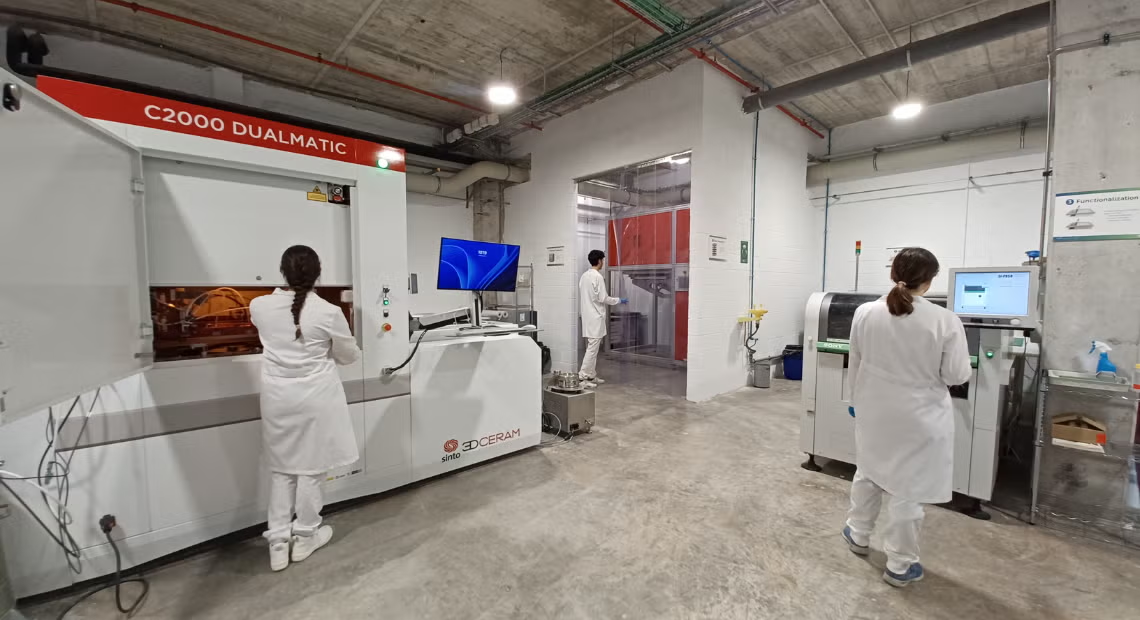
Hydrogen Production Gets a 3D-Printed Boost with IREC’s Merce Lab Pilot Line
December 15, 2025Imagine a 3D printer whipping up high-performance ceramic cells for hydrogen fuel. Well, Catalonia Institute for Energy Research (IREC) just pulled that off. On December 5, 2025, they flipped the switch on their new pilot line, Merce Lab, in Tarragona, Spain—and trust me, this is a game-changer for hydrogen production and fuel cell technology.
A world-first manufacturing leap
Up until now, making solid oxide cells (SOC) meant a cocktail of pressing, sintering, coating, and stacking by hand. Slow, clunky, and a real material gobbler. Merce Lab? They’ve turned that on its head by 3D printing whole solid oxide cells and modules in one smooth flow. The result? Complex shapes, sleeker designs, lighter setups, and up to four times the power density of old-school units.
How it all comes together
The process is a five-step dance: whipping up the ink, printing each cell, crafting interconnectors, stacking them into modules, then running full validation. By tweaking the ceramic inks and layering everything precisely, IREC nails both design freedom and quality control. Bonus: no cobalt, nickel, or rare earths, so they sidestep those pesky supply-chain snarls.
Efficiency that slashes costs
Here’s the kicker: they’ve cut about 25% of the energy use during electrolysis compared to polymer-based systems. That’s a huge boost to electrolyzer efficiency and a textbook example of driving down total cost of ownership. At roughly €800/kW, hydrogen prices could dip below €4/kg—if renewable power stays cheap. Right now, the pilot cranks out about 2 MW per year, but it’s built to scale.
“We’re breaking new ground in SOC manufacturing at this scale,” says Marc Torrell, head of Merce Lab. “This opens doors in maritime and aviation, where every kilogram counts and energy density rules.”
Backing and partnerships
Merce Lab rolls under the €25 million Tecnopropia banner—an Important Project of Common European Interest on hydrogen infrastructure. It’s driven by electrolyser maker H2B2 and topped up with €2 million from Spain’s Recovery, Transformation, and Resilience Plan. Ceramic-printing pros like France’s 3Dceram and a host of emerging players are also on board, fine-tuning materials and modules.
Why it all matters
We’re shooting for hundreds of gigawatts of electrolyser and fuel cell capacity by 2030, far beyond today’s output. Pilot lines like Merce Lab bridge the lab-to-factory gap, supercharging our sustainable energy goals. They cut electricity use, ease the squeeze on critical minerals, and lay the groundwork for spin-offs—IREC plans to launch Oxhyd Energy to take this tech commercial.
With smart engineering, solid partnerships, and strategic funding, Merce Lab is staking Catalonia’s claim in the green hydrogen economy. It’s one thing to talk zero emissions; it’s another to print them into reality. And with robust hydrogen infrastructure sprouting up alongside, we’re looking at a pretty bright, clean-energy future.

 With over 15 years of reporting hydrogen news, we are your premier source for the latest updates and insights in hydrogen and renewable energy.
