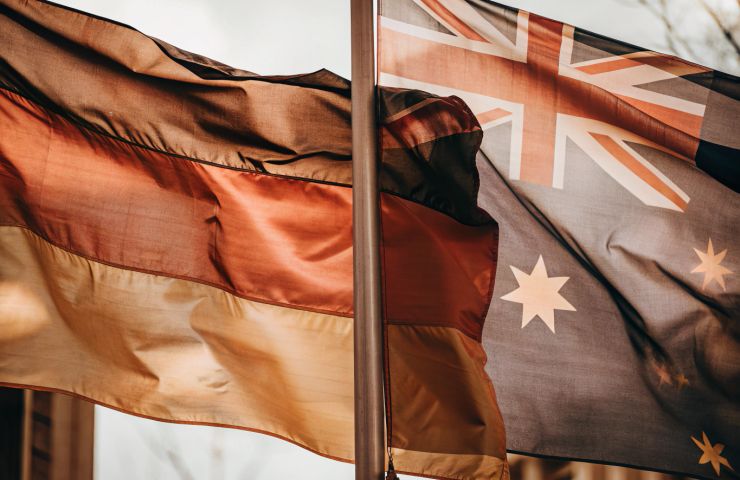
Hydrogen Production Partnership: Germany and Australia Kick Off H2Global Auction Consultation
January 6, 2026Germany and Australia have rolled up their sleeves and kicked off a market consultation for their joint H2Global funding window. It’s a big move that lays the groundwork for the first sales auction in 2027/28 and helps close the price gap between Australian-made green hydrogen and Europe’s industrial demand.
- Who: Germany’s Federal Ministry for Economic Affairs and Energy teaming up with Australia’s Department of Climate Change, Energy, the Environment and Water.
- What: A hefty €400 million hydrogen production auction (split €200 million each) under the H2Global scheme.
- Where: Green hydrogen plants across multiple Australian regions, with shipments heading into Rotterdam, the Netherlands.
- When: Consultation launched in January 2026; the initial purchase auction lands in late 2025; first annual sales auction targeted for 2027/28.
- Why: To lock in decade-long offtake contracts that banks and investors can rely on, send clear price signals via a double-sided auction, and scale up clean supply chains for industrial decarbonization.
Reshaped Funding for a Decade of Certainty
Alongside that new bilateral window, Germany bumped its total H2Global budget up to roughly €3 billion in the 2026 federal spending plan. Contracts now stretch a full ten years—2029–2038 for regional lots and 2032–2041 for the global lot—giving hydrogen producers the runway they need to lock in multi-billion-euro projects. Meanwhile, the Netherlands chipped in about €297 million (around €33 million a year from 2028 to 2036) to beef up import infrastructure in Rotterdam.
How the Double-Sided Auction Works
The H2Global platform uses a market-driven double-sided auction. Sellers of renewable hydrogen and derivatives—think clean ammonia and methanol—submit bids at their lowest acceptable price. On the flip side, government subsidies bridge the gap to market rates, locking in ten-year fixed-price offtake deals. That healthy dose of competition drives genuine cost discovery, nudging electrolyzer operators to sharpen efficiency and scale up electrolysis plants.
Building a Strategic Supply Corridor
Australia brings abundant solar and wind power plus vast tracts of land for electrolysis-based hydrogen production. By pairing these facilities with dedicated shipping routes to Europe, the partnership is stitching together a zero-emission supply line that strengthens hydrogen infrastructure on both hemispheres. Rotterdam’s ammonia terminals and blending hubs are set for upgrades to handle that first wave of clean molecules.
Industrial and Geopolitical Ripples
Long-term offtake agreements give Europe’s chemical, steel, and fertilizer industries the cost predictability they need to swap out natural gas for clean ammonia and hydrogen. For Australia, it means diversifying exports beyond minerals and LNG, unlocking private capital—potentially north of €10 billion—for new production sites and port upgrades. Plus, tapping into southern-hemisphere suppliers eases Europe’s dependence on traditional gas exporters, boosting energy security.
From Pilot to Scale
The first H2Global pilot back in 2023 awarded Fertiglobe €397 million over ten years for renewable ammonia out of Egypt. That proof-of-concept pulled in four more country sponsors—Germany, the Netherlands, Canada, and Australia—building a €6 billion funding pipeline by October 2025. Now, with the market consultation underway, stakeholders can weigh in on lot sizes, geographic eligibility, and auction cadence ahead of the 2025 purchase auction.
What’s Next?
As the consultation window stays open, industry players will fine-tune proposals, lock down financing, and nail logistics. All eyes are on that first hydrogen purchase auction in late 2025—an event that could finally shift green hydrogen from a niche pilot to the backbone of industrial decarbonization. We’ll be watching price discovery unfold, seeing how electrolyzer tech drives down costs, and tracking how fast ammonia carriers can ferry clean molecules across the globe.
In a world sprinting toward net-zero, the Australia–Germany H2Global alliance could become the go-to blueprint for other bilateral hydrogen partnerships—and a real-world proving ground for hydrogen fuel cell technology, sustainable energy, and zero-emission industrial processes.
 With over 15 years of reporting hydrogen news, we are your premier source for the latest updates and insights in hydrogen and renewable energy.