Hydrogen Production Powers Hyundai Steel’s $6B Low-Carbon Louisiana Mill
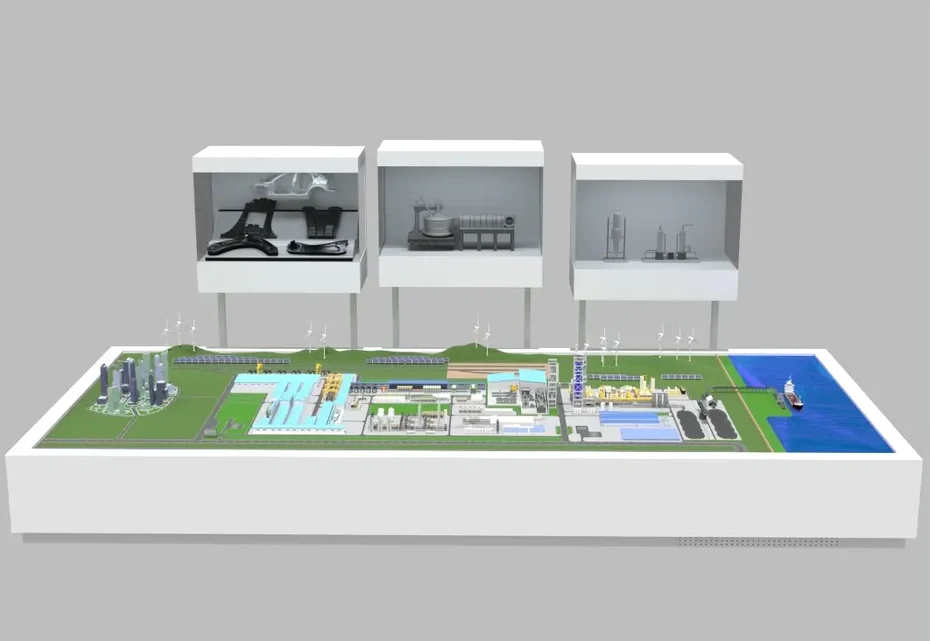
December 3, 2025At the World Hydrogen Expo 2025 in Goyang, South Korea, Hyundai Steel pulled back the curtain on a jaw-dropping scale model of its first North American steelmaking site: a $6 billion, hydrogen-ready mill in Ascension Parish, Louisiana. It’s a centerpiece of Hyundai Motor Group’s bold move toward ultra-low-carbon manufacturing in the U.S., slotting neatly into its wider $26 billion investment roadmap for 2025–2028. Designed to churn out 2.7 million tonnes of steel annually while driving emissions toward near zero, the plant will kick off using natural gas with carbon capture—aka blue hydrogen—and then swap in green hydrogen from renewable-powered electrolysis, targeting commercial operations by late 2029.
At their expo booth, Jim Park, Senior Vice President of Hyundai North America, made it clear that the company isn’t wavering—even as federal debates over hydrogen production tax credits heat up in Congress. The project has already caught the eye of POSCO Group, which plans to co-invest, demonstrating how two South Korean steel titans are teaming up to pioneer hydrogen-integrated production in North America.
Engineering a Hydrogen-Ready Mill
Instead of the old-school blast furnace belching out 1.5–2.5 tons of CO₂ per ton of steel, this mill marries Direct Reduced Iron (DRI) and Electric Arc Furnace (EAF) technologies. First, a DRI shaft furnace strips oxygen from iron ore pellets at scorching temperatures, initially using natural gas plus on-site carbon capture. Then, the plan shifts gears to 100% green hydrogen from renewables-powered electrolyzers. The sponge iron feeds into EAF bays, where graphite electrodes arc above 1,800 °C to melt everything down. This modular setup keeps emissions under 0.1 tCO₂ per ton of steel and offers real flexibility—drawing power from the grid, intermittent renewables or even on-site solar and wind arrays.
The expo model laid it all out: the DRI building, EAF bays, hot- and cold-rolling lines, plus towering hydrogen storage tanks. Videos walked visitors through a three-phase roadmap: first, a mill-level introduction of hydrogen; second, hooking up to regional supply; and third, weaving a statewide hydrogen infrastructure ecosystem that links producers, pipelines and end users across industries.
Regional Hydrogen Framework
Ascension Parish, perched on the Mississippi River in southeastern Louisiana, already boasts sprawling petrochemical and gas networks—prime real estate for a hydrogen hub. Pipelines, inland waterways and a skilled workforce mean Hyundai can hit the ground running. The state’s Industrial Tax Exemption Program and Quality Jobs Program were key carrots, Hyundai Steel told the Louisiana Clean Hydrogen Task Force, a policy group charged with fast-tracking everything from electrolyzer siting to carbon storage.
Still, hydrogen production economics can be brutal. As Mark Zappi, Executive Director of the Energy Institute of Louisiana, points out, “green hydrogen remains 3–4 times more expensive than gray hydrogen, with blue hydrogen adding 50–75 cents per kilogram” thanks to carbon capture costs. The Inflation Reduction Act’s tax credits help, but the finer details are still up in the air. To keep a lid on expenses, Hyundai’s exploring offtake agreements with utilities and hydrogen suppliers, plus potential on-site electrolyzers tied to solar or wind farms.
Hyundai estimates the mill will generate thousands of construction and permanent jobs, though exact numbers are still under wraps. They’re already partnering with local community colleges and unions to roll out specialized training programs in hydrogen operations and steelmaking tech. All of this stitches into a three-phase vision: mill-level hydrogen integration, a regional pipeline network and, eventually, a statewide ecosystem feeding refineries, chemical plants and heavy transport—driving real progress in industrial decarbonization.
Strategic Market Impacts
At $6 billion, this project ranks among the largest foreign direct investments into U.S. manufacturing decarbonization to date. Hyundai Motor Group sees on-shore steel production as critical for a resilient, low-carbon automotive supply chain, supplying its U.S. plants with steel whose embedded emissions have been slashed by over 90% compared to blast furnace output. And remember that larger $26 billion U.S. investment plan? This mill fits right into it.
Hyundai forecasts the U.S. green steel market will grow about 8.5% annually through 2034, driven by tightening regulations like carbon border adjustments and corporate net-zero pledges. That’s more than double the pace of conventional steel, underscoring a premium market for low-emission products. By allying with POSCO Group, Hyundai spreads the risk, shares R&D know-how and sets a template for future industry partnerships. No surprise this will crank up the pressure on North American blast furnace operators and EAF retrofits to embrace hydrogen or electrification. It also dovetails with U.S. efforts to reshore critical industries and cut reliance on imports amid supply chain challenges.
Long-Term Decarbonization Shift
Steelmaking accounts for 7–9% of global CO₂ emissions. Traditional blast furnaces pump out 1.5–2.5 tons of CO₂ per ton of steel, while hydrogen-based DRI-EAF routes target under 0.1 tCO₂. Hyundai’s Louisiana mill aims to erase millions of tons of carbon over its life cycle, lighting a path for broader sustainable energy transformation.
With the EU’s carbon border adjustment mechanism kicking in and automakers’ net-zero commitments tightening the screws on embedded emissions, Hyundai is betting early experience with a 2.7 Mtpa hydrogen-capable plant will pay dividends—and position it to export low-carbon steel through Gulf ports. Looking down the road, advances in electrolyzer membranes, scaling and manufacturing efficiencies could halve the cost of green hydrogen over the next decade, closing the gap with gray hydrogen. As these technologies mature, the Louisiana project could become the blueprint for hydrogen steel hubs from Texas to the Midwest and beyond.
In the end, Hyundai Steel’s Louisiana mill is more than a standalone plant—it’s a bellwether for industrial decarbonization and the burgeoning hydrogen economy in North America. Costs and policy clarity are still hurdles, but with a clear, phased roadmap and deep collaboration with POSCO, it shows how heavy industry can break free from its carbon past. If it delivers, this mill could spark a wave of clean-steel production, reshape regional supply chains and set new benchmarks for zero-emission steel.

 With over 15 years of reporting hydrogen news, we are your premier source for the latest updates and insights in hydrogen and renewable energy.