
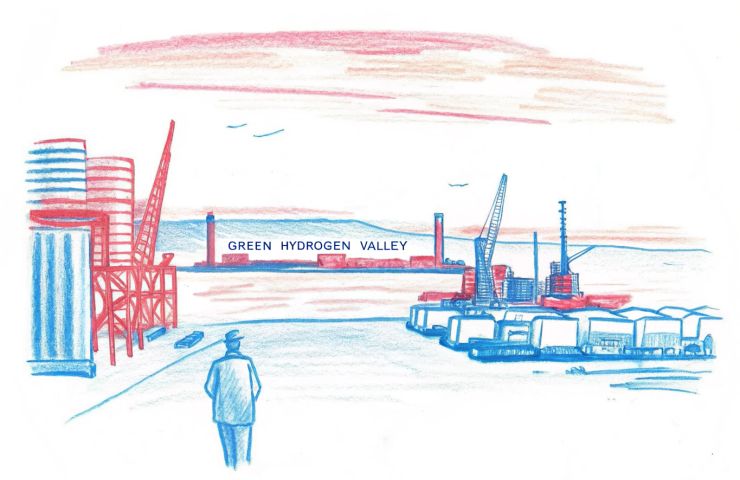
Hydrogen Production Takes Center Stage as Kakinada Emerges as India’s ‘Green Hydrogen Valley’
January 20, 2026What turns a century-old fertilizer hub on India’s east coast into a global clean energy powerhouse? On January 17, 2026, N. Chandrababu Naidu, Chief Minister of Andhra Pradesh and leader of the Telugu Desam Party, will be front and center at a ceremony that could flip the script on traditional hydrogen production in India.
Kakinada’s Green Hydrogen Valley
Picture this: a coastal town that once thrived on 19th-century maritime trade is getting a high-tech makeover. At Kakinada’s port, Naidu will christen the region India’s Green Hydrogen Valley as AM Green breaks ground on a brownfield conversion. By 2030, they aim to crank out 1.5 million tonnes per annum of clean ammonia, powered by 7.5 gigawatts of solar and wind and topped off with advanced pumped-hydro storage.
Powering the Green Pulse
The real magic happens behind the scenes: nearly 2 gigawatts of round-the-clock renewables—backed by pumped storage at Pinnapuram—will feed about 1,950 megawatts of electrolysers. Through water electrolysis, they’ll split H₂O into green hydrogen and oxygen with zero carbon in sight. That hydrogen then joins nitrogen (from air separation) in a modern Haber-Bosch loop, churning out clean ammonia in phases: 0.5 MTPA by 2027, 1 MTPA by 2028, and the full 1.5 MTPA by 2030.
Strategic Partnerships and Offtake
And they didn’t go it alone. Founded by veterans of the Greenko Group, AM Green has roped in heavy hitters like Gentari (Malaysia), GIC (Singapore) and the Abu Dhabi Investment Authority. On the demand side, a deal with Uniper in Germany is already inked, with talks heating up in Japan and Singapore. Once it’s up and running, Kakinada’s green ammonia could fuel ships, power plants—or even serve as a hydrogen carrier for regions short on renewables.
Economic and Environmental Impact
This is more than just a green headline. With a roughly $10 billion price tag, construction will create around 8,000 jobs—from heavy-industry roles to skilled technical gigs in logistics and renewable operations. When the dust settles, the complex will anchor an integrated sustainable energy ecosystem: solar farms, wind parks, pumped storage and port logistics, all underpinned by Andhra Pradesh’s Integrated Clean Energy Policy 2024.
Aligning with National Goals
It’s not happening in a vacuum. India’s National Green Hydrogen Mission, launched in 2023, is shooting for 5 MTPA of green hydrogen by 2030. By crowning Kakinada as a flagship export hub, Andhra Pradesh is cutting import dependencies and boosting India’s role in global industrial decarbonization.
Lessons from Legacy Conversion
Why reinvent the wheel? Instead of building brand-new plants, Kakinada taps existing infrastructure—slashing timelines, smoothing permitting and plugging into established supply chains. This brownfield approach could become the blueprint for coastal regions worldwide looking to pivot to clean ammonia and green hydrogen.
Challenges and Risk Management
No project this ambitious is without hurdles. The upfront investment is massive, mega-scale engineering gets complex, and renewables can be unpredictable. But AM Green has de-risked the plan with phased rollouts, locked-in offtake contracts, and pumped storage to balance the grid. Plus, heavyweight backers help spread financial risk and reassure lenders and regulators.
Global Context and Comparisons
We’re not the only ones chasing this vision—Europe and the Middle East have their own green hydrogen hubs, from Egypt’s NEOM Green Hydrogen to Germany’s Hamburg ammonia terminal. But few match the scale and integrated brownfield makeover of Kakinada’s zero-emission complex.
As those first cranes swing into place, India inches closer to a low-carbon future. By marrying robust policy support with cutting-edge electrolysis and ammonia synthesis, AM Green and Andhra Pradesh are charting a course that could reroute global energy trade. If it all comes together, this Green Hydrogen Valley could set the bar for sustainable energy projects everywhere.
After 2030, the sky’s the limit—expanding capacity, integrating fuel cells, tapping new markets. And down the road, byproducts like green oxygen and thermal integration could tilt the economics even more in renewables’ favor. For now, Kakinada’s old steel, salt and sulfur are making way for sunshine and wind to drive a bold new industrial chapter.
When Naidu tightens that first bolt on January 17, it won’t just be another photo-op—it’ll cement Kakinada’s spot in the global hydrogen production story. And for anyone talking zero emissions and industrial decarbonization, it’ll prove that guts, teamwork and smart reuse can turn an ordinary port city into the beating heart of a clean energy revolution.
 With over 15 years of reporting hydrogen news, we are your premier source for the latest updates and insights in hydrogen and renewable energy.