
Hydrogen Production Trends Rise as Doosan Enerbility Secures US Data Center Gas Turbine Contracts
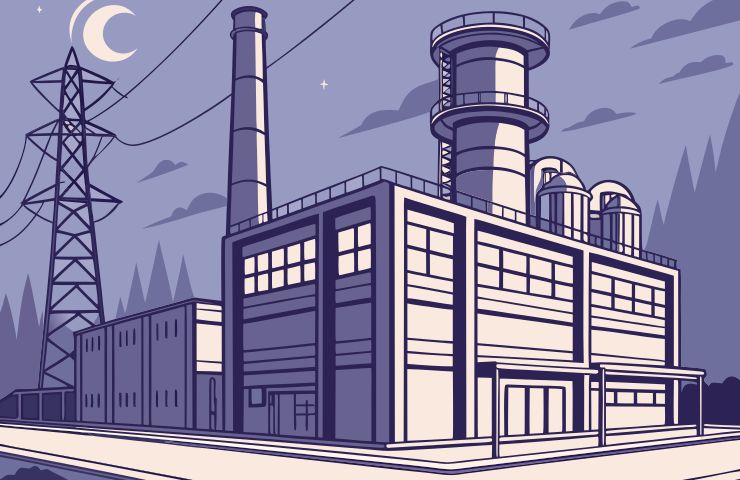
December 21, 2025Doosan Enerbility has landed a deal for three 380 MW-class natural gas turbines to power an unnamed U.S. tech giant’s data center, marking its first export of big machines designed for AI-driven self-generation. It follows an October award for two units, bringing Doosan’s U.S. backlog to five turbines, with delivery eyed between late 2026 and 2028.
Market Context
Data centers are getting hungrier by the day, thanks to all those AI workloads pushing the local grid right up to its limits. According to the International Energy Agency, most new U.S. data center capacity over the next decade will lean on natural gas rather than just renewables—that’s a nod to the reality that pure green energy hasn’t quite caught up. With kilowatt-hour prices spiking in hotspots like Texas and Ohio, tech giants are doubling down on reliable onsite self-generation to keep the lights on. We’ve seen xAI plotting combined-cycle plants in Memphis, OpenAI pitching ten gas generators in Texas, and Meta rolling out a 200 MW setup in Ohio. By choosing gas turbines on-site, companies sidestep transmission snarls and lock in more predictable costs. In this space, Doosan Enerbility isn’t just another vendor—it’s stepping up as a partner for modular, scalable power solutions, backed by the Doosan Group’s nuclear pedigree and 17,000 hours of full-load testing.
Environmental & Decarbonization Angle
Sure, natural gas turbines crank out dependable baseload power, but they still emit more CO2 than zero-emission alternatives. That’s why the buzz around hydrogen production and fuel cells is heating up, even if no Korean player has sealed a hydrogen deal for this project yet. Industry chatter suggests upcoming data center campuses are eyeing pilot schemes that blend hydrogen produced via electrolysis with renewable energy—aiming for a cleaner mix. The IEA predicts gas will dominate the near-term build-out, but it also sees hydrogen blends and full conversions as vital for hitting decarbonization targets in the 2030s. What’s cool is Doosan’s turbines can already handle up to 15% hydrogen co-firing, so they’re future-ready for emerging hydrogen networks. Toss in carbon capture and storage (CCS) retrofits, and operators can meaningfully dial down emissions today, while keeping an eye on long-term sustainable energy goals.
Competitive Landscape
Globally, only five heavy hitters build >300 MW-class gas turbines: GE Vernova (US), Siemens (Germany), Mitsubishi Power (Japan), Ansaldo Energia (Italy), and Doosan Enerbility (Korea). Traditionally, GE and Siemens have led the pack, but as AI-fueled projects ramp up, their order books have swelled. Mitsubishi’s also scrambling to hit delivery slots, leaving an opening that Doosan has seized—especially in the U.S. data center game. Doosan’s Houston-based arm, Doosan Turbomachinery Services, covers commissioning, maintenance, and aftermarket support, smoothing the path for customers. Back in South Korea, a modular manufacturing setup means faster build times and leaner assembly lines. Not to be outdone, incumbents are spinning up new plants and partnerships—GE just flagged a U.S. factory boost, and Siemens is teaming with local fabricators. For data center operators, that push-and-shove translates into sharper pricing, more flexible deals, and shorter waits.
Technical Snapshot
These orders call for single-shaft, 380 MW-class turbines running on natural gas, each equipped with advanced dry low-emission burners hitting sub-15 ppm NOx and boasting a combined-cycle efficiency north of 60%. Doosan’s been hammering these turbines through a rigorous test program—17,000 hours at full load since 2019—and the data checks out. The rollout is staggered: one unit lands in late 2026, two more in 2028 for the December deal, plus the earlier two by the end of 2026 from October’s order. Thanks to skid-mounted, modular designs, site installations go smoother, and factory-integrated digital controls pave the way for remote monitoring and predictive maintenance. Better yet, these turbines can take up to a 15% hydrogen blend with minimal tweaks, so you’re not locked into a single fuel path. All post-sale support is funneled through the Houston hub, promising local know-how and quick turnarounds.
Key Takeaways
- First US data center export: Doosan steps into the big-league self-generation market with five 380 MW turbines.
- AI-driven demand: Grid stress pushes hyperscalers to pick on-site gas turbines.
- Hybrid capability: Up to 15% hydrogen co-firing paves the way for greener power.
- Competition heats up: New entrants spur better pricing, service, and faster delivery.
- IEA forecast: Natural gas to fuel most new U.S. data centers over the next decade.
Looking Ahead
Doosan’s first big U.S. self-generation win signals a shift from passive grid reliance to active, on-site power strategies for data centers. As hydrogen production technologies and storage networks mature, we’ll likely see hybrid setups that mix gas turbines with electrolysis-based hydrogen and fuel cells. Operators who lock in modular, zero-emission-ready assets now will be better positioned to tackle tightening carbon rules. Meanwhile, expect the global competition to ramp up: incumbents bulking up capacity, and startups racing to commercialize next-gen combustion and hybrid solutions. For Doosan Enerbility, the next big milestone is converting hydrogen pilot programs into firm orders, cementing its footprint across both gas and hydrogen value chains.
About Doosan EnerbilityPart of South Korea’s Doosan Group, Doosan Enerbility specializes in large gas turbines and power generation gear. Since rolling out its 300+ MW-class turbines in 2019 via a tech transfer from Ansaldo Energia, Doosan has logged over 17,000 test hours at full load. Its Houston-based branch, Doosan Turbomachinery Services, delivers on-the-ground commissioning, maintenance, and aftermarket support across North America.
 With over 15 years of reporting hydrogen news, we are your premier source for the latest updates and insights in hydrogen and renewable energy.
