Hydrogen Refueling Stations Propel Taiwan’s Fuel Cell Revolution
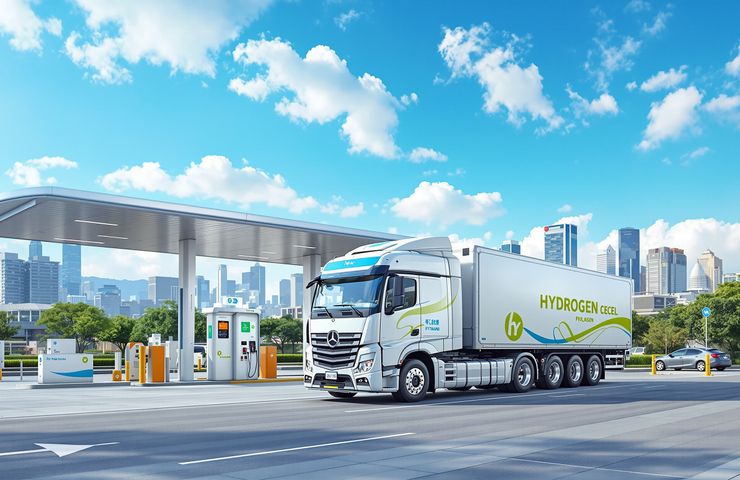
December 16, 2025CPC Corporation has teamed up with Linde LienHwa to flip the switch on the island’s very first Hydrogen Refueling Stations. These aren’t your run-of-the-mill pumps—they’re built for heavy-duty giants like trucks and buses running on zero-emission fuel cell power. The first two stations will pop up at major hubs near Taipei and Taichung Port, setting the stage for a network that could stretch across the whole island. Thanks to high-pressure pumps, vehicles can refill in just minutes, offering the same convenience as diesel but without the CO₂ trail.
Could This Be the Boost Taiwan’s Hydrogen Economy Needs?
Taiwan has a tight deadline: net-zero by 2050, with stops along the way—20% renewables by 2025 and 60 MW of fuel cell capacity. Yet 98% of its energy still comes from imports, largely LNG, solar, or offshore wind. For years, hydrogen has been the sleeper pick: full of promise but sidelined by a lack of infrastructure. Now, with functional Hydrogen Refueling Stations backed by a state-owned energy giant and a global industrial gases pro, we might finally see a real shift. This rollout follows national feasibility studies wrapping up in 2025 and a decade’s worth of stationary fuel cell demos.
Diving into the Technology
At its heart, these stations do something both simple and game-changing: they pump compressed hydrogen at up to 700 bar straight into onboard tanks. A quick 5–10 minute fill-up, and you’re back on the road. From there, the hydrogen feeds a fuel cell stack where it meets oxygen, sparking an electrochemical reaction that generates electricity and spits out only water vapor. Pure, clean, no carbon. Pair that with modular fuel cell designs and clever waste-heat recovery, and operators can squeeze every drop of efficiency out of the system. Earlier this year, Linde LienHwa even showcased Taiwan’s first heavy-duty Fuel Cell Trucks at Energy Taiwan 2025, turning heads with its slick integration of fuel cell tech and high-pressure storage.
Meet the Teams Driving the Change
This isn’t a solo act. At one corner, there’s CPC Corporation, the state-owned powerhouse that’s kept Taiwan’s lights on—expanding LNG terminals and bulking up strategic reserves. They’ve also been leading national hydrogen strategy studies due to wrap by 2025. On the other side, Linde LienHwa, a joint venture with the global Linde Group, brings deep chops in industrial gases and decarbonization. Beyond the fuel cell truck demo, they’re partnering with Walsin Lihwa, MIRDC, CIP, TÜV SÜD, and MiTAC to champion hydrogen across the board. It’s CPC’s infrastructure muscle plus Linde’s gas-handling wizardry, all working to build a solid refueling network.
What’s in it for Taiwan—and the Planet?
- Heavy-duty decarbonization: Trucks and buses can finally ditch emissions, sidestepping the range and weight limits batteries face.
- Fast refueling: 5–10 minutes per fill, matching the quick pit stops drivers expect from diesel.
- Economic boost: A budding fuel cell supply chain projected to hit around USD 200 M by 2032, growing at a 28.5% CAGR.
- Energy security: Less reliance on LNG and more leverage through a homegrown hydrogen ecosystem.
- Export potential: Taiwan could become a regional hydrogen hub, selling to markets like mainland China.
Building on a Solid Foundation
Taiwan’s tango with fuel cells started back in 2009, when the government kicked off demo programs for stationary power units. By 2019, 37 demo sites—mostly 15–25 kW backup systems—totaled 274 kW online. Fast forward to 2021, and domestic fuel cell output hit over USD 140 M, mostly for export. While LNG still holds the short-term spotlight, those early projects set the stage for bigger plays. The new Hydrogen Refueling Stations leverage a mature supply chain brimming with electrolyzers, compressors, storage vessels, and fuel cell stacks—proof that Taiwan already has the industrial chops to scale a thriving Taiwan Hydrogen Economy once policy green lights and infrastructure funding align. Local strengths shine through in homegrown electrolyzer makers, high-pressure tank builders, and fuel cell integrators who’ve been perfecting their craft for over a decade.
Navigating Challenges and Next Steps
It won’t be all smooth sailing. Policies for heavy-duty hydrogen vehicles still lag behind bus subsidies (capped at NT$20 M per unit), and truck-specific incentives need more clarity. Scaling the refueling network takes serious cash, and these two stations are just the opening act. Building a nationwide grid will demand tight coordination between public utilities and private operators. Plus, to steer clear of “gray” hydrogen from fossil sources, clean production methods—like electrolysis powered by offshore wind—must ramp up. The government’s 2025 feasibility studies will outline the roadmap for production, distribution, and regulation. Nail those details, and Taiwan could ride its LNG logistics know-how and fuel cell expertise straight into a clean energy future.
This launch isn’t just for show—it’s a real stride toward Taiwan’s 2050 net-zero dream. As more stations come online and fleets swap fuel sources, we’ll get a clear picture of how hydrogen weaves into daily logistics. Taiwan’s got a leg up with its industrial base, solid government backing, and star-studded partnerships. If everything goes well, expect announcements on more refueling points, fresh heavy-duty Fuel Cell Trucks, and even green hydrogen production sites. In the race for low-carbon transport, Taiwan may emerge not just a contender but a full-fledged exporter in the Asia-Pacific arena.
 With over 15 years of reporting hydrogen news, we are your premier source for the latest updates and insights in hydrogen and renewable energy.