Hydrogen Storage Soars with World’s Largest 40,000 m³ LH2 Carrier to be build by Kawasaki and JSE
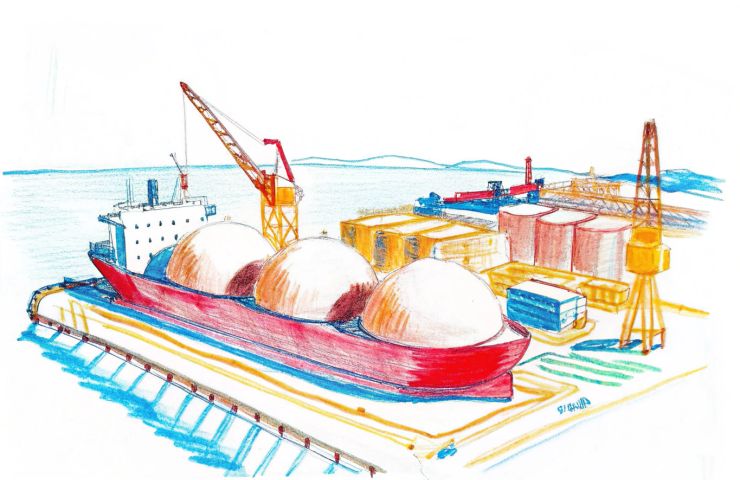
January 7, 2026Japan’s drive to build a massive hydrogen storage supply chain just scored a big win. Kawasaki Heavy Industries has teamed up with Japan Suiso Energy to ink a deal for a colossal 40,000 cubic-metre liquefied hydrogen (LH2) carrier at Kawasaki’s Sakaide Works in Kagawa Prefecture. Backed by the NEDO Green Innovation Fund, this ship will show off commercial-scale LH2 transport to the Ogishima terminal in Kawasaki City by the early 2030s—paving the way for next-level hydrogen infrastructure.
Core Details at a Glance
• Who: Kawasaki Heavy Industries (shipbuilder) & Japan Suiso Energy (hydrogen supply chain developer)
• What: 40,000 m³ LH2 carrier—the world’s biggest—packed with cutting-edge cryogenic tanks, vacuum-jacketed lines & dual-fuel engines
• Where: Built at Sakaide Works, Kagawa Prefecture; linked to Ogishima LH2 terminal, Kawasaki City
• When: Contract signed 06/01/2026; sea trials & ship-to-shore demos set for 2030–2031
• Why: Scale up liquefied hydrogen shipments between exporters (like Australia) & import hubs, meeting 2030s demand & driving industrial decarbonization toward Japan’s 2050 carbon-neutral goal.
Ship Specifications and Tech Details
The new carrier stretches about 250 m long, 35 m wide and drafts 8.5 m—tailored for LH2’s low density. Inside, four spherical tanks hold a whopping 40,000 m³ of liquid hydrogen. They’re wrapped in super-efficient multilayer insulation to slash boil-off. When gas does escape, it’s captured, compressed and fed into hydrogen-oil dual-fuel generators that power the ship’s electric and diesel propulsion setup. Transfer lines are vacuum-jacketed to keep things icy during ship-to-shore operations, cutting losses and boosting safety. And of course, ClassNK will register the vessel under the Japanese flag.
Strategic Implications for Global Hydrogen Supply
This carrier ups the ante roughly thirtyfold compared to Kawasaki’s 2021 Suiso Frontier (1,250 m³), marking a real jump from pilot to full-scale logistics. For hydrogen exporters like Australia, it means reliable bulk deliveries into Japan’s budding network of terminals. Japan Suiso Energy, riding on its NEDO-backed project, will put the vessel through its paces at Ogishima, testing performance, safety and cost metrics. Early ocean trials in 2030–2031 will churn out vital data to refine pricing models, shape rules and lay the groundwork for a fleet of carriers and terminals across Asia—and beyond.
Company and Regional Context
Kawasaki Heavy Industries, launched in 1896, has been breaking new ground in shipbuilding and energy—remember the Suiso Frontier and the Hy touch Kobe terminal? Japan Suiso Energy, led by Eiichi Harada, is all about weaving together global hydrogen supply chains. The Sakaide Works sits smack in the heart of Japan’s Seto Inland Sea shipbuilding hub, while Kawasaki City’s petrochemical zone offers direct access to ports and energy lines—ideal for scaling up hydrogen infrastructure.
Economic and Environmental Outlook
With demand for green hydrogen set to surge across power generation, transport and industry, these big LH2 carriers are linchpins for industrial decarbonization. By capturing boil-off gas and funneling it back into power, they’ll help slash CO₂ emissions and stabilize import volumes—taming price swings along the way. Plus, building and running these ships and terminals will spark job growth in Kagawa and Kanagawa Prefectures. Of course, hurdles remain: hefty upfront costs, strict cryogenic safety rules, and making sure upstream hydrogen production stays truly zero-emission.
Looking Ahead
As 2030 rolls around, insights from these demos will steer the next wave of LH2 carriers, terminal layouts and global regulations. Japan’s bid to hit carbon neutrality by 2050 hinges on exporting this blueprint worldwide. If the Kawasaki–JSE partnership nails it, we’ll have a ready-made model for compact, reliable hydrogen infrastructure in emerging markets—proving that large-scale LH2 logistics are not just possible, but essential for a sustainable energy future.
About Kawasaki Heavy Industries: Founded in 1896, Kawasaki Heavy Industries is a diversified powerhouse in shipbuilding, aerospace, energy systems and hydrogen tech. Japan Suiso Energy is a Tokyo-based joint venture focused on building out international liquefied hydrogen supply chains.

 With over 15 years of reporting hydrogen news, we are your premier source for the latest updates and insights in hydrogen and renewable energy.