Industrial Decarbonization Takes Flight with South Africa’s Largest Solar-Battery Hybrid Project
February 18, 2026Ever wondered how heavy industries can dodge South Africa’s infamous load-shedding and still slash their carbon footprints? This month, SOLA Group crossed the finish line on financing for Naos-1, a trailblazing 300 MW (435 MWp) solar PV and 660 MWh contracted battery energy storage system (BESS) hybrid in the Free State. With long-term power purchase agreements in hand from Sasol and Air Liquide, it’ll wheel clean power straight onto the national grid—making it the largest privately contracted hybrid renewable project to date.
After near-constant blackouts, South Africa had to shake things up. Since the post-2021 market reforms invited private players in, everyone’s been racing to lock down dispatchable renewables. The Free State—with its pancake-flat land and endless sunlight—has become the go-to spot for solar farms. Nestled among maize fields and whispers of an old gold rush, Naos-1 is already raising eyebrows as an industrial decarbonization milestone.
What’s Happening at Naos-1?
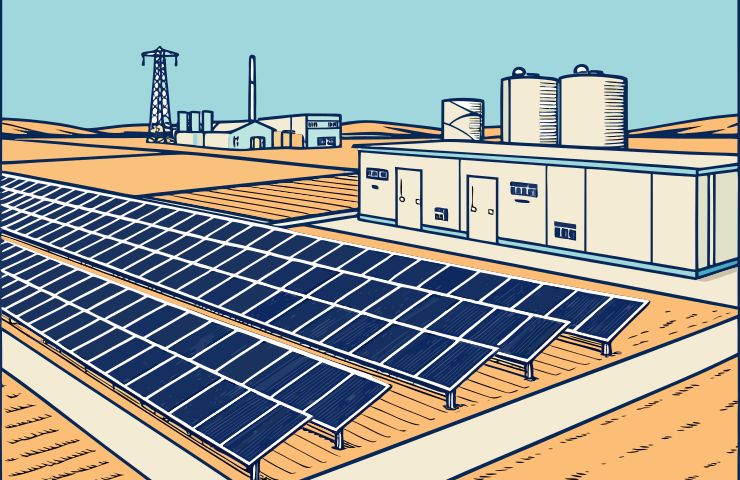
At its core, Naos-1 marries a 435 MWp solar PV array with a 660 MWh contracted BESS. Thanks to private wheeling agreements, the power zips through the Eskom grid directly to Sasol’s chemical complexes and Air Liquide’s oxygen plant. That means they sidestep volatile spot prices and lock in competitive tariffs for nearly 20 years.
How It Works
By day, the PV panels turn sunlight into DC electricity, either feeding it into the grid or charging lithium-ion batteries. When clouds roll in or demand spikes, the BESS kicks in, dishing out stored juice on demand. The result? A rock-solid, renewable-backed supply that combines photonic generation with on-call storage—ideal for savvy industrial off-takers eyeing sustainable energy.
Why It Matters
Naos-1 tackles two birds with one stone: it eases grid strain during peak hours and slashes emissions from coal-fired back-ups. Sasol and Air Liquide score reliable power without relying on fossil fuels, supercharging their low-carbon roadmaps. For South Africa, it’s proof private-wheeled renewables can be both scalable and bankable, setting a new standard in industrial decarbonization.
Financing and Partnerships
The Development Bank of Southern Africa stepped in with vital project finance, alongside equity from SOLA Group. A joint venture between SOLA Build and WBHO will handle engineering, procurement and construction. With financial close in the bag, site works kicked off this month, aiming for commercial operation in the first half of 2028.
Broader Impacts
Naos-1 isn’t just another power plant—it’s a living case study. Hundreds of locals will find jobs during construction, with dozens more staffing the site long-term. It shores up grid stability, showcases private wheeling, and sends a strong signal to investors that large-scale hybrids are a go. On the flip side, carving out 800 hectares sparks debates over farming land, and battery supply chains bring their own environmental footprints to manage.
SOLA Group’s got big ambitions: 2 GW of solar and 5 GWh of storage by 2030. Naos-1 is just the opening act in a 600 MW hybrid pipeline ready to roll. And while it won’t churn out hydrogen directly, having dependable renewables is exactly what green hydrogen producers—and their future electrolyzers—need to build out hydrogen infrastructure and ramp up hydrogen production. Think zero-carbon hydrogen and even clean ammonia at scale powered by Free State sunshine. Now that’s a plot twist in South Africa’s energy transition.

 With over 15 years of reporting hydrogen news, we are your premier source for the latest updates and insights in hydrogen and renewable energy.