
Israel Unveils Hydrogen Production Valley in the Negev to Drive Clean Energy Innovation
December 19, 2025When you think of the eastern Negev desert, images of endless sand dunes and sleepy silence probably come to mind—hardly a hotbed of innovation. The Israel Ministry of Energy and Infrastructure has unveil an international hydrogen valley that threads together hydrogen production, refueling, storage and power generation into one sprawling desert ecosystem.
A Desert Transformed
The eastern Negev, long overlooked except for phosphate mines run by ICL Rotem and a smattering of solar pilot projects, sits amid gas pipelines, power lines and dusty service roads. Now, thanks to record‐high solar irradiance, the plan is to fire up giant arrays to run large‐scale electrolysers churning out green hydrogen and to heat pyrolysis reactors that split hydrocarbons into hydrogen and solid carbon—without burning a drop of fossil fuel. On top of that, an extra 100 million shekels is being funneled into nearby towns like Yeruham, boosting R&D labs, workforce training and local infrastructure so residents actually reap the rewards.
Historically, this arid fringe has struggled to attract much beyond mining and small‐scale farming. Government planners now see the valley as a game changer—high‐tech jobs, global research talent and real economic liftoff for the periphery. With a kickoff slated for early 2026 and an initial budget north of 40 million shekels (roughly $12 million), this patch of desert is gearing up for a makeover few saw coming.
Building the Hydrogen Value Chain
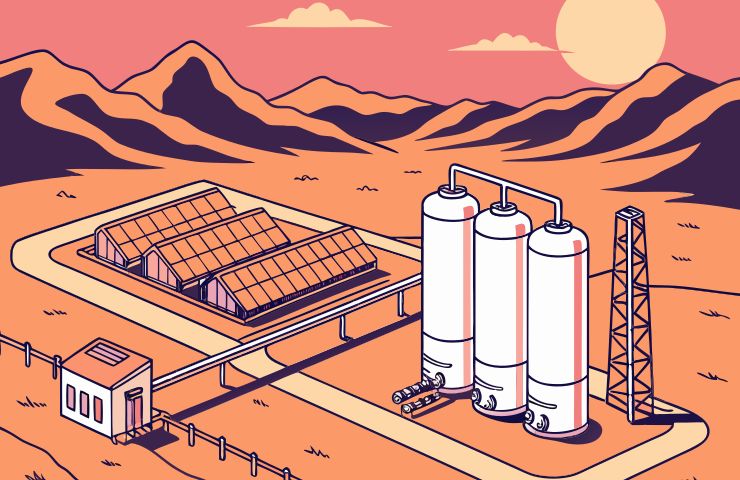
At its core, the valley will juggle two main production streams. First, banks of pyrolysis units will crank temperatures above 1,000°C to break down organic or light hydrocarbon feedstocks into hydrogen and solid carbon in an oxygen‐free chamber—zero CO₂ emissions, and the leftover carbon can be sequestered or used as industrial carbon black. Right alongside, rows of electrolysers powered by desert solar farms will split water into O₂ and green hydrogen. It’s a smart one-two punch: when winter clouds roll in, pyrolysis keeps the output steady; in blazing summer months, electrolysis takes the lead.
Refueling long-haul trucks and fleets is front and center, too. A dedicated hydrogen refueling station will tie into a network of high-pressure storage tanks, buffer vessels for liquid hydrogen and an internal pipeline system that delivers fuel straight to the pump. If the grid wobbles or demand spikes, hydrogen-based power generators will fire up, emitting nothing but water vapor. Mobile tube trailers and tanker trucks will also be on standby, ready to ship hydrogen or derivatives like ammonia to ports on the Red and Mediterranean Seas.
By co-locating all these pieces, the project slashes logistical headaches and drives down capex for each component. It becomes a one-stop shop where startups, established firms and research teams can test new catalysts, storage materials and fuel cell designs under real-world conditions. Best of all, it’s a living showcase for investors hunting the next big opportunity in hydrogen infrastructure.
Strategic and Economic Impact
Beyond the tech, the valley pins Israel’s climate ambitions to a very real spot on the map. The government has pledged a 27% cut in carbon emissions by 2030 and net-zero status by 2050. By fronting over 40 million shekels, the Israel Ministry of Energy and Infrastructure is signaling that sustainable energy and green hydrogen aren’t just research buzzwords—they’re strategic industries. Another 100 million shekels earmarked for regional connectivity, R&D facilities and workforce development ensures local communities share in the upside.
The valley also dovetails with a soon-to-be-approved 400-kilometre hydrogen pipeline stretching from Jezreel Valley to Eilat, promising a direct link to domestic and export markets. Early analyses suggest that by decade’s end, hydrogen prices could rival natural gas alternatives for sectors like fertilizer plants and heavy transport—a huge leap for industrial decarbonization.
Analysts are already likening the Negev project to Europe’s Rhône Valley and China’s Guangdong clusters, noting that integrated hubs tend to attract larger capital pools and accelerate commercialization. With its sun-drenched real estate and sturdy infrastructure, Israel could soon be the poster child for how peripheral regions can lead the clean energy revolution.
Addressing Environmental and Local Concerns
Of course, industrializing pristine desert landscapes doesn’t come without pushback. Conservationists warn that sprawling solar arrays and new pipelines near the Oron‐Zin nature reserve could fragment habitats and spoil scenic vistas. In response, planners are carving out buffer zones, elevating pipelines and installing low-profile solar panels to minimize visual and ecological impacts. They’re also tackling water scarcity by using treated brackish water for electrolyser cooling and closed-loop systems in the pyrolysis units.
Community engagement is another pillar. Local Bedouin councils and municipal authorities have been invited to co-create training programs, seasonal employment projects and profit-sharing mechanisms. While some skepticism remains, these measures aim to strike a balance between economic growth, environmental stewardship and social inclusion—essential ingredients for any lasting project.
Scaling Clean Energy
The hydrogen valley slots neatly into Israel’s broader goal of sourcing 30% of electricity from renewables by 2030 and phasing out centralized fossil fuel plants. It’s a live proof-of-concept for how hydrogen production via desert-based electrolysis and pyrolysis can operate at scale, feeding global debates on decarbonizing hard-to-abate sectors such as shipping, steelmaking and long-haul aviation. Plans are already afloat to produce green ammonia on-site—leveraging ammonia’s easier storage and shipping profile to serve markets in Europe and Asia.
Internationally, hydrogen valleys from Denmark to South Korea are racing to validate the economics of clustered infrastructure. The Negev’s ace in the hole is its relentless sunshine and proximity to both Mediterranean and Red Sea ports. If export pipelines and shipping terminals come online in sync with production modules, Israel could morph from regional supplier to a key node in a global low-carbon trade network.
Of course, technical hurdles remain—managing thermal stresses in sun-baked electrolysers, preventing carbon fouling in pyrolysis reactors and developing membranes that shrug off dust and extreme heat. To tackle these challenges, the valley incorporates test-and-learn zones where startups can iterate rapidly, plus government grants that back both successes and pilot-scale failures. It’s a clear message: risk-taking is woven into the valley’s DNA.
Whether the eastern Negev truly evolves into a buzzing hydrogen infrastructure corridor or remains an ambitious blueprint will depend on those critical first years of operation. But one thing’s for sure: Israel is betting its desert future on hydrogen’s promise. When the first reactors hum to life in 2026 and the valley springs into action, the world will be watching to see if this arid frontier can spark a global shift toward sustainable energy.

 With over 15 years of reporting hydrogen news, we are your premier source for the latest updates and insights in hydrogen and renewable energy.