Japanese team unveils palm-sized SOFC microreactor with 5-minute startup
January 23, 2026A portable SOFC that heats up fast
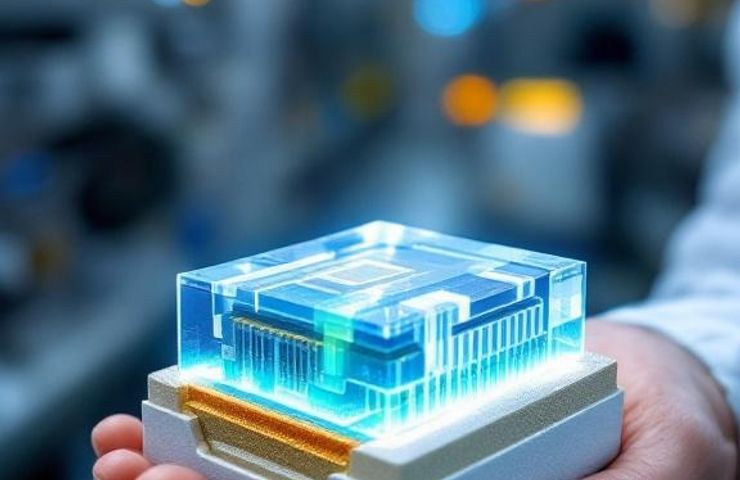
A team at the Institute of Science Tokyo—specifically its Laboratory for Future Interdisciplinary Research of Science and Technology—has dropped an eye-opener in Microsystems & Nanoengineering. Led by Dr. Tetsuya Yamada, they revealed a palm-sized solid oxide fuel cell (SOFC) microreactor that’s rewriting the rules on startup times. In lab tests, it rockets to its optimal 600 °C in just five minutes from room temperature—a huge leap compared to the half-hour ramp-up of conventional SOFCs. In partnership with TAIYO YUDEN CO., LTD., they homed in on two stubborn roadblocks: sluggish thermal ramp-up and safety when things get burning hot.
Engineering the heat under control
Shrinking down an SOFC is no small feat. Crank these devices up to high temps and the ceramics start to crack under thermal stress, basically begging for early retirement. To sidestep that, the Tokyo team got clever with a yttria-stabilized zirconia (YSZ) ceramic cantilevered structure that pulls double duty as a load-bearing scaffold and a thermal shield. They’ve etched microchannels with surgical precision so hydrogen-rich fuel, oxygen, and exhaust streams flow like a well-choreographed dance—maximizing reaction zones while keeping hot spots in check.
On the safety front, they’ve wrapped the reactor in a custom multilayer insulation ensemble that slashes thermal conduction by more than 50% versus traditional wraps, while interior coatings boomerang infrared radiation right back into the heart of the reaction. The payoff? You can literally hold the outside in your hand, even though the inside is blazing away. And just in case the insulation ever gives out, they’ve baked in a fail-safe that throttles the system below hydrogen’s ignition point—a slick move that ticks all the boxes for durability and real-world use.
Power where batteries can’t
If you’ve ever hefted a lithium-ion battery and thought, “There’s got to be more energy in there,” this microreactor might be your answer. While top-tier batteries peak around 250 Wh/kg, this hydrogen-fed marvel can pack up to four times that energy density. Add in theoretical electrical efficiencies flirting with 70% when fed clean hydrogen, and you’ve got a knockout player in the field of fuel cell technology and hydrogen fuel cells. In the bigger picture of sustainable energy, this gadget stands out for edge applications where weight and uptime are make-or-break.
During demonstration runs, the microreactor delivered continuous electric output capable of powering small drones, robotic manipulators, and industrial sensors for hours on a single fuel charge. Imagine these real-world scenarios:
- A drone pushing its flight endurance beyond two hours for detailed aerial mapping
- Autonomous warehouse robots cruising through multiple shifts without pausing to recharge
- AI-equipped sensors on offshore rigs or remote pipelines staying online in punishing conditions
- Emergency communication kits that hold the line through major power outages
All told, this could tip the scales toward hydrogen fuel cells when batteries just can’t deliver the juice.
Building on decades of SOFC research
Fuel cell technology has roots stretching back to the 1960s, but because SOFCs typically run between 600 °C and 1,000 °C, they’ve been mostly tethered to large-scale, stationary plants. Those behemoths didn’t flinch at startup inertia. In the last ten years, though, strides in intermediate-temperature SOFCs and advances in ceramic materials like YSZ have chipped away at the high-temp barrier, making portability a real possibility.
Still, hurdles like startup lag, thermal cycling fatigue, and vulnerability to heat spikes kept portable SOFCs more pipe dream than product. What the Tokyo crew did differently was fuse structural design, microfluidics, and next-level insulation into a single, elegant package—so they didn’t have to compromise on temperature or toughness.
Strategic implications for Japan’s energy sector
Japan’s all-in on making hydrogen and hydrogen fuel cells a cornerstone of its decarbonization roadmap. When the Tokyo Institute of Technology was restructured into the Institute of Science Tokyo in 2024, it signaled a fresh era of interdisciplinary breakthroughs. Now, with TAIYO YUDEN—six decades deep in materials science—on board, scaling this microreactor looks like the next big leap.
This partnership dovetails perfectly with Japan’s budding hydrogen network, from planned refueling stations to local electrolysis hubs. For companies scouting off-grid or zero-emission technology solutions, a palm-sized SOFC promises nonstop power without the weight penalty of hefty batteries. Sector analysts reckon logistics, defense, and other mission-critical fields will be particularly keen, especially as they chase resiliency and sustainable energy metrics.
Beyond Japan’s borders, broader SOFC advancements are supercharging the global hydrogen economy—boosting electrical efficiency (up to 70% in theory) and expanding fuel flexibility to everything from pure hydrogen and natural gas to synthetic syngas. Paired with advances in hydrogen storage and distribution, the potential is huge. If this microreactor scales, it could unlock fresh markets in industrial decarbonization, emergency backup, and maybe even consumer electronics, where ultra-high energy density becomes a key differentiator.
Looking ahead
So, when’s it actually hitting the market? A few checks remain: proving long-term durability in the field, validating hundreds (or thousands) of thermal cycles, and dealing with real-world fuel impurities. And we can’t ignore cost—precision-engineered YSZ ceramics and custom insulation layers don’t come cheap when you’re talking small batches. But like semiconductors before it, volume manufacturing and wider adoption of green hydrogen could send prices tumbling over the next five years.
In fact, pilot programs are already in the works, with drone makers and robotics firms lining up to slip these microreactors into field trials by late 2026. Meanwhile, regulators hashing out portable hydrogen cartridge standards and safety protocols will play a big role in ironing out the commercialization path.
Looking even further out, integrating with portable hydrogen cartridges, on-site reformers, or ammonia cracking units might be the secret sauce for a truly user-friendly power kit. With Japan ramping up its hydrogen-station rollout as a local proving ground, global adoption will depend on robust hydrogen storage networks and international safety approvals.
Ultimately, by cracking the code on thermal management and rapid startup, this palm-sized SOFC microreactor is already leagues ahead of other portable power contenders. If they can pull off scale, you might soon see hydrogen fuel cells powering edge applications that batteries simply can’t sustain. And with the worldwide push for zero-emission technology in full swing, that could well ignite a new era of off-grid, high-density energy solutions.

 With over 15 years of reporting hydrogen news, we are your premier source for the latest updates and insights in hydrogen and renewable energy.