
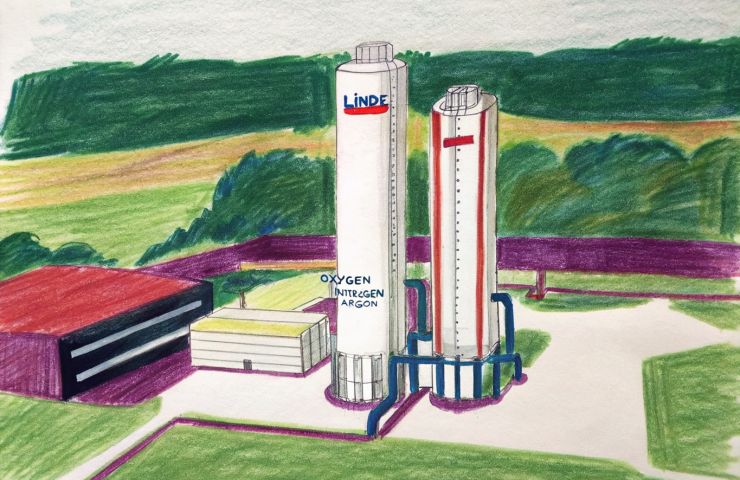
Linde plc’s New ASU in Wisconsin
March 17, 2026Ever wonder how the oxygen you’re breathing, the nitrogen chilling your ice cream, and the argon strengthening your welded steel seams all come from the same kind of place? Well, this month Linde plc quietly announced plans to set up a brand-new Air Separation Unit on the south side of Oshkosh, Wisconsin. It might sound like industrial speak, but these plants are the secret sauce behind modern factories, hospitals, food processors—and so much more. So what’s the fuss about, and why should you care about all those giant tanks and pipes?
In its latest update, Linde plc—the global leader in industrial gases and engineering, with $34 billion in sales last year—said it’ll build, own, and operate this new ASU to produce high-purity liquid oxygen, nitrogen, and argon for customers across Northeast Wisconsin (Green Bay, Madison, Milwaukee) and Michigan’s Upper Peninsula. Land’s been secured, big-ticket equipment is rolling in, and they expect to fire up operations in the latter half of 2028. Capacity numbers? They’re still under wraps. And at this pre-construction stage, no one’s raised any red flags in public comments. This move slots perfectly into Linde’s push for industrial decarbonization and broader sustainable energy goals, with an eye toward zero-emission technology down the road.
Why Oshkosh, you ask? Nestled on the shores of Lake Winnebago, this city’s got a pedigree in manufacturing—paper mills, foundries, even aviation gatherings. A mix of metal shops, food plants, and healthcare facilities keeps a steady appetite for industrial gases. By planting the air separation unit closer to those end users, Linde can boost supply reliability, slash transport time and costs, and shrink related emissions. As the Midwest economy hums along, this project dovetails with Linde’s strategy to invest locally and back regional growth.
Peeling Back the Layers of ASU Technology
At its heart, an Air Separation Unit is a cryogenic setup that pulls in ambient air, cranks up the compression, chills it to roughly −196 °C, and then fractionally distills that frosty mixture into its main players: oxygen, nitrogen, and argon. Once separated, each gas gets tucked away in insulated tanks before heading out via trailers or pipelines. It sounds almost straightforward, but fine-tuning energy efficiency and purity levels is a constant puzzle that demands top-tier engineering.
It’s no coincidence we link Linde with air separation. The story stretches back to Carl von Linde’s 1895 patent for liquefying gases, and through a string of mergers—most notably with BOC in 2006—has led to today’s powerhouse. In the U.S., Linde has just fired up an ASU in Tennessee, doubled CO₂ capture capacity in Texas, and plans another ASU expansion in La Porte. Each move mirrors the post-2020 industrial comeback and surging demand for clean tech. That deep history is why clients trust Linde’s roadmap for sustainable energy and hydrogen infrastructure.
Ripple Effects Beyond the Fenceline
Putting up a new ASU isn’t just about grabbing market share. Local contractors get to bid on jobs, equipment suppliers see fresh orders, and skilled tradespeople find steady work on site. Once it’s humming, manufacturers get steadier gas flows, hospitals secure reliable medical-grade oxygen, food processors tap consistent refrigeration, and electronics assemblers access ultra-pure nitrogen. And with shorter delivery routes, transport-related CO₂ emissions take a dip—another win for industrial decarbonization.
Under the hood, this project exemplifies Linde’s playbook: diverse end markets—from chemicals & energy to food & beverage, electronics to healthcare, manufacturing to metals & mining—each region gets tailored solutions. The Oshkosh Air Separation Unit strengthens Linde’s Midwest footprint at a time when reshoring and supply-chain resilience are front-of-mind. It’s all about proximity, moving away from one-size-fits-all to a hyper-local model that anticipates customer needs.
Plugging into Hydrogen Infrastructure
Though this plant’s main gigs are oxygen, nitrogen, and argon, it quietly feeds into the broader puzzle of hydrogen infrastructure. Oxygen streams can fuel electrolyzers in green hydrogen projects, while nitrogen helps purge and protect electrolysis systems. As industries ramp up clean hydrogen for fuel cells and industrial decarbonization, having a local ASU can cut lead times by weeks and shave off costs. So even if you don’t spot hydrogen tanks on site, this setup is a backstage pass to the zero-emission technology shift.
We’re still waiting on the nitty-gritty—tonnes per day, output specifics—those numbers are held close. But the roadmap’s clear: land deals and equipment orders now, engineering milestones ahead, and commissioning in H2 2028. It’s a marathon, not a sprint—a steady cadence that regional stakeholders can plan around, without any startling surprises.
Looking Ahead
In an age obsessed with flashy breakthroughs, it’s easy to overlook the quiet workhorses like ASUs. Yet these facilities are the lifeblood of modern industry. From a 19th-century patent to today’s push for sustainable energy and industrial decarbonization, Linde plc reminds us that building infrastructure—piece by piece, region by region—often does the heavy lifting for a zero-emission technology future. As Oshkosh gears up, the big question is: which community will get the next ASU?
 With over 15 years of reporting hydrogen news, we are your premier source for the latest updates and insights in hydrogen and renewable energy.