Low-Carbon Ammonia Partnership Powers Louisiana’s Clean Energy Future
December 15, 2025Air Products and Yara International are deep in talks to launch massive low-carbon ammonia projects on Louisiana’s Gulf Coast. Announced on December 8, 2025, this deal syncs perfectly with global decarbonization goals, injecting fresh momentum into a plan that had been stuck on pause. By blending proven carbon capture technology with Yara’s top-tier ammonia distribution network, they aim to turn the Gulf Coast petrochemical corridor into a beacon of clean industrial innovation.
Decades of industry expertise
On one side, Air Products—trading on the NYSE as APD since 1940—is the world’s biggest hydrogen supplier and a heavyweight in industrial gases. They already run a 700-mile hydrogen pipeline stretching along the Gulf Coast, feeding refineries, power plants and chemical sites. Norway’s Yara International, meanwhile, is the planet’s leading fertilizer producer and ammonia shipper, moving over 4 million metric tonnes a year through its fleet of 12 vessels and 18 import terminals. Listed under YAR on the Oslo Stock Exchange, Yara has deep pockets for global growth. Add to that Air Products’ decade-plus of large-scale carbon capture successes at U.S. sites, and you have a partnership built on decades of operational know-how.
The idea is simple but powerful
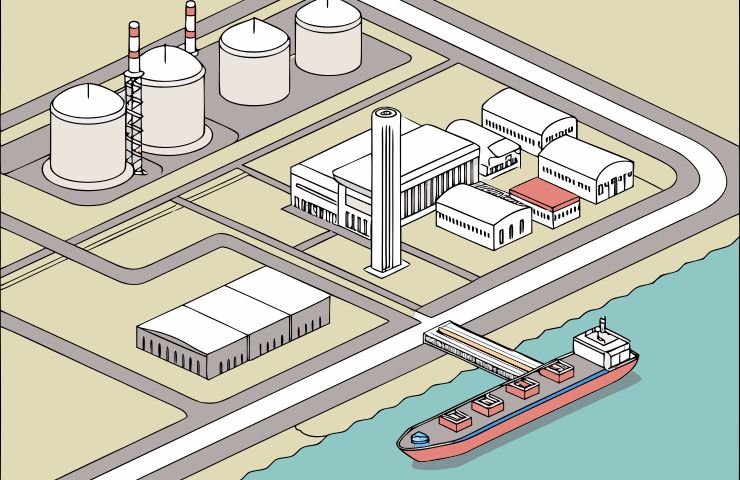
At the core of this venture is the Louisiana Clean Energy Complex, designed to crank out more than 750 million standard cubic feet per day of low-carbon hydrogen. Here’s how it rolls: natural gas (or similar hydrocarbons) is reformed under high heat and pressure, splitting into hydrogen and CO2. Advanced carbon capture units then swoop in to snag up to 95% of the CO2—around 5 million tonnes annually—which gets compressed, dried and sent off to deep geological formations for permanent storage. The gear—pressure swing adsorbers, amine scrubbers and compressors—has been battle-tested in oil and gas for decades, so this is far from a lab experiment.
Under a 25-year agreement, Air Products will supply roughly 80% of that hydrogen to Yara, feeding into cutting-edge Haber-Bosch synthesis plants that will churn out some 2.8 million tonnes of low-carbon ammonia each year. The remaining 20% of hydrogen travels through Air Products’ existing pipeline network, delivering clean fuel to Gulf Coast customers. By splitting the process and letting each company focus on its specialty, they’re squeezing maximum efficiency out of every step.
Made in Louisiana, made for America’s future
By tapping into Louisiana’s rich industrial base, this project plugs into an ecosystem that’s already humming. Deepwater ports on the Mississippi River streamline the inbound feedstocks and outbound ammonia shipments, while local steel mills, equipment suppliers and service contractors all gear up for their roles. Community colleges and workforce training institutes are updating curriculums to get thousands of technicians and engineers ready.
With an estimated investment of $8–9 billion, the complex will spark a wave of construction jobs and then settle into hundreds of permanent positions—engineers, plant operators, maintenance crews and logistics specialists. It’s truly “Made in Louisiana, made for America’s future,” boosting energy security with homegrown supplies of clean hydrogen and ammonia for both domestic use and export. State and local incentives, plus potential tax credits under Louisiana’s chemical manufacturing programs, further sweeten the deal.
Solving real-world problems with green ammonia
Ammonia isn’t just fertilizer anymore—it’s also a promising zero-carbon marine fuel and a convenient hydrogen carrier that can be “cracked” back into hydrogen at destination ports. As environmental regulations tighten—especially in Europe—industries are on the hunt for cleaner feedstocks. That’s where Yara shines, leveraging its global distribution network to deliver low-carbon ammonia across Europe, Asia and beyond, helping customers hit tough decarbonization targets.
What’s more, spanning everything from upstream hydrogen production to downstream ammonia shipping helps hedge against market swings. When natural gas prices soar, flexible supply agreements and long-term off-take contracts keep end users’ costs more predictable. And by cutting out extra energy conversion steps, the partnership slashes waste and boosts overall efficiency—translating to real-world wins, from greener crop nutrients to sustainable marine fuels.
Right in step with global decarbonization
One of the big reasons this project is back on track? The lure of U.S. incentives like the 45Q tax credits. By rewarding companies for each tonne of CO2 they permanently store, these credits dramatically improve project economics. Combined with Yara’s 25-year hydrogen offtake guarantee, lenders felt confident enough to give the go-ahead. It’s a clear example of how smart policy and solid partnerships can turn ambitious ideas into reality.
At the same time, Air Products is charging ahead with the NEOM Green Hydrogen Project in Saudi Arabia, targeting renewable ammonia production from wind and solar-powered electrolyzers, with a final marketing agreement expected by mid-2026. Together, these twin ventures show how low-emission ammonia can scale across diverse geographies, whether that’s established petrochemical hubs or brand-new, sustainability-focused cities.
Environmental and community impact
This partnership isn’t just about bottom-line gains—it’s about genuine environmental and community uplift. Capturing and sequestering roughly 5 million tonnes of CO2 per year is like taking 1.2 million cars off the road. Local air quality will improve as older ammonia plants are upgraded or replaced, letting neighborhoods, schools and parks breathe easier. Plus, the project team is teaming up with local NGOs to continuously monitor air, water and soil quality during construction and operation—building trust and keeping everything transparent.
Economically, the ripple effect will boost everyone from equipment suppliers and truckers to caterers and hospitality businesses, delivering sustained growth for Louisiana’s local economy.
Building a cleaner tomorrow, today
Final investment decisions are targeted by mid-2026, pending air permit approvals and construction contracts. If all goes as planned, the Louisiana complex could be up and running in the late 2020s, sequestering 5 million tonnes of CO2 a year and supplying millions of tonnes of low-carbon ammonia worldwide. As regulators and customers demand ever-lower emissions, this project proves heavy industries can innovate without sacrificing scale or reliability. When giants like Air Products and Yara International join forces, a cleaner, more prosperous future isn’t just a dream—it’s happening now.

 With over 15 years of reporting hydrogen news, we are your premier source for the latest updates and insights in hydrogen and renewable energy.