
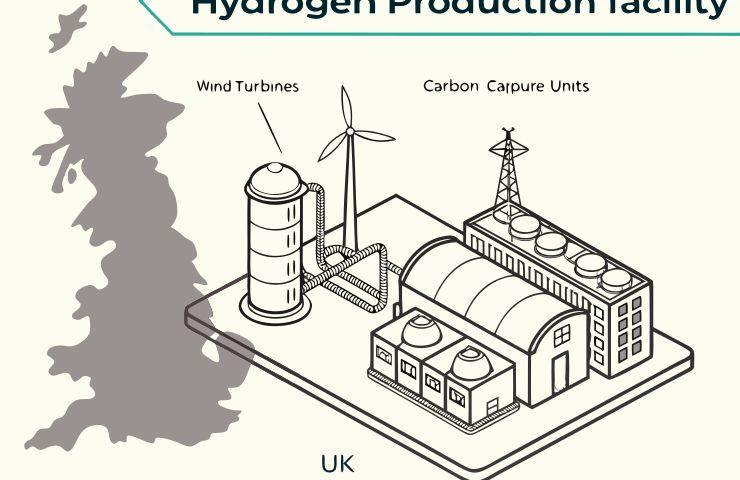
Low Carbon Hydrogen Standard v4 Strengthens UK’s Net Zero Hydrogen Strategy
February 2, 2026Earlier this month, the Department for Energy Security and Net Zero rolled out Version 4 of the Low Carbon Hydrogen Standard, marking a big step towards a cleaner, greener energy mix across the UK. This update fine-tunes how we calculate lifecycle GHG emissions, opens up more hydrogen production pathways, and adds handy new tools to help developers hit that magic low-carbon benchmark of 20 g CO₂e per MJ LHV. It’s a clear sign the UK is dead serious about backing a scalable hydrogen industry as part of its UK hydrogen policy and net zero roadmap.
As the official GOV.UK guidance explains, “The LCHS outlines a methodology for calculating lifecycle emissions from hydrogen production and sets compliance requirements for hydrogen to be low carbon.” [UK Low Carbon Hydrogen Standard, v4]
What’s new in the UK’s Low Carbon Hydrogen Standard v4?
Version 4 builds on feedback from the first Hydrogen Allocation Round and earlier drafts to streamline processes and expand eligibility. Here’s what’s changed:
- Biomethane via the gas grid: You can now use a mass-balance approach backed by Renewable Gas Guarantees of Origin (RGGOs) to prove your feedstock is low-carbon.
- Simplified refinery off-gas: Classification rules have been tightened up, so integrated sites can more easily include by-product streams.
- Updated REGO alignment: New options like Metered Volume Reallocation are on the table, bringing hydrogen into line with wider energy-sector practice.
- Asphalt for solid carbon: If you’re capturing CO₂ into asphalt products, that’s now recognised as a compliant end-use.
- Stored feedstocks and fuels: Fresh guidance helps you juggle inventory without tripping up compliance rules.
- Data Annex revisions: From March onwards, live projects will use the updated factors and pathways in the Data Annex when reporting.
- Hydrogen Emissions Calculator v4.10: A revamped toolkit to measure GHG intensity every 30 minutes, giving you sharper insights.
How does the updated lifecycle methodology work?
At its heart, LCHS v4 asks producers to keep tabs on every bit of greenhouse gas from your feedstock’s origin right through to the point you deliver the hydrogen. By plugging data into the Hydrogen Emissions Calculator and applying the factors from the Data Annex, companies report half-hourly figures on energy use, process emissions and fugitive hydrogen leaks. Stack all that up, and you need to stay at or below the 20 g CO₂e/MJ LHV threshold to qualify.
They’ve also made tracking fugitive emissions more formal—sites now need a proper risk-management plan and an annual report on any unintended hydrogen releases. It’s all about transparency, and it gives investors confidence that the standard really holds up.
Who stands to benefit—and who’s steering the ship?
The brains behind LCHS v4 is DESNZ, which runs the Low Carbon Hydrogen Production Revenue Support scheme under the Hydrogen Production Revenue Support Regulations 2023. If you’re producing hydrogen and want to tap into government subsidies, you’ll need to show you’re fully compliant with the standard. That covers everything from electrolytic projects powered by renewables to reforming routes paired with carbon capture.
Energy majors and up-and-coming clean-tech firms alike get a clearer rulebook for planning and financing new sites. Even the Welsh government is on board, signalling it will sync its infrastructure plans with the updated standard—so you’ll see consistent rules across the UK.
Why this matters for the UK’s hydrogen economy
With a national target of 10 GW of low-carbon hydrogen by 2030, having clear, consistent rules is non-negotiable. LCHS v4:
- Reduces approval hurdles by simplifying complex feedstock accounting.
- Attracts investment by tying revenue support to a transparent, science-based methodology.
- Keeps pace with new tech like biomethane mass-balance and solid-carbon use cases.
- Aligns hydrogen certification with existing energy-sector tools such as REGOs, smoothing integration across electricity and gas markets.
By nailing down these rules now, the UK is laying the foundation for a strong hydrogen supply chain—one that can deliver deep cuts in industry, transport and power. As hydrogen moves from niche to mainstream, having a trusted, consistent standard will be crucial. LCHS v4 is a practical, future-facing step that should help unlock capital, drive innovation and keep the UK firmly on the path to net zero.

 With over 15 years of reporting hydrogen news, we are your premier source for the latest updates and insights in hydrogen and renewable energy.
