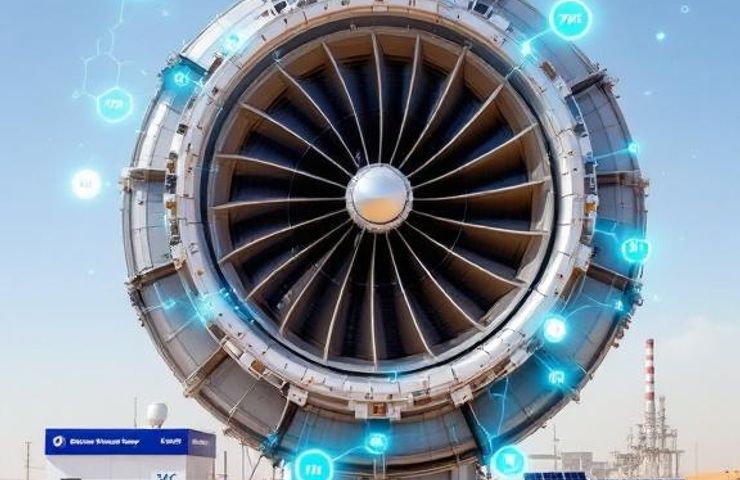
M701JAC gas turbine Drives Qatar’s Hydrogen-Ready Power Future
January 19, 2026Ever wondered what happens when an industry titan like Mitsubishi Power teams up with a country dead set on reshaping its energy future? Buckle up! They’ve just locked in a landmark order: a fleet of hydrogen-ready turbine M701JAC gas turbines for Qatar IWPP Facility E. This isn’t just another turbine drop—it’s a bold leap toward a low-carbon desert power grid.
It builds on Mitsubishi Power’s track record: since 2009, they’ve shipped over 92 J-series turbines worldwide and chalked up 1.7 million operating hours across 52 commercial units. Now, that same proven DNA is firing up in Qatar.
Here’s What Was Missing—and How We Fixed It
Traditional power plants have always walked a tightrope: meet soaring electricity demand while racing to slash emissions. They juggle three major headaches:
- Carbon-heavy output when running on straight fossil fuels.
- Sluggish response to sudden load swings.
- Difficulty integrating intermittent renewables.
Enter the M701JAC gas turbine. This isn’t just a high-power workhorse—it’s a flexible, low-carbon marvel that can:
- Fire up from a cold start in under 30 minutes.
- Throttle output from 50% to 100% in seconds.
- Blend in up to 30% hydrogen without any retrofits.
- Keep emissions ultra-low: sub-25 ppm NOₓ and sub-9 ppm CO.
And it gets better: in simple-cycle mode it delivers 448–574 MW, so operators can choose rapid power boosts or switch into combined cycle for top-tier fuel savings.
The Magic Inside the M701JAC
There’s a lot going on under that sleek casing:
- 1,650 °C Turbine Inlet: Superalloy blades brave the heat thanks to advanced thermal barrier coatings and finely tuned air-cooling channels.
- 15-Stage Compressor: Variable guide vanes ensure stable airflow, even with hydrogen in the mix.
- 22-Can Combustor: Each canister is optimized for clean combustion—keeping NOₓ under 25 ppm and CO below 9 ppm.
- 4-Stage Turbine: Extracts maximum work before sending exhaust to the steam cycle.
- 3,000 RPM: A single-rotor setup balancing a 550-ton powerhouse.
- Exhaust Stack: 646–663 °C flue gas feeds the HRSG, pushing combined cycle efficiency past 64%.
All told, you’ve got a 550-ton engineering marvel that, thanks to modular design, goes in surprisingly fast.
Why It’s a Game-Changer for Qatar
In Qatar, water and power are inseparable. Their IWPPs pull in seawater and churn out both fresh water and electricity for homes and industry. Facility E is stepping up to meet surging demand driven by urban growth and expanding desalination.
By co-firing hydrogen, Qatar can:
- Cut CO₂ emissions by roughly 20% versus coal benchmarks.
- Free up natural gas for export while securing domestic supply.
- Ramp to peak loads at 30–66 MW per minute.
- Keep desalination plants running with reliable baseload power.
Since LNG exports are the lifeblood of Qatar’s economy, optimizing domestic gas use here means more to sell abroad. It’s a win-win: decarbonize at home and bolster global markets.
Ground-Proven Reliability
- Over 92 units shipped since 2009.
- 52 turbines online, logging 1.7 million hours.
- The M701JAC is already powering a 5,300 MW GTCC plant in Thailand (Gulf Energy & Mitsui).
- One unit surpassed 8,000 operating hours by 2022.
- J-series turbines hit 100,000 hours globally by 2023.
From Thailand’s steamy climate to Bahrain’s peak-season crunch and Morocco’s grid demands, these machines have proven they can handle anything.
Strategic Moves Under the Hood
Mitsubishi Power isn’t just selling hardware—it’s selling a vision:
- Heritage & Innovation: Rooted in Mitsubishi Heavy Industries since 1884, their R&D pushes blade metallurgy and combustion chemistry forward.
- Partnerships: What began in Thailand now extends into the Gulf, with Qatar leading the next phase.
- Policy Support: Qatar’s incentives for hydrogen blending and carbon tracking pave the way.
- Local Impact: Training programs and local-content rules build a skilled workforce on the ground.
How It Ripples Beyond Qatar
This deal is more than a one-off—it’s a blueprint for cleaner baseload power across the Gulf and beyond:
- Decarbonization Path: Ease into hydrogen blending without scrapping your fleet.
- Financial Edge: Lower financing costs for IPPs that can demonstrate real emissions cuts.
- Skills & Supply Chains: Grow local expertise from fabrication yards to control centers.
That momentum could spark 30% co-firing retrofits across the GCC—and ignite interest worldwide.
Peeking Ahead
We’re on the cusp of a true hydrogen era. Next steps include:
- Scaling Green H₂: More electrolyzers will drive costs down and boost blend ratios.
- Digital Twins & AI: Real-time monitoring will squeeze extra efficiency out of every megawatt.
- Full H₂ Firing: A future where 100% hydrogen power means near-zero carbon emissions.
Facility E IWPP is already wired for these upgrades. Regulators are drafting standards for blending thresholds and carbon accounting to keep pace.
In a world racing to meet climate goals, every megawatt counts. Landing those M701JAC gas turbines for Qatar’s Facility E IWPP is more than a contract—it’s proof that tried-and-true gas turbine tech can evolve into a hydrogen-ready platform, aligning with bold climate targets and dynamic energy markets.
With global pressure heightening to cut carbon footprints, this deal lights the fuse for a sustainable power revolution in the desert—and beyond. Ready to jump in? The spark’s already been struck.

 With over 15 years of reporting hydrogen news, we are your premier source for the latest updates and insights in hydrogen and renewable energy.