
Mid-Atlantic Clean Hydrogen Hub MACH2: A Real-World Solution for Industrial Decarbonization
January 23, 2026The Mid-Atlantic Clean Hydrogen Hub (MACH2) is turning heads across Pennsylvania, New Jersey, and Delaware with its goal to churn out 100,000 tons of hydrogen every year. This public–private mashup, backed by the U.S. Department of Energy, just snagged an $18.8 million Phase 1 award to jumpstart planning, design, and community outreach. And with up to $750 million in federal cost share waiting in the wings, the plan is to deliver near-zero carbon hydrogen to industry using mostly renewables-driven electrolysis and existing pipelines, slashing costs and hassle.
What is MACH2? Big splash in clean energy
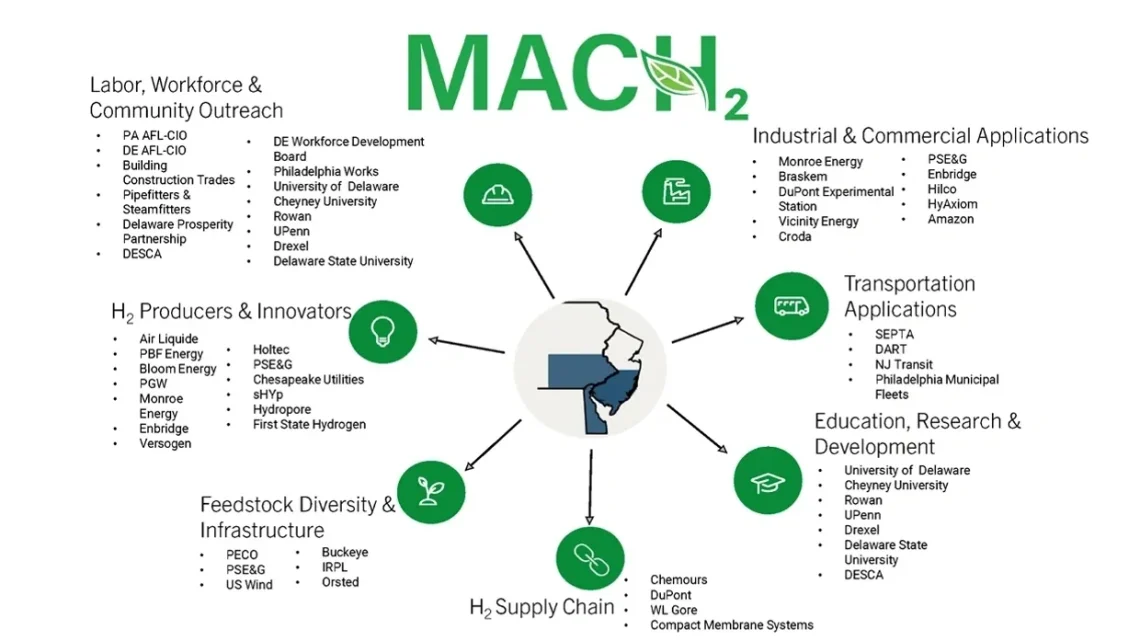
The MACH2 Hub is a one-of-a-kind consortium made up of 19 partners—utilities, energy companies, universities, and agencies—brought together under the Bipartisan Infrastructure Law. The idea: pair on-site hydrogen production with underused pipelines and a workforce-heavy approach. Once fully up and running, this hub will feed hydrogen through pipelines for industrial heat, power generation, and heavy-duty transport, all at a price that draws long-term buyers.
Historical context: Powering up under the Bipartisan Infrastructure Law
Back in 2021, the Bipartisan Infrastructure Law set aside $7 billion for Regional Clean Hydrogen Hubs—America’s first big federal commitment to scaling up Clean Hydrogen Production. While earlier administrations dabbled in hydrogen fuel cells, this marks a serious push. MACH2 locked in its DOE funding just before the political winds shifted in Washington, cementing Phase 1 support for planning, community benefits, and early design work.
Secret sauce: Green, Pink & Blue Hydrogen
Roughly 97% of the hub’s hydrogen will spring from Green Hydrogen (wind- and solar-powered electrolysis) and Pink Hydrogen (nuclear-driven electrolysis). In the early days, a dash of Blue Hydrogen—steam methane reforming with carbon capture—fills the gap until renewable capacity hits full stride. This blend keeps emissions near zero, supplying an industrial-ready fuel that checks the carbon-box.
Leveraging legacy pipelines: Built for the future
One of MACH2’s smartest moves? Reusing vintage pipeline corridors along the Delaware River industrial zone. Instead of laying thousands of feet of new pipe, the hub is breathing new life into old lines once used for fossil fuels. That reality-check slashes capital outlays, speeds up deployment, and reduces land disturbances—proof that practical Hydrogen Infrastructure can grow fast, without reinventing the wheel.
Jobs & regional revival: Kicking that challenge to the curb
By coupling federal funds with partner investments, MACH2 is set to generate around 20,000 jobs in the tri-state area, including 6,000 permanent positions. Senator Tom Carper praises the way the hub taps local union training programs and an existing manufacturing workforce ready to pivot to Hydrogen Production. The outcome? Communities shifting from old-school heavy industry to a resilient, clean energy economy.
Political headwinds & funding risk
In a savvy move, the MACH2 team finalized their DOE deal right before a new administration took office, locking in Phase 1 dollars. But looming budget cuts explored by the Trump administration could claw back up to $1.7 billion across MACH2 and its sister hub, ARCH2, putting future phases and job targets in jeopardy. Now, leaders are hustling to safeguard funding and keep the momentum rolling.
Collaterals & community engagement
Beyond cutting carbon, the hub’s Community Benefits Plan zeroes in on environmental justice under the Justice40 initiative, targeting economically stressed neighborhoods. Still, watchdogs like the Delaware Riverkeeper Network worry that site specifics aren’t clear enough—calling for more transparency. MACH2 counters with promises of union-led engagement and equity programs, making sure local voices guide each step.
Looking ahead: Serious about leading the energy transition
Phase 1 planning is slated to run about 15 months—covering design, permitting, and stakeholder sit-downs. Construction should kick off soon after, with operations aiming to start by the decade’s end. If everything clicks, the Mid-Atlantic Clean Hydrogen Hub will show that large-scale clean hydrogen can stand toe-to-toe with conventional fuels, opening a new chapter in industrial decarbonization.
Bottom line… The Mid-Atlantic Clean Hydrogen Hub isn’t just another energy project—it’s a blueprint for integrating Clean Hydrogen into legacy systems, building skilled jobs, and forging a low-carbon future, even when the political seas get choppy.

 With over 15 years of reporting hydrogen news, we are your premier source for the latest updates and insights in hydrogen and renewable energy.