
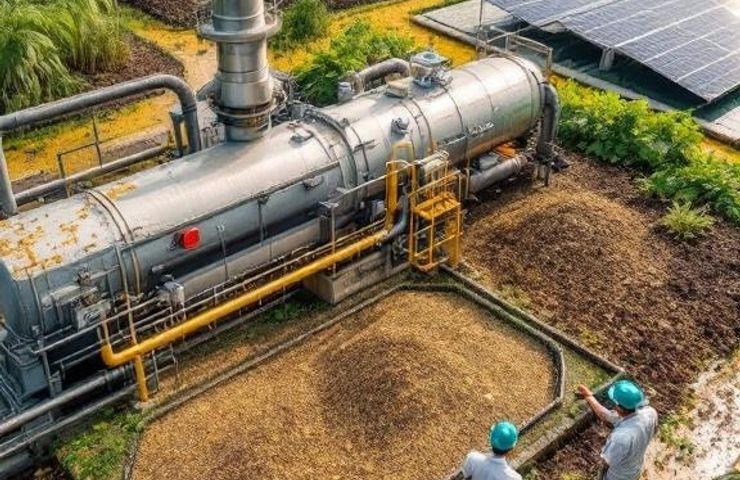
MNRE & BIRAC Unveil INR 100 Crore CfP for Biomass-Based Green Hydrogen Pilots
January 14, 2026The Ministry of New and Renewable Energy (MNRE) and the Biotechnology Industry Research Assistance Council (BIRAC) have rolled out a Call for Proposals to breathe life into pilot-scale green hydrogen production in India. They’ve earmarked INR 100 crore in total funding—up to INR 25 crore per project—to back clever hydrogen production pathways, from biomass-based and wastewater-based processes to floating solar-powered electrolysis. If you’ve got a groundbreaking idea, you’ve got until January 27, 2026, to toss your hat in the ring via BIRAC’s online portal.
Market Impact
This initiative is a game-changer on several fronts. First off, it taps into India’s massive biomass reserves—over 500 million tonnes of agricultural and forestry residues a year—turning yesterday’s waste into feedstock. It also bridges that tricky gap between lab experiments and real-world deployment by targeting Technology Readiness Levels 5–6. Plus, with the private sector on the hook for just 20% of equipment costs, there’s far less upfront risk, so you can expect fresh public-private partnerships, local biomass-collection networks, and off-take deals in areas like cooking, heating, off-road mobility, and decentralized power.
Technical Snapshot
We’re talking about technologies already proven at bench scale—think biomass gasification, pyrolysis, biological fermentation, advanced wastewater conversion, or solar-integrated electrolysis. Each project must get its pilot plant up and running within 12 months and then prove the concept over a six-month demo. The funding covers capital equipment—reactors, electrolyzers, catalysts, and retrofits—while land, civil works, manpower, water, consumables, and power stay on the executing agency’s tab.
Key Takeaways
- Total kitty: INR 100 crore, with a max of INR 25 crore per project.
- Equipment cost support: 80% for private players; 100% for government bodies.
- Eligibility: technologies at TRL 5–6.
- Timeline: 12 months to commission, plus 6 months of demo.
- Priority goes to projects with lined-up hydrogen offtakers and clear utilization plans.
- Submit your application via BIRAC’s portal by January 27, 2026.
Stakeholder Roles
BIRAC will handle the application intake, administrative screening, and technical evaluations. A Project Appraisal Committee (PAC), led by the NGHM Mission Director, will rate proposals on innovation, scalability, output capacity, cost-effectiveness, and offtaker readiness. Final sign-off sits with the National Green Hydrogen Mission’s Advisory Group, so don’t be surprised if you see site visits or remote audits as part of the due diligence.
Implementation Timeline & Process
Once you’re in, there’s an 18-month sprint: a 12-month commissioning window followed by six months of live operation. That means teams have to lock down supply chains, set up biomass-collection networks, secure utility hookups, and nail down off-take agreements right out of the gate. Oh, and you get to keep any revenue from hydrogen sales during the demo phase—turns operational success into real cash flow.
Broader Energy Transition
This CfP is the next chapter of the National Green Hydrogen Mission, which kicked off in January 2023 with an overall outlay of INR 19,744 crore. Earlier phases zeroed in on electrolyzer manufacturing and grid-tied electrolysis. Now, the spotlight shifts to alternative pathways that match India’s unique resource mix. By turning biomass residues and wastewater into clean fuel, we’ll slash open-burning pollution—especially across Punjab and Haryana—and spark rural employment in collection, preprocessing, and logistics.
Policy Synergies
The program dovetails neatly with MNRE’s National Bioenergy Programme and state-level biomass-power policies, opening up fresh markets for agro-residues. It also aligns with the Department of Biotechnology’s goal of taking lab breakthroughs to market via BIRAC‐backed schemes. By synchronizing efforts across ministries, the government hopes to fast-track approvals, cut red tape, and speed up hydrogen infrastructure roll-outs like gasifiers and storage facilities.
Potential Ripple Effects
Get ready for a ripple effect. Successful pilots could spawn rural clusters devoted to biomass collection, pelletizing, and logistics. Local manufacturers might ramp up production of compact gasifiers, electrolyzers, and modular reactors. Plus, universities and startups will use demo data to fine-tune catalysts, microbial strains, or membrane materials—putting India on the map for bench-to-market green hydrogen innovation. Of course, gaps like limited hydrogen refueling stations will still need attention if we’re serious about scaling.
Future Outlook
By mid-2026, we should see hard data on efficiencies, throughput, uptime, cost per kilogram of hydrogen, and environmental impact. If pilots hit their marks, expect a follow-up CfP aimed at TRL 7–8 and maybe even concessional loans or equity funds to back full-scale rollouts. For investors eyeing the hydrogen value chain, now’s the time to scout standout technologies and gear up for the next funding wave.
Sure, there are hurdles—off-taker deals can wobble if users aren’t ready to pay up, and hauling biomass across fragmented agricultural regions is no cakewalk. On top of that, regulatory frameworks for hydrogen transport and storage are still catching up. But pull this off, and you’ll significantly de-risk bigger commercial deployments, lure in private capital, and supercharge sustainable energy efforts and industrial decarbonization across India. Keep your eyes peeled—this CfP could be the tipping point for hydrogen production and the future of clean energy in the country.
 With over 15 years of reporting hydrogen news, we are your premier source for the latest updates and insights in hydrogen and renewable energy.