
Natural Hydrogen Production from Serpentinization Confirmed in Qinghai-Xizang Plateau Ophiolites
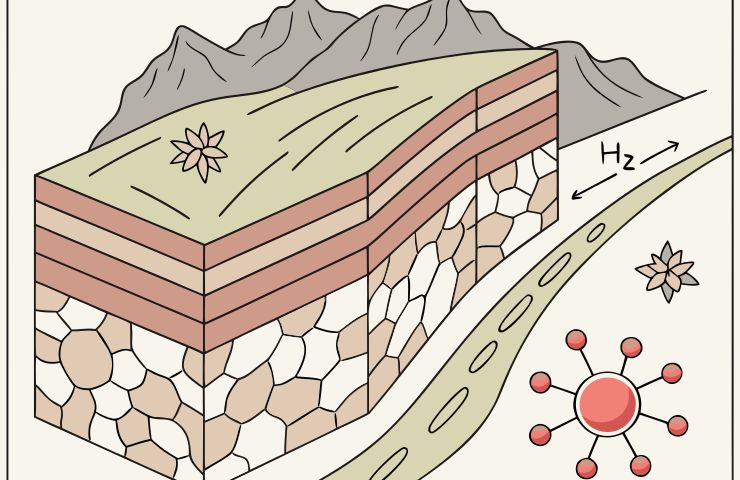
February 10, 2026You don’t stumble across a fresh deposit of natural hydrogen buried beneath a lofty plateau every day, do you? Well, that’s exactly what the team at the Institute of Geology and Geophysics, Chinese Academy of Sciences revealed on February 6, 2026. They took mantle olivine minerals from ophiolite complexes on the Qinghai-Xizang Plateau and ran them through micron-scale fluid inclusion analysis. The result? The first concrete proof that the geological dance called serpentinization churns out hydrogen—and that this H₂ can hitch a ride from deep rock layers all the way to the surface.
Serpentinization: Earth’s Natural Hydrogen Factory
So, what’s serpentinization if you haven’t heard of it? Picture water seeping into iron-rich olivine in the Earth’s mantle, triggering a reaction that releases hydrogen gas (H₂) and a pinch of methane (CH₄). Scientists have long suspected this was the planet’s underground hydrogen production line, but nobody had snagged the gas in the act. Using high-resolution spectroscopy and nano-imaging, the researchers spotted tiny pockets of near-pure H₂ tucked inside the olivine crystals—no lab tricks, no smoke and mirrors, just rock-solid evidence of a natural hydrogen reactor.
Linking Mantle Sources to Surface Emissions
Finding the gas is one thing, but proving it actually feeds into surface springs and seeps is the real kicker. The team crunched the numbers, matching hydrogen concentrations trapped hundreds of meters down with flux measurements taken at vents above the ophiolite belt. In other words, they mapped a full “source-to-sink” route: H₂ born deep underground navigates fracture networks and porous rocks before bubbling up at the surface. This blueprint is a game-changer—it means explorers won’t have to drill dozens of dry holes to pinpoint where natural hydrogen might be hiding.
Strategic Implications for Clean Energy
Why should we care? Well, green hydrogen from geothermal sources could flip the script on our pursuit of sustainable energy. Today, most H₂ comes from steam-methane reforming (hello, CO₂ emissions) or electrolysis (hello, sky-high electricity bills). By contrast, natural hydrogen pops up with almost zero footprint and potentially lower costs. Tapping into these ophiolite belts could bolster China’s push for zero-emission technology and supercharge its hydrogen infrastructure, all while trimming the need for big electrolyzers or imported H₂.
China’s Strategic Edge in Natural Hydrogen
The Institute of Geology and Geophysics, CAS isn’t new to high-stakes geoscience. As part of the broader Chinese Academy of Sciences, it’s been at the forefront of plateau tectonics and the hunt for unconventional energy since 1949. The Qinghai-Xizang Plateau, born from the India-Asia collision over 50 million years ago, lays bare swaths of ancient oceanic mantle—prime real estate for serpentinization. By homing in on hotspots where hydrogen is actively cooked up and released, researchers can steer exploration straight toward the richest veins, shoring up sustainable energy security at home.
Broader Impact and Next Steps
Globally, the race for green hydrogen is heating up, and while other countries have spotted surface emissions, China’s new rock-inclusion proof runs deeper—literally. Published in Science Bulletin, these findings raise the bar on how we scout for natural hydrogen. Next up: engineering extraction methods that safely and cost-effectively harvest subsurface H₂ at scale, plus rigorous environmental assessments to keep ecosystems intact. With a clear model bridging mantle reactions to surface vents, each step can be fine-tuned for targeted drilling and smarter hydrogen infrastructure development.
As the world sprints toward zero-emission technology and greener fuels, this discovery is a bright reminder that the Earth itself may hold untapped routes to clean energy. It’s geology, geochemistry, and energy policy all rolled into one fascinating story—and it might just reshape how we think about hydrogen for decades to come.

 With over 15 years of reporting hydrogen news, we are your premier source for the latest updates and insights in hydrogen and renewable energy.