Schaeffler Advances Hydrogen Production with New PEM Electrolyzer and Bipolar Plate Contracts
January 22, 2026Securing Supply Contracts
Ever wonder how hydrogen production can go from zero to sixty? Well, this month, Schaeffler Hydrogen Technology (Shanghai) Co., Ltd., the China-based arm of Germany’s Schaeffler Group, announced it’s landed fresh supply contracts for PEM electrolyzers and fuel cell bipolar plate coatings. These orders aren’t just another line item on a balance sheet—they’re a major leap toward large-scale commercialization of cutting-edge electrolysis, fuel cell technology, and precision metal-plate solutions. And check this out: it all ties straight into China’s push for a carbon peak by 2030 and carbon neutrality by 2060. In short, hydrogen infrastructure is moving from the drawing board into the real world.
Building on a Year of Local Growth
Just over a year ago, the Shanghai team cut the ribbon on its new digs at the Jiading Hydrogen Energy Port. This move was all part of Schaeffler Group’s big-picture play to cover the whole hydrogen production chain—from making the molecules to putting them to work. In Shanghai, they’re zeroed in on R&D and pumping out PEM electrolyzer stacks and precision-crafted bipolar plates coated to last. Word is they’re keeping the price tags and customer names in the vault, but make no mistake: these contracts kick off full-scale deliveries and lay the groundwork for beefed-up local manufacturing and service networks across key provinces.
From Bearings to Electrolyzers
It might surprise you to learn that when Schaeffler Group first rolled into China in 1995, it was all about bearings and auto parts. But fast-forward to the early 2020s: as renewable energy sources started playing hard to get, Schaeffler’s engineers had an aha moment—could their metal-forming and surface-treatment expertise turbocharge hydrogen production? That spark led them into global hydrogen alliances, and by early 2025, they officially launched Schaeffler Hydrogen Technology (Shanghai) Co., Ltd.. Today, the Shanghai squad taps decades of the parent company’s material science and precision-engineering DNA, meshing worldwide experience with local hustle.
Inside the PEM Electrolyzer Stack
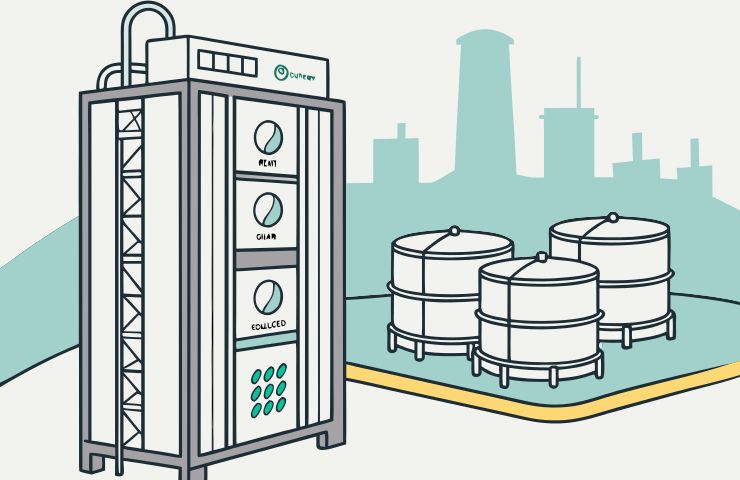
Let’s lift the lid on those Proton Exchange Membrane (PEM) electrolyzers. At their core, they’re high-tech water splitters, using renewable juice to crack H2O into oxygen and green hydrogen. Schaeffler’s patchwork? They deliver the must-have stack components—metallic bipolar plates, membrane-electrode assemblies, pure water supply units, power electronics, gas separation modules, you name it. And here’s the kicker: they’ve teamed up with wind and solar outfits to ensure the electricity fueling those stacks is genuinely green. Picture the stack as a performance engine for fuel cell technology, where protons, catalysts and heat management waltz together in perfect harmony.
Bipolar Plate Coatings: The Unsung Heroes
Now, don’t underestimate those bipolar plates—they’re the unsung heroes cradling the membrane, channeling electrons and corralling gases. Schaeffler’s edge? Top-notch precision stamping paired with anti-corrosion coatings that help these plates soldier on for thousands of hours in harsh electrochemical conditions. A stout coating means a longer lifespan and way fewer maintenance headaches for industrial users. Simply put, these plates are the backbone of both electrolyzers and fuel cells, shuttling electrons and protons with mechanical precision.
Tapping into Jiading’s Hydrogen Hub
These fresh deals didn’t just pop up out of thin air—they’re part of deeper collaborations with local governments and utilities. The Jiading Hydrogen Energy Port is quickly morphing into a full-fledged hub for production, storage and distribution, complete with pilot projects tying renewable power to hydrogen refueling stations. Schaeffler’s move here builds on a framework cooperation agreement with Shanghai authorities and rides the wave of regional infrastructure investments. By locking down these contracts now, the Shanghai arm is getting a head start on other global players scrambling for Chinese orders.
Aligning with China’s Dual Carbon Goals
China’s “dual carbon” blueprint—hitting a carbon peak by 2030 and neutrality by 2060—has become the north star for energy players. Right at the center of that strategy? Green hydrogen whipped up by electrolysis. The National Energy Administration isn’t shy about it, offering subsidies for high-pressure electrolyzers and greenlighting demo zones left, right and center. By deploying those PEM systems in Shanghai and beyond, Schaeffler is riding high on policy tailwinds, proving that eco-friendly fuel cell technology can also make solid economic sense.
A Ripple Effect Across Sectors
Picture this: you flip the switch, and steel mills or chemical plants start running on green hydrogen. That’s huge for industries like steelmaking and chemicals—traditionally tough nuts to crack when it comes to decarbonization. These supply contracts could kick off pilot projects, swapping coal for hydrogen in furnaces. And it doesn’t stop there: you’ll see spillover effects like fresh jobs in manufacturing, tech services and infrastructure maintenance. Even better? Local firms get to level up on advanced coating and membrane-handling know-how, supercharging China’s own tech ecosystem instead of leaning on imports.
Scaling Production and Driving Down Costs
Scaling isn’t just about laying bricks for bigger factories; it’s about fine-tuning every step in the process. Thanks to Schaeffler’s pedigree in automotive mass production, they’ve got cost-cutting through repeatability down to an art. Now they’re applying that same playbook to bipolar plate stamping and coating, aiming to drive the price of electrolyzer stacks way down. And as volumes ramp up, everyone in the supply chain—from steel mills to polymer producers—will boost their output, chipping away at the bottom line for genuinely clean hydrogen.
Global Synergy and Knowledge Sharing
The Shanghai team isn’t flying solo. On the global stage, Schaeffler Group holds seats on the China Hydrogen Alliance and Europe’s Clean Hydrogen Alliance, trading best practices and R&D insights. Engineers in Germany feed fresh design tweaks into the Chinese production line, while breakthroughs from Jiading get rolled into pilot plants back in Europe. It’s a two-way street of innovation, and these new contracts are proof that cross-border collaboration is the fuel that speeds up the journey to zero-emission tech.
Looking Ahead
So, what’s next on the horizon? More orders, for sure, as demand for electrolyzers takes off in China and far beyond. Schaeffler’s play could nudge competitors to sharpen their offerings, igniting a wider market for affordable stacks and fuel cells. And once green hydrogen really hits its stride, expect a shift from niche pilots to everyday reality—from station power backups to large-scale industrial feedstock. When you zoom out, these commercial wins are just a few puzzle pieces in a grand mosaic: a future where hydrogen lights up factories, fuels fleets and keeps our grids humming.
Look, hydrogen production can feel like a jigsaw puzzle with a dozen pieces missing, but when seasoned players like Schaeffler drive meaningful contracts and ramp up capabilities, the picture starts to snap into focus. Keep your eyes on Shanghai’s hydrogen port—it’s one of those hotspots where tomorrow’s hydrogen infrastructure is already taking shape.
 With over 15 years of reporting hydrogen news, we are your premier source for the latest updates and insights in hydrogen and renewable energy.