Sinopec Capital Invests in FORVIA to Boost Hydrogen Production and Storage in China
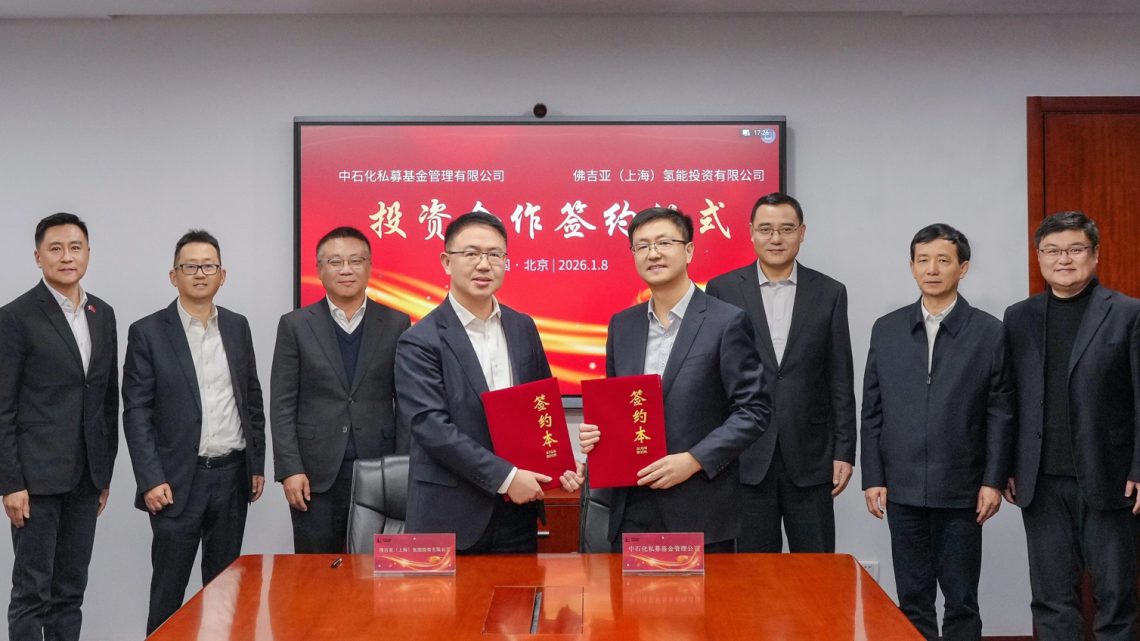
January 11, 2026Sinopec Capital—the investment arm of China Petrochemical Corporation (Sinopec)—has poured CNY 300 million (about €40 million) into FORVIA’s hydrogen unit in China. Officially known as Faurecia Hydrogen Investment (Shanghai) Co. or FORVIA Hydrogen Solutions China, this fresh capital boost not only strengthens FORVIA’s local balance sheet but also brings a heavyweight industrial partner into one of the world’s fastest-growing hydrogen production markets.
Key Takeaways
- Sinopec Capital’s CNY 300 million top-up secures them a strategic minority stake in FORVIA Hydrogen Solutions China.
- The money flowed through the Chaoyang Hydrogen New Energy Venture Capital Fund, Sinopec’s dedicated vehicle for the hydrogen sector.
- China hit 36.5 million tons of hydrogen production in 2024 (up 3.5% year-on-year), backed by over 559 refuelling stations and more than 30,000 fuel-cell vehicles.
- FORVIA’s footprint now includes R&D centers in Shanghai and Shenyang plus multiple composite-tank manufacturing sites after its 2021 acquisition of Shenyang Slinda Safety Technology.
- This partnership marries FORVIA’s expertise in hydrogen storage with Sinopec’s massive production and distribution network.
- China’s policy roadmaps target 500,000 fuel-cell vehicles by 2030 and over 1 million by 2035, driving industrial decarbonization across heavy-duty transport.
Tech and Footprint
FORVIA—born in 2022 from the merger of Faurecia and Hella—is a global automotive supplier pulling in over €28 billion in revenue. In China alone, its 2024 sales reached €5.9 billion (about 21% of its global top line). With 67 plants, 27 R&D centers in 30+ cities and a workforce of 30,700, they’ve built serious scale.
Under its Clean Mobility and FORVIA Hydrogen Solutions banners, the group zeroes in on hydrogen storage systems—especially Type III/IV high-pressure composite cylinders rated to 700 bar. Made from carbon-fibre-reinforced resins, these tanks clear rigorous safety and durability tests. The 2021 buy-out of Shenyang Slinda Safety Technology Co. supercharged local production lines and accelerated R&D in Shanghai and Shenyang.
On the national stage, China produced 36.5 million tons of hydrogen in 2024 (a 3.5% uptick over 2023). While chemicals soak up most of it, transport and steelmaking are ramping up volumes via fuel cell technology. By year-end, the country boasted 559 hydrogen refuelling stations and over 30,000 fuel-cell vehicles—cementing its lead as the world’s largest market.
Business Implications
Inviting Sinopec Capital on board at FORVIA Hydrogen Solutions China isn’t just about the money—it’s a strategic handshake with one of China’s energy giants. Here’s how it plays out:
- It unlocks government-backed hydrogen and mobility projects where Sinopec often takes pole position.
- Local supply chains for carbon fibre and high-performance resins get bolstered, driving down hydrogen storage system costs.
- They’ll jointly tap into Sinopec’s refuelling infrastructure and distribution channels, smoothing the path for wider fuel-cell vehicle adoption.
For Sinopec, this move deepens its “No. 1 hydrogen company” ambitions by pairing upstream clout with FORVIA’s advanced storage know-how. As chairman Ma Ming puts it, they’re shooting for “win–win outcomes” across the entire hydrogen value chain.
Looking Ahead
China’s policy playbook—highlighted by the 2025 Energy-saving and New-Energy Vehicle Technology Roadmap—sets bold targets: 500,000 fuel-cell vehicles by 2030 and over 1 million by 2035. In that context, tie-ups like FORVIA–Sinopec are essential for:
- Driving down system costs through economies of scale in storage and hydrogen infrastructure.
- Fast-tracking hydrogen infrastructure rollouts in hotspots like Shanghai and Shenyang.
- Ensuring growth in hydrogen use aligns with low-carbon production, avoiding any fossil-based lock-in.
It’s early days, but this strategic capital injection could speed up the commercial rollout of hydrogen mobility and industrial applications in the world’s most dynamic hydrogen market. If they nail execution, expect a surge in fuel-cell vehicle deployments and a beefed-up domestic supply chain—milestones that could echo across global clean-energy ambitions.
 With over 15 years of reporting hydrogen news, we are your premier source for the latest updates and insights in hydrogen and renewable energy.