
Solar-Powered Biomass Co-Electrolysis Delivers Low-Cost H₂
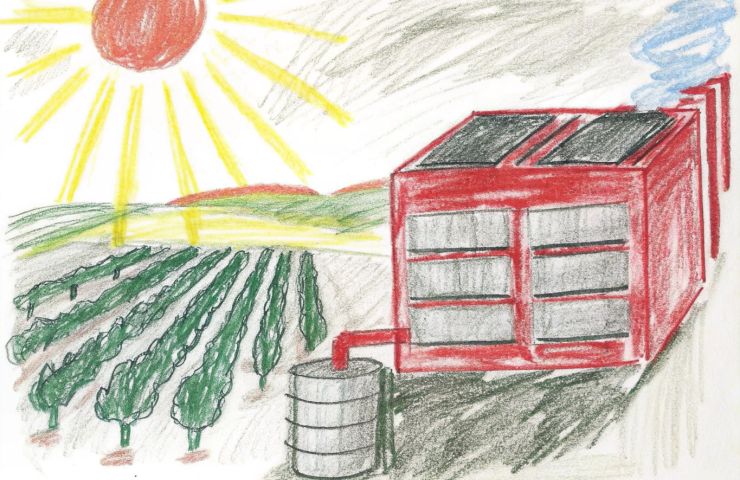
January 11, 2026Imagine harnessing farm waste and sunlight to brew not just green hydrogen but also a high-value chemical. That’s the punchline from researchers at China Agricultural University and Nanyang Technological University, who have built a proof-of-concept, solar-powered, membrane-free co-electrolysis device that does exactly that. By focusing concentrated sunlight on biomass-derived glucose, they trigger a selective oxidation that simultaneously churns out hydrogen and formate at rates and costs competitive enough to challenge traditional fossil-fuel methods. It’s a neat trick that intertwines sustainable energy, circular bioeconomy and hydrogen production into one streamlined system.
Reimagining the Anode Reaction
Standard electrolysis methods lean heavily on the oxygen evolution reaction (OER), which demands high voltages and often luxury-price catalysts like iridium or ruthenium. This new setup flips the script. Instead of OER, it employs a copper-doped cobalt oxyhydroxide anode (Cu–CoOOH) to guide glucose—sourced from non-food agricultural residues—through a cascade oxidation into formate. Tuning the composition with just ~5 mol% copper lifts the glucose-to-formate efficiency from roughly 50% to 80%, while dropping the onset potential by about 400 mV in alkaline conditions. That voltage reduction equates directly into lower energy input, redefining what’s possible in renewable electrolysis.
Membrane-Free Meets Earth-Abundant
Flipping to the cathode, an earth-friendly Ni₄Mo alloy takes charge, pumping out hydrogen at nearly 100% Faradaic efficiency. And here’s the kicker: the system does away with the usual proton-exchange membrane. By letting anode and cathode share a single undivided cell, you sidestep the headaches of membrane costs, minimize cross-contamination risks, and trim both capital and operational outlays—all without sacrificing the high-purity H₂ output that industries crave.
Powered by Triple-Junction PV
Powering this neat electrochemical dance is an InGaP/GaAs/Ge triple-junction photovoltaic stack under concentrated sunlight. In endurance tests, the integrated setup maintained a hydrogen production rate of 519.5 ± 0.4 μmol h⁻¹ cm⁻² over a full day. Even under standard one-sun illumination, the solar-driven co-electrolysis outperforms typical solar water splitting by some 21.5%, showcasing the tangible efficiency gains unlocked by ditching OER in favor of selective sugar oxidation.
Money Matters: H₂ at $1.54/kg?
All that geeky performance data sets the stage, but the financial numbers steal the show. Through a techno-economic analysis, the team estimates that selling formate alongside green hydrogen could lower the levelized cost of hydrogen production to about $1.54/kg—undercutting grey hydrogen from steam methane reforming, which hovers around $2/kg. Coupling this co-product revenue with simple, membrane-free hardware could finally tip the economics toward large-scale clean hydrogen adoption.
Beyond raw costs, tapping into agricultural hydrolysates closes the loop in a circular bioeconomy: materials once destined for burning or landfill become the very feedstock for zero-emission technology and valuable chemical production. Picture a rice mill or corn stover depot not only powering its own operations with on-site H₂ but also getting paid for upgrading leftovers into something profitable.
Of course, this is still a lab-scale demo. Key hurdles remain: proving the long-term robustness of Cu–CoOOH under real-world sunlight fluctuations, scaling electrode areas by orders of magnitude, and handling messy, mixed biomass slurries rather than pure glucose solutions. Tackling these challenges will require smart engineering, bigger pilot reactors, and refinement of upstream biomass processing—but none of it is insurmountable. The field has tackled renewable electrolysis before, and this design carves out a promising path forward.
Why It Matters
As industries scramble to decarbonize, green hydrogen holds a special place for sectors that resist direct electrification—think steelmaking, ammonia synthesis, and heavy-duty transport. Cutting down energy demands and capital costs for electrolysis is mission-critical, and co-electrolysis hits both targets. By weaving together solar power, biomass valorization, and membrane-free simplicity, this approach could spark distributed H₂ hubs in rural farming zones, drive down lifecycle emissions, and spur innovative agri-tech business models. It’s a concrete step toward truly sustainable energy systems and resilient, low-carbon supply chains.
We’re still a way off from commercial rollout, but this study—freshly published in eScience—marks a solid milestone on the road to making green hydrogen not just an eco-friendly promise but a commercially viable reality. With continued refinement, scale-up, and cross-sector collaboration, solar-powered biomass co-electrolysis could well become the game-changer that makes global zero-emission technology affordable and accessible.


 With over 15 years of reporting hydrogen news, we are your premier source for the latest updates and insights in hydrogen and renewable energy.