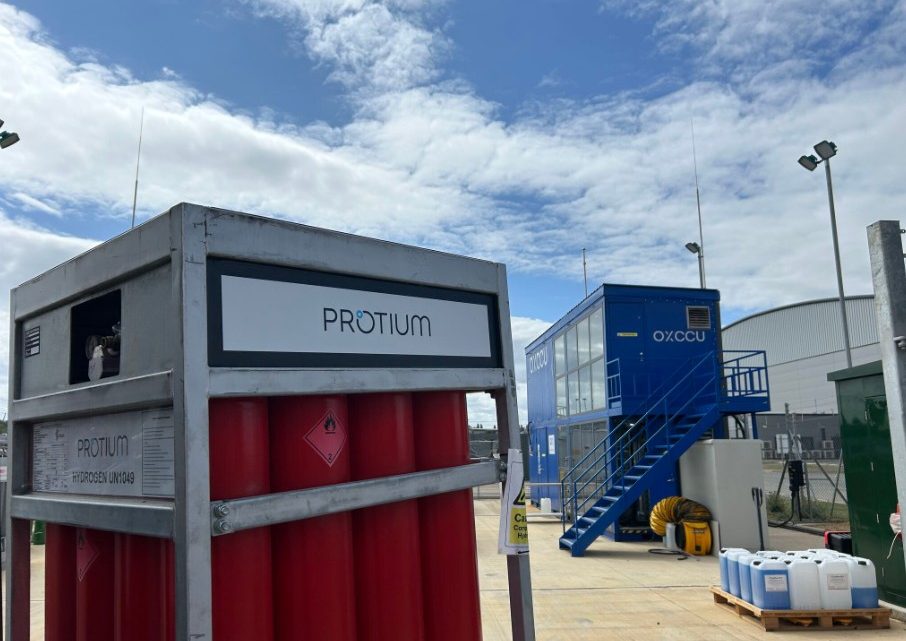
Sustainable Aviation Fuel Production: Protium delivers its first green hydrogen consignment at London Oxford Airport
February 11, 2026Big Splash in Aviation Decarbonization
I’ve gotta say, it’s a real game-changer: Protium, the UK’s trailblazer in green hydrogen, just handed over its inaugural batch of zero-carbon hydrogen to OXCCU’s OX1 pilot plant at London Oxford Airport. But this isn’t your standard fuel delivery—it’s the critical piece in a chain that transforms waste CO₂ and hydrogen into sustainable aviation fuel in a single leap. Yes, you heard that right. OX1 is the first-ever demonstration of a single-step catalysis process, and now it’s fully stocked with green hydrogen for its next testing phase. Considering aviation bags roughly 2–3% of global CO₂ emissions, this partnership could really slash lifecycle carbon intensity and push us closer to those 2050 net-zero targets. Talk about making some serious waves!
Staging the Scene: Aviation’s Carbon Challenge
The aviation industry’s thirst for energy has long been quenched by fossil jet fuels, and with regulations like the EU’s RED III mandating 6% sustainable aviation fuel by 2030, airlines and fuel producers are in a full-on scramble. From short-haul charters to intercontinental flights, the carbon footprint is massive. Most “drop-in” SAF options involve multi-step conversions, expensive feedstocks, or competing with food crops—hardly the simple, scalable solution the sector needs. What they’ve been craving is a leaner, cleaner process, and that’s exactly where OXCCU’s one-and-done approach, fueled by green hydrogen, steps into the spotlight. It’s a make-or-break moment for genuine aviation decarbonization.
Proud Heritage Behind the Pilot
OXCCU got its start in 2021 when Andrew Symes, Dr. Jane Jin, Dr. Tiancun Xiao, Dr. Benzhen Yao, and Professor Peter Edwards—experts in catalysis, process engineering, and sustainability—joined forces after spinning out of Oxford University. Armed with a patented iron-based catalyst, they set out to simplify jet-fuel synthesis. After closing a £20.75 million Series B round in autumn 2023, they moved full steam ahead to bring the OX1 pilot online in 2024. The result? The world’s first facility to churn CO₂ and H₂ into jet-range hydrocarbons—all in one reactor, in one step.
Secret Sauce: Single-Step Catalysis
At the heart of OXCCU’s setup is that iron-based catalyst everyone’s talking about. Unlike traditional Fischer-Tropsch pathways—which juggle multiple reactors, intermediate steps, and energy-draining hydrogenation loops—this baby converts CO₂ and H₂ directly into C₈–C₁₆ hydrocarbons tailor-made for jet engines. The bonus? Far fewer energy losses, a smaller footprint, and a process you can practically fit in your back pocket. So far, OX1 has clocked over 1,000 operating hours, proving it can handle real-world fluctuations without skipping a beat. It’s lean, mean, and ready for the big leagues. By folding heat management and gas recycling into a single vessel, they’ve slashed both CapEx and OpEx, tossing out needless complexity.
Green Hydrogen’s Role
No one’s flying this journey without ample green hydrogen. Arguably the unsung hero of aviation decarbonization, it’s produced via electrolysis powered by wind and solar and serves as the zero-carbon backbone of OXCCU’s approach. Protium kicked things off with its Pioneer 1 plant in South Wales in early 2023, funneling clean hydrogen into industries from steelmaking to chemical manufacturing. Now, Pioneer 2 is gearing up to expand capacity 25 times over. It’s all part of Protium’s master plan to cement a reliable clean hydrogen supply network and supercharge decarbonization in sectors that’ve long been stuck in fossil fuel mode—no coal, no gas, just pure H₂ streaming from renewables.
Real-World Integration
When Protium’s tanker trundled into London Oxford Airport, it marked the first time green hydrogen directly fueled a single-step SAF demo. That milestone proves you can match supply and demand without building bespoke infrastructure at every twist and turn. Even better, it shows the whole system can click into place—validating the commercial logic of pairing a green H₂ champion with a catalytic pioneer. While OXCCU focuses on tuning catalyst performance and ramping up yields, Protium secures a high-value offtake for its hydrogen—each side playing to its strengths.
Regional Impact
Oxfordshire—home to about 700,000 people and London Oxford Airport—has become a hotbed for low-emission aviation research. Head west to South Wales, and you’ll find a region of 2.1 million residents in the midst of a renewables reboot from its coal-rich past, hosting Protium’s hydrogen plants. Together, these locales form a living lab and showcase the UK’s strategy: leverage local know-how, power up cutting-edge tech, and drive the clean energy transition from the ground up.
Why This Matters
At the end of the day, this collaboration slashes SAF lifecycle emissions compared to fossil jet fuel, marries clean hydrogen supply with next-gen catalysis, and aligns with EU and UK decarbonization targets under RED III. By paring down operational steps and boosting efficiency, it also drives production costs lower—making sustainable aviation fuel a more competitive choice. For regulators, investors, and airlines alike, that’s a win-win. With the global SAF market anticipated to hit a $100 billion-plus valuation by 2030, innovations like this could rewrite the rules of the game.
Collateral Benefits
Besides shaving carbon, these advances kick-start wider hydrogen infrastructure, create skilled jobs in the cleantech sector, and position the UK as an advanced fuels exporter. If all goes to plan, OXCCU aims to roll out OX2 by 2030 with up to 10,000 tonnes of annual SAF capacity, while Protium ramps hydrogen output to meet growing demand. This synergy boosts supply chain resilience and could even pave the way for export partnerships across Europe and beyond. And let’s not forget: that iron catalyst could branch out into green chemicals and plastics, unlocking new markets for CO₂ valorization and circular economy wins.
Challenges Ahead
No doubt there are hurdles on the horizon. Scaling green hydrogen to gigawatt levels demands grid upgrades, fresh renewable capacity, and robust water sourcing. Electrolyzer supply chains need beefing up, and costs must come down further. On the conversion side, any new SAF route must clear stringent certification before it carries paying passengers, while regulators will seek thorough lifecycle analyses. Public acceptance and clear policy signals will be crucial too. But with this pilot under its belt, the industry now has something tangible to build on—so stakeholders from government and finance to industry are already leaning in.
Trailblazers Driving Change
OXCCU CEO Andrew Symes often highlights how lining up each link in the value chain can turbocharge innovation, while Protium COO Jon Constable points out that this partnership bridges green hydrogen to some of the toughest-to-abate sectors. They’ve become real thought leaders, rallying support from investors and policy makers alike. These teams aren’t just talking the talk—they’re walking the walk, and their success is already sparking similar collaborations across Europe and beyond.
Looking Forward
So what’s next? With Pioneer 2 gearing up and OX2 on the drawing board, it’ll be fascinating to see how far this blueprint can stretch. If supportive policies stay in place, R&D keeps churning out breakthroughs, and investment momentum holds, these innovations could become the gold standard. We might even see this template leap into maritime shipping or heavy industry. For aviation—and other hard-to-abate sectors—that shift can’t come soon enough.
In a nutshell, the Protium–OXCCU alliance is charting a fresh course for aviation decarbonization. By meshing top-notch clean hydrogen supply with pioneering single-step catalysis, they’re crafting a cleaner, more resilient future for air travel—and potentially rewriting how we produce fuels and chemicals across the board. The sky’s the limit when hydrogen and catalysis team up.
 With over 15 years of reporting hydrogen news, we are your premier source for the latest updates and insights in hydrogen and renewable energy.