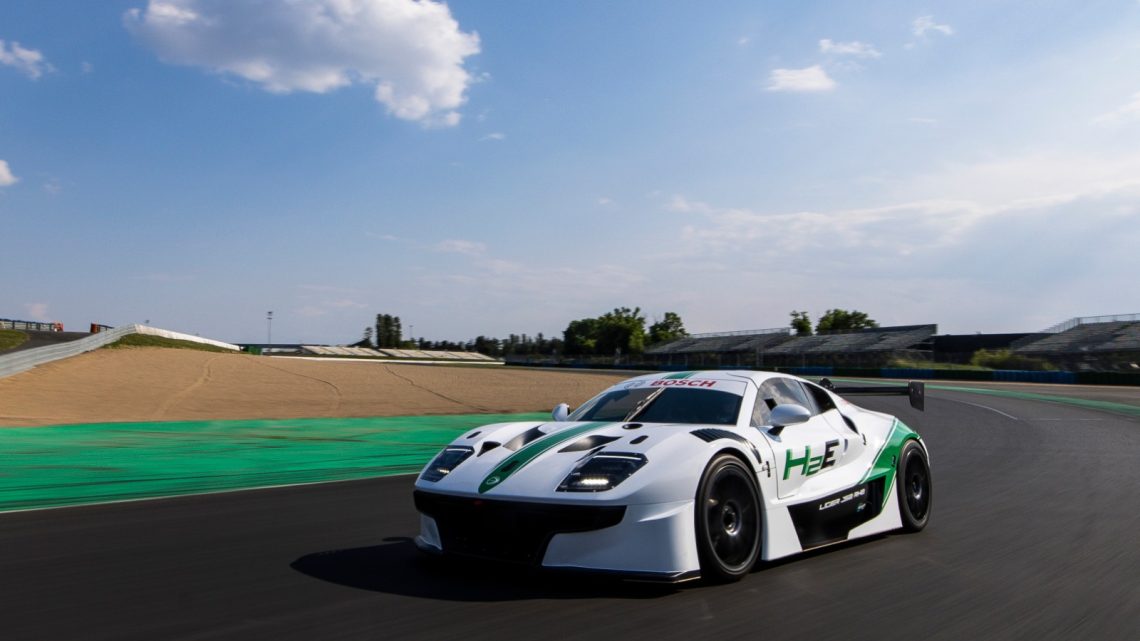
Zero-emission technology on track: Bosch and Ligier unveil hydrogen-combustion JS2 RH2
December 4, 2025Bosch Engineering has teamed up with Ligier Automotive to shake things up in zero-emission technology by rolling out the JS2 RH2. If you caught the buzz at Le Mans’s centenary in 2023, this hydrogen-combustion demo based on Ligier’s JS2 R already made a splash. Since then, it’s covered over 3,500 miles (about 5,600 km) of torture tests—blasting down Boxberg’s straights, carving through Magny-Cours’s tight bends and braving scorching and freezing temps at Le Mans—to prove it’s built to last and keep sustainable energy in pole position.
Key insights
- Performance leap: Gen1 cranks out 563 bhp and 502 lb-ft—up from 325 bhp on the petrol JS2 R, a neat +238 bhp gain; early Gen2 dyno runs have already nudged numbers to 641 bhp and 649 lb-ft.
- Minimal overhaul: Swap in hydrogen-specific injectors, ignition coils, spark plugs and a bespoke ECU—yet keep the engine block, pistons, oil and cooling systems exactly the same.
- Hydrogen storage: Three 700 bar Hexagon Purus tanks nestled in a carbon monocoque, good for 20–25 minute stints and lightning-fast pit-lane fill-ups.
- Over 3,500 miles on the clock, including demo laps at the Le Mans 24 Hours in 2023 and 2024, blistering runs at Boxberg and frosty tests in Sarthe.
- Future potential: Bosch reckons they can squeeze another 20% more power out of this setup with smarter ECU mapping and combustion tuning.
- Emissions profile: mostly water vapor with a whiff of NOₓ—and zero carbon if you’re running on renewable green hydrogen.
The drive behind this demo? Bosch kicked off its hydrogen-combustion program back in 2016, aiming to keep the heart of the internal combustion engine beating while slashing carbon. Under Jacques Nicolet’s watch, Ligier tweaked its JS2 R chassis to house the new powertrain—and even let journalists tag along for passenger laps at Boxberg to feel that instant throttle snap and rock-solid reliability.
Under the hood
Pop the hood, and it’s a 3.0-liter twin-turbo Ford Cyclone V6 doing the heavy lifting. Instead of petrol injectors, Bosch fitted custom-designed hydrogen injectors that meter H₂ straight into each cylinder. New ignition coils and spark plugs light up the lean hydrogen–air mix, while a tailor-made ECU juggles injection timing, spark advance and turbo boost on the fly—dodging pre-ignition and keeping the power curve silky smooth.
The fuel lives in three beefy Hexagon Purus tanks rated at 700 bar, all snug in Ligier’s carbon-fiber monocoque lifted from its LMP3 racer. A web of stainless-steel lines, safety valves and sensors keeps tabs on pressure and temp, instantly sealing off if anything goes sideways. Throw in a dedicated vent circuit and crash zones, and you’ve got a system built to modern motorsport’s strict safety playbook.
Before touching asphalt, Bosch’s engineers mashed the gas in the digital world—running exhaustive digital-twin sims to perfect the Direct Hydrogen Injection System and ECU logic. That virtual R&D slice shaved months off the on-track calibration, modeling combustion cycles, injection bursts and turbo response so the real-world tests hit the ground running.
Emission control is a breeze: hydrogen combustion spits out mostly water vapor, so the JS2 RH2 gets away with lean, lightweight catalytic converters low on precious metals—shedding weight and cost compared to a petrol engine.
Why it matters
Endurance racing is all about strategy, and the JS2 RH2’s lightning-fast refuel times give teams a real edge over battery-electric rivals still plugging in for ages. Plus, mechanics can stick to familiar routines—only the injectors and ECU change—shielding jobs and keeping supply chains humming.
The Automobile Club de l’Ouest (ACO), gatekeeper for the Le Mans 24 Hours, is eyeing a hydrogen entry by 2028—assuming the right pit-lane hydrogen infrastructure arrives. That deadline dovetails neatly with bigger pushes for industrial decarbonization and rolling out sustainable energy solutions in heavy transport and high-end sports cars.
Broader implications
- Environmental benefit: Near-zero tailpipe CO₂ with green hydrogen, making motorsport and logistics a whole lot cleaner.
- Infrastructure compatibility: You could retrofit existing fuel stations with hydrogen pumps, easing the rollout of refueling points.
- Workforce continuity: Tech mechanics already know how to tune ICEs; minimal retraining means fewer headaches.
- Commercial traction: Long-haul trucks and heavy gear get the range and rapid refueling batteries can’t match—ideal for keeping goods moving.
- Technology synergy: Breakthroughs in hydrogen storage and injection feed into both combustion engines and hydrogen fuel cell tech.
- Partnership leverage: When mobility pros and hydrogen experts pool their strengths, we turbocharge progress on industrial decarbonization.
- Hurdles: High-pressure storage, evolving regs and public trust all need a coordinated push to get over the line.
From track to road
Sure, the JS2 RH2 is a race car, but its low-impact conversion—leaving the block, pistons and lubes untouched—means your favorite service shops and parts bins stay in play. Talks are already underway with supercar makers and big commercial OEMs about dropping this tech into road cars, rigs and heavy equipment where quick fill-ups and big power are game changers.
Looking ahead
To really make hydrogen pop outside the paddock, we need more refueling stations and electrolyzer plants powered by renewables. We also need global harmony on safety rules for 700-bar systems and crystal-clear regs for hydrogen-combustion engines. But after logging 500+ hours of hot-and-cold testing, hydrogen’s done proving it’s no garage gizmo.
As laws catch up and green hydrogen scales, don’t be surprised if hydrogen-fired engines roll out of garages into supercar lineups before the decade’s up. Using an LMP3 carbon-fiber monocoque and Hexagon Purus tanks, this collaboration highlights how cross-industry teamwork is steering hydrogen into the fast lane.
About Bosch Engineering
Bosch Engineering, part of Robert Bosch GmbH since 1886, specializes in mobility across the board. Since kicking off its hydrogen-combustion push in 2016, it’s teamed up with Ligier Automotive to turn lab ideas into track-ready—and soon road-ready—solutions that drive a cleaner, more efficient future.

 With over 15 years of reporting hydrogen news, we are your premier source for the latest updates and insights in hydrogen and renewable energy.