EDF’s HYODE Project Pioneers Offshore Hydrogen Production off Dunkirk
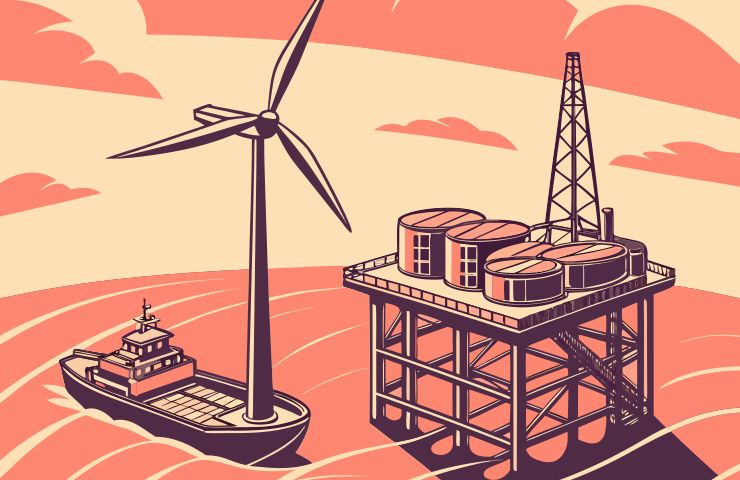
December 1, 2025While offshore wind has soared in Europe, coupling it directly with hydrogen production at sea is still a bold frontier. EDF Power Solutions has taken a decisive step, launching its tender for Environmental Impact Assessment (EIA) services and hazard studies for HYODE (HYdrogen Offshore DunkerquE). The plan: build a floating hydrogen factory off Dunkirk, weaving together wind turbines, electrolyzers, storage tanks, and transport vessels in France’s Exclusive Economic Zone (EEZ). This move could redefine hydrogen production beyond the coast.
With no operational offshore hydrogen facilities yet in France, HYODE is a first-of-its-kind effort that could steer future policy and investment choices for energy infrastructure at sea.
France’s Hydrogen Ambitions and HYODE’s Role
As part of its National Hydrogen Strategy, France is shooting for 6.5 GW of electrolysis capacity by 2030, with green hydrogen front and center to decarbonize industry and power vehicles. Across the EU, the Fit for 55 package and REPowerEU plan are all about ramping up clean hydrogen production, storage, and distribution. That’s where HYODE jumps in:
- Decarbonization: Delivering zero-carbon H₂ to steel mills, chemical plants, refineries, and transport networks;
- Innovation: Pioneering a fully offshore setup that sidesteps coastal grid bottlenecks;
- Economic Growth: Spurring investments in marine engineering, maritime services, and shipbuilding specialties.
By securing EU Innovation Fund support in October 2025, HYODE tapped into resources designed to cover early-stage risks for breakthrough clean-tech projects.
Historical Context
Europe’s offshore wind scene has exploded from just a handful of megawatts in the early 2000s to more than 20 GW by 2025. But when it comes to doing electrolysis out at sea, we’re still charting new waters. So far, most hydrogen pilots have stayed onshore or hooked up to coastal wind farms. Take the Netherlands’ PosHYdon project—slated to kick off in late 2024—which retrofits a North Sea gas platform for electrolysis. In the UK, they’re testing smaller turbine-mounted electrolyzers. HYODE cranks things up a notch with its all-in-one offshore design—France’s first real plunge into at-sea hydrogen production, potentially setting the standard for others.
Shifting electrolysis offshore could ease onshore grid pinch points and dodge the land-based permitting headaches that come with saturated coastal wind farms.
Why Dunkirk?
Dunkirk’s port brings a lot to the table:
- Deep-water berths that breeze through coal, steel, and bulk cargo;
- Seamless rail and road links to major European industrial corridors;
- A skilled workforce experienced in maritime, petrochemical, and energy services;
- Proximity to northern EU markets—Belgium, the Netherlands, and Germany.
Local authorities and the Port of Dunkirk operators are all in—seeing HYODE as a lifeline for post-industrial sites and a way to broaden the region’s economy beyond its classic steel-and-chemicals roots.
Technical Architecture
HYODE’s integrated platform isn’t just turbines parked next to electrolyzers. It’s a tightly tuned system where every piece works together to cut shore connections and get the most out of every breeze.
Offshore Wind Farms harness steady Channel winds with rotor blades and generators, sending renewable power straight to the electrolyzer platform.
Floating Electrolyzer Platform splits seawater into hydrogen and oxygen using proton exchange membrane or alkaline electrolysis modules—creating green hydrogen right where the wind blows.
Hydrogen Storage uses marine-grade tanks to buffer production, smoothing out the peaks and dips of wind-driven power.
Ship-Based Transport employs custom vessels with high-pressure or cryogenic containment to shuttle hydrogen to onshore terminals for further distribution.
By co-locating production and initial storage offshore, HYODE cuts down on long subsea cables and demonstrates a modular energy park concept for sustainable energy.
Tender Timeline and Environmental Safeguards
On 28 November 2025, EDF kicked off its tender for EIA and hazard studies. Bidders will need to dig into:
- Seabed habitats and benthic communities;
- Bird migration corridors and marine mammal pathways;
- Noise and electromagnetic emissions;
- Cumulative effects alongside fishing, shipping, and existing wind farms.
Key dates to pencil in:
- Proposal Deadline: 12 December 2025;
- Evaluation Period: 12 January–8 April 2026;
- Contract Kickoff: April 2026.
Getting the green light also means a unified EEZ authorization under French maritime law, full Natura 2000 compliance, and public consultations to shape the final design and schedule.
Strategic Significance
If HYODE takes off, it could anchor a new hydrogen corridor in Europe and deliver:
- Scale: A replicable offshore model for multi-megawatt hydrogen parks;
- Trade: Positioning France as a green hydrogen exporter;
- Market Development: Jump-starting hydrogen infrastructure—think pipelines, refueling stations, and conversion facilities;
- Job Creation: Boosting maritime services, environmental consultancy, and specialized manufacturing.
This project slots neatly into France’s broader hydrogen puzzle—from Lhyfe’s 10–210 MW land-based electrolysis plants to the Port-la-Nouvelle import-export hub and the Energy Observer 2 liquid hydrogen vessel—fueling a fully integrated French hydrogen economy.
Key Challenges Ahead
Despite its promise, HYODE faces some tough nuts to crack:
Regulatory Complexity: Locking down a single EEZ license means juggling environmental, navigational, and safety regulations—any slip-up could spike costs.
Economic Hurdles: Offshore hydrogen needs to hit competitive cost curves to rival onshore electrolysis and imported low-carbon H₂.
Technical Integration: Matching variable wind output with continuous electrolysis calls for advanced energy management systems and robust backups.
Manufacturing Lead Times: Shipyards and contractors will have to speed up delivery of platforms, storage units, and transport vessels.
Environmental Mitigation: Detailed plans for noise reduction, collision-risk management, and habitat restoration must align with strict EU conservation directives.
Outlook and Next Steps
In the first half of 2026, the big wins will be naming the EIA and hazard study contractors and rolling out baseline environmental surveys. Detailed engineering will follow—pinning down how many turbines, the scale of the electrolyzers, and storage volumes. Construction and commissioning hinge on gear delivery slots, vessel availability, and weather windows—the usual offshore juggling act. How quickly these pieces click into place will dictate whether HYODE transitions from blueprint to operating reality within the next decade.
About the Company: EDF Power Solutions is the renewable energy arm of Électricité de France, specializing in offshore wind, green hydrogen, and sustainable energy solutions across Europe. By weaving together wind power, electrolysis, and maritime logistics, HYODE aims to chart a new course in offshore sustainable energy—proving that large-scale hydrogen production can indeed happen on the high seas.


 With over 15 years of reporting hydrogen news, we are your premier source for the latest updates and insights in hydrogen and renewable energy.