
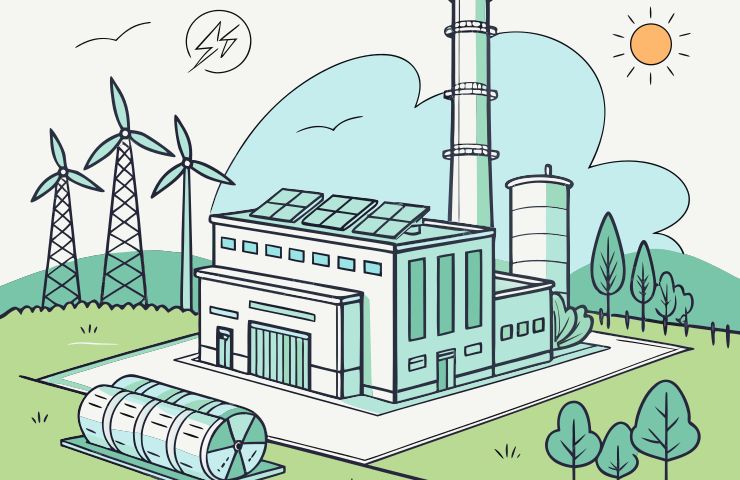
Germany’s Tender for Hydrogen-Ready Gas Plants Aims to Scale Hydrogen Production
January 20, 2026Imagine flicking a switch and unleashing a surge of clean power on demand. As Germany plots its exit from coal and nuclear, locking in solid backup for wind and solar has never felt more crucial. The country’s Federal Ministry for Economic Affairs and Climate Action (BMWK) just dropped a bold tender for up to 12 to 12.5 GW of hydrogen-ready gas-fired power plants. If everything lines up, these turbines will slot into Germany’s energy mix just as the last reactors blink off and coal plants flicker out for good. It’s a clear message that reliability and industrial decarbonization can stride side by side.
Strategic Push for Dispatchable Capacity
Under the EU-approved framework, Germany’s laying the groundwork to steady the grid during those so-called “dark doldrums”—the stubborn stretches when wind and sun barely whisper. The concept is straightforward: power you can call on in minutes to smooth out any dips from solar panels or wind farms. Tenders could kick off as soon as late 2024 or early 2025, offering a much clearer roadmap than last year’s on-again, off-again chatter. With coal set to bow out by 2038, this move covers the short- to mid-term gap brilliantly.
EU Backing and Policy Context
The European Commission waved this plan through in mid-2024, green-lighting state aid that cushions both upfront investments and the fuel-price gap for roughly 800 full-load hours each year. Of course, there’s a catch: by 2045, every unit must run solely on green hydrogen. That target gives developers the confidence they need—no more half-baked hydrogen schemes floating in limbo.
Bridging to a Green Hydrogen Era
Sure, these plants will fire up on natural gas at first, but the long game is clear—full conversion to green hydrogen by 2045. This aligns neatly with Germany’s fossil phase-out playbook and the EU’s push toward sustainable energy and net-zero emissions. Early incentives nudge the industry toward 2 GW of hydrogen combustion readiness by 2040, followed by another 2 GW by 2043—anchoring fresh electrolyzer investments and ramping up hydrogen production.
Tech Specs and Retrofitting
The turbines are built to run on gas initially, but they’ve got the DNA to handle a growing blend of hydrogen over time. And once they hit 100% green hydrogen, there’s no need for carbon capture and storage—score one for simplicity. The tender terms bake in retrofitting milestones, and operators who stick to the conversion timeline will get extra kudos. It’s no small feat—think revamped burners, new seals, and other hardware tweaks.
Phased Tender Design
This auction rolls out in two waves: first up, 5 GW of fresh builds plus 2 GW of retrofits, along with 500 MW reserved for pure hydrogen turbines and another 500 MW for long-duration storage. A second chunk of roughly 5 GW follows. Everything needs to be online by 2031 to qualify for support, after which these plants can throw their hats into Germany’s upcoming tech-neutral capacity market slated for 2028.
Wider Implications
Beyond keeping the lights on, these tenders could supercharge the hydrogen infrastructure ecosystem and give a real lift to Germany’s push for sustainable energy. Developers get clarity on offtake, electrolyzer projects find anchor customers, and markets begin to learn how to price green molecules. It’s Germany sending a loud-and-clear signal that it’s not just talking about hydrogen—it’s ready to build the bridge.
Balancing Risks and Rewards
Of course, there’s a flip side. If green hydrogen supply lags, plants might cling to natural gas longer than planned, risking a lock-in of fossil emissions. Environmental groups are already on alert. Still, by tying subsidies to firm decarbonization pledges, policymakers are hoping to dodge a drawn-out gas era and keep the transition credible.
Industrial and European Stakes
For energy-intensive industries, this strategy promises more reliable, zero-emission power down the road—a huge win for industrial decarbonization. And across the EU, Germany’s move sets a template for marrying short-term security with long-term sustainability. It showcases Berlin’s intent to lead in clean energy innovation, even as it navigates complex state aid and competition laws.
Historical Footprint
Germany’s journey from the coal-fueled Wirtschaftswunder of the post-war era to today’s renewables powerhouse has been anything but linear. After shuttering its last nuclear reactor and pledging to exit coal by 2038, Berlin has had to juggle security, affordability, and climate priorities. This tender marks a new chapter—backup power no longer from dug-up carbon, but from electrolyzers fed by wind and sun. It’s also a nod to lessons learned from past energy shocks, especially the vulnerabilities laid bare by the Ukraine conflict.
Market Reaction
Industry is all eyes on this rollout. The German Association of Energy and Water Industries (BDEW) is urging Brussels to speed up approvals so developers can lock in contracts. Electrolyzer manufacturers are keen to see a steady order book, while turbine makers are fine-tuning designs for hydrogen blends. Even battery and biomass players are taking note, eyeing a spot in the tech-neutral capacity market where multiple solutions duke it out on reliability and cost.
Looking Ahead
As these tenders unfold, keep an eye on auction results and strike prices—they’ll give us the real-world price tag for scaling up green hydrogen generation. If all goes to plan, by mid-century these turbines will be burning nothing but sunshine and wind in molecular form, delivering steady, carbon-free power around the clock.

 With over 15 years of reporting hydrogen news, we are your premier source for the latest updates and insights in hydrogen and renewable energy.
