
HT-PEM Fuel Cell Technology Soars with Advent–Airbus Hydrogen Aviation Collaboration
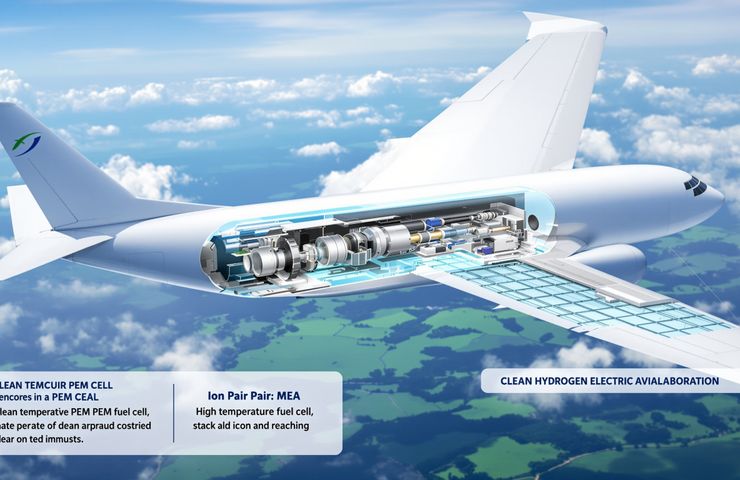
January 19, 2026Advent Technologies Holdings, Inc. recently gave its partnership with Airbus a major boost by expanding their Joint Development Agreement to push forward HT-PEM fuel cell technology for the next wave of hydrogen-electric propulsion in aviation. It’s all part of Airbus’ bold ZEROe vision, tackling those notorious engineering puzzles—like trimming down weight, simplifying cooling and cutting drag. Having already hit their interim power goals, the teams are now diving into durability tests under flight-like cycles and gearing up for full stack trials—simple in concept, yet powerful in impact.
Advancing Hydrogen-Electric Propulsion
At the heart of this collaboration is Advent’s unique Ion Pair™ MEA, designed to shine in high-temperature proton exchange membranes (HT-PEM) above 180°C. Cranking up the heat means fewer auxiliary parts, smaller radiators and, you guessed it, less weight. As Jim Coffey, Advent’s COO, points out, “Our HT-PEM fuel cell technology lets us shrink the cooling system, slashing both weight and drag.” That translates into extra range and passenger capacity on hydrogen-powered flights—a real game-changer.
Technology That Solves Real-World Problems
The beauty here is the simplicity: deploy fuel-flexible fuel cells that run on hydrogen, eMethanol or other renewables, and tap into the thermal perks at higher temperatures. By Emory De Castro’s account—he’s Advent’s CTO—they’ve hit Airbus’ interim power marks with smart MEA redesigns and beefed-up hardware. Next up? Gathering solid durability data under conditions that mimic actual flight profiles, then moving into end-to-end stack integration. This phase is crucial for proving long-haul performance under tough, real-world challenges.
Aviation Decarbonization in Step with ZEROe Goals
This expansion meshes perfectly with Airbus’ ZEROe roadmap, aiming for hydrogen aircraft by the mid-2030s. Addressing thermal management issues front and center, Advent’s high-temp stacks promise higher power density, streamlined cooling and lighter overall systems. In practice, that could mean a big cut in CO₂ emissions—water vapor is literally the only exhaust. It’s a vital leap for aviation decarbonization, making those lofty climate targets feel within reach.
Broader Impact: From Marine to Mobility
While the aviation angle grabs headlines, this partnership’s tech has a life beyond the skies. Advent’s durable, high-temperature stacks are perfect for off-grid power, heavy-duty transport, marine vessels and even defense applications. Earlier work with Technohull on eMethanol-powered boats showed just how versatile fuel-flexible fuel cells can be, easing the strain on pure hydrogen infrastructure. Born in the USA and Europe, this innovation is setting the stage for a cleaner, global energy future.
Local Innovation, Global Reach
Based in Livermore, California, with R&D hubs in Athens, Patras and Kozani, Greece, Advent is tapping into top-notch talent on both sides of the Atlantic. This transatlantic alliance not only ramps up regional clean-tech production but also creates skilled jobs in engineering and stack assembly. Teaming with Airbus—Europe’s aerospace powerhouse—shows what happens when U.S. ingenuity meets European aeronautical chops.
Looking Ahead
As they ramp up durability trials and full stack integration, the path forward is crystal clear: validate thousands of flight hours, refine for series production and get hydrogen-electric propulsion into regional aircraft trials before scaling up to larger fleets. With air traffic expected to double in the coming decades, these fuel cells could be the secret weapon to slice aviation emissions. As Coffey says, “We’re tackling real-world problems and charting a new course for clean flight.”
By expanding this Joint Development Agreement, Advent Technologies and Airbus aren’t just fine-tuning HT-PEM fuel cell R&D—they’re carving out a practical roadmap to decarbonize one of the toughest industries out there. It’s a solid reminder that focused innovation and cross-sector teamwork can drive big change, exactly in step with global climate goals.


 With over 15 years of reporting hydrogen news, we are your premier source for the latest updates and insights in hydrogen and renewable energy.