
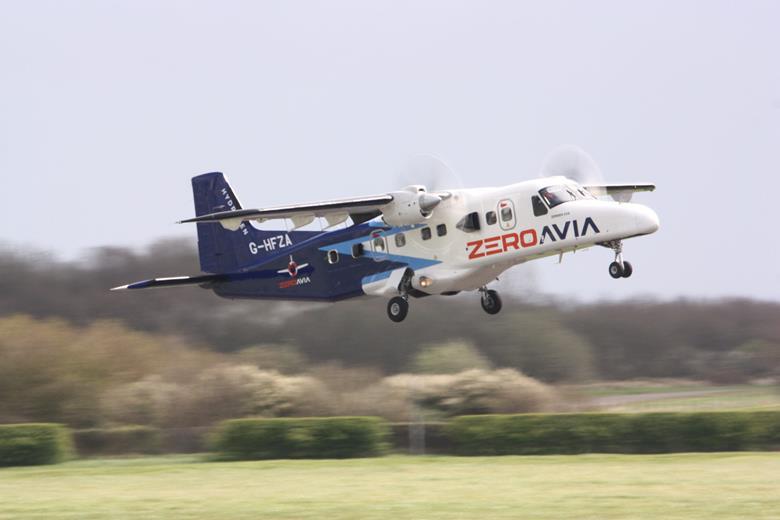
Hydrogen Fuel Cells Drive ZeroAvia’s Latest Funding to Scale Regional Propulsion
December 23, 2025ZeroAvia has secured fresh funding led by Barclays Climate Ventures, Breakthrough Energy Ventures, Ecosystem Integrity Fund, Horizons Ventures, Summa Equity and AP Ventures, with strong support from the UK’s National Wealth Fund and Scottish National Investment Bank. This new backing stretches our cash runway into 2027, turbocharging the move from prototype to industrial-scale hydrogen-electric propulsion systems for both aviation and defense.
- Who: An all-star roster of climate and government investors rallying behind ZeroAvia.
- What: Capital infusion to ramp up our fuel cell technology and push those hydrogen engines through final certification.
- When: Deal closed December 22, 2025—runway secured through 2027.
- Where: Our innovation hubs in Kemble, UK, and Everett, Washington, USA.
- Why: To de-risk the entry-into-service of the ZA600 regional powertrain and expand defense deployments of SuperStack Flex.
With airlines and militaries under mounting pressure to slash carbon emissions, this milestone arrives right when zero-emission technology is top of mind. It signals our pivot from lab benches to volume delivery—making industrial decarbonization in aviation more than just a buzzword.
SuperStack Flex: A Modular Leap
Think of the SuperStack Flex as the Swiss Army knife of hydrogen fuel cells. Certified as a Design Organisation by the UK CAA in November 2025, it delivers higher energy density than lithium batteries, cuts noise and heat signatures, and stretches maintenance intervals. Thanks to this new cash infusion, we’ll fast-track installations on defense UAVs and experimental rotorcraft—essential for missions that batteries simply can’t handle.
ZA600 Powertrain for Regional Flight
Built on those same modular cores, the ZA600 aims at 10–20 seat commuter aircraft. We’ve already nailed flight tests and racked up hundreds of engine orders, including a launch customer in Norway for 15 planes. This latest round backs us as we finalize certification and roll out first deliveries—positioning hydrogen propulsion as a real rival to turboprops on short regional hops.
Comparative Edge Over Battery-Electric Options
Battery-electric aircraft shine on super-short routes, but when you need endurance and payload, hydrogen fuel cells bring over three times the energy density per kilo compared to lithium-ion. Our flexible architecture lets you blend batteries for takeoff with fuel cells for cruise—ideal for both manned flights and unmanned platforms.
Supply Chain and Infrastructure Build-out
All this hinges on scaling green hydrogen via electrolysis and rolling out airport refueling stations. We’re deep in talks with electrolyzer manufacturers and ground service providers to standardize tank modules and fueling protocols. A successful pilot in Norway could become the blueprint for regional hubs across Europe and North America, slashing barriers for airlines and ground handlers alike and jump-starting broader hydrogen infrastructure.
Strategic and Market Impact
By industrializing hydrogen-electric systems, ZeroAvia is tapping multiple markets. Regional airlines can cut operating costs and carbon footprints on short hops, while defense operators gain silent, low-heat power for surveillance drones—accelerating industrial decarbonization in critical sectors. Early adopters in Norway aren’t just fans—they’re proof points that our approach works.
Investor Confidence and Financial Backing
Barclays Climate Ventures led the charge, joined by Bill Gates–backed Breakthrough Energy Ventures and other impact-focused funds. Public backers like the UK National Wealth Fund bring strategic heft alongside capital. As CEO Val Miftakhov says, “This show of confidence lets us power ahead with SuperStack Flex and de-risk the next phases of our roadmap.”
Historical Trajectory and Industry Context
Since founding in 2017, ZeroAvia has leapt from bench-scale fuel cell technology demos to heavy-duty flight trials. Milestones like ZA600 test hops, UK CAA approvals, and a growing order book have paved the way. This financing round bridges R&D and commercial-scale manufacturing, syncing perfectly with aviation’s mid-century net-zero push.
Regulatory Landscape and Next Steps
Certification remains our biggest hurdle. While the UK CAA’s design approval for SuperStack Flex was a landmark win, we’re still courting regulators worldwide to greenlight hydrogen engine installs and operations. Next up: nailing type certification for the ZA600 and partnering with airports and ground crews on hydrogen refueling systems.
Forward Look
Over the next 24 months, watch for the first hydrogen-powered passenger flights in Norway and defense UAV deployments. Success here could spark a wave of investments in green hydrogen production and supply chains—fueling the broader industrial decarbonization movement. As airlines gear up for zero-emission technology, hydrogen fuel cells might just steal the spotlight in regional air mobility.
About ZeroAvia
- Founded in 2017 by Val Miftakhov, headquartered in Kemble, UK and Everett, Washington.
- Developer of hydrogen-electric propulsion systems for commercial aircraft, eVTOLs, UAVs and defense.
- Recent achievements include UK CAA Design Organisation approval, ZA600 prototype flights, and hundreds of engine orders.
- Backed by leading climate investors and public funds, driving forward our hydrogen infrastructure vision.


 With over 15 years of reporting hydrogen news, we are your premier source for the latest updates and insights in hydrogen and renewable energy.