Hyundai E&C Develops Korea’s First Flat-Bottom Liquid Hydrogen Storage Tank
Hyundai E&C is set to demonstrate Korea’s first flat-bottom liquid hydrogen storage tank, offering high-capacity, cost-efficient cryogenic storage as part of the nation’s carbon neutrality push.
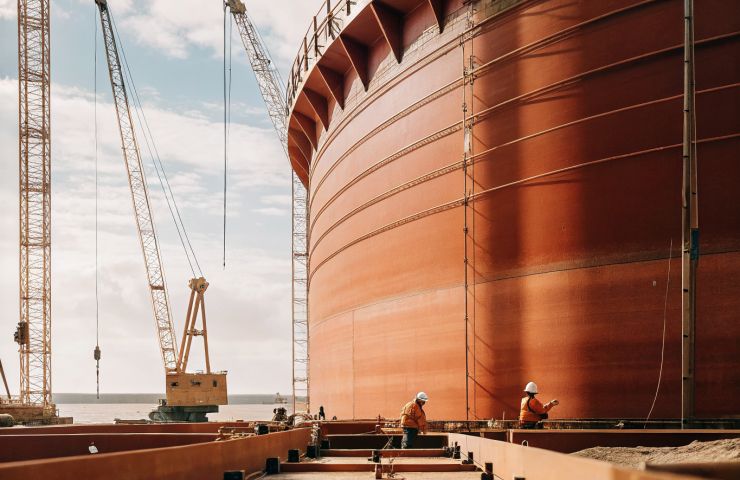
Early this month, Hyundai E&C shook things up in the world of clean energy infrastructure by unveiling Korea’s very first flat-bottom liquid hydrogen storage tank. Diving head-first into the tricky business of cryogenic storage, the team’s looking to supercharge the country’s hydrogen energy infrastructure. After all, with hydrogen set to be a cornerstone of South Korea’s bid for carbon neutrality by 2050, having rock-solid, high-volume storage is a must—from heavy-duty transport to industrial heating loads.
Breaking New Ground in Hydrogen Storage
Building a tank that holds liquid hydrogen—think around −253 °C—means you’ve got to get creative with materials and engineering. Sure, spherical or cylindrical tanks have their perks, but a flat-bottom setup can slash construction headaches and save a bundle. Hyundai E&C’s game plan? Layered insulation teamed up with vacuum gaps to keep the heat out and the boil-off losses down. Plus, with the base sitting right on the ground or a simple foundation, we’re looking at no-fuss support structures. And because Korea sits on seismic hot spots, they’re also beefing up the design to handle shakes and rattles.
During the demo phase, every test wall and insulation panel will have eyes on them—thermal sensors, stress gauges, you name it. All that real-world data will tweak the blueprint before they roll out the full-scale version. While they haven’t spilled the exact capacity numbers, the dream is to build an ultra-large tank—possibly the biggest in Asia—to anchor strategic storage hubs.
A Quick Glance at Korea’s Hydrogen Journey
South Korea kicked off its Hydrogen Economy Roadmap back in 2019, throwing cash and tax breaks at research and infrastructure. The aim? Crank out over 5 million tons of hydrogen a year by 2040, with about a third coming from renewables. Incentives have spurred a flurry of electrolysis plants, fuel-cell vehicles and compressed H₂ pipelines. But liquid hydrogen? That’s been on the back burner, thanks to pricey liquefaction and cryogenic hurdles.
Enter the flat-bottom tank. If it delivers on its promise—scalable, cost-effective storage—Korea could whisk hydrogen across land and sea for a fraction of today’s price. That opens the door to export markets and offshore energy farms.
What’s Special About the Flat-Bottom Design?
There’s more to a flat-bottom design than meets the eye. For starters, you get more bang for your buck in usable volume—fewer curves, more space for hydrogen, and a better fill factor. Putting the tank at ground level also means welding and assembly are a breeze, cutting down on labor time and slip-ups. Plus, skipping redundant steel in curved sections trims material costs. Hyundai E&C’s engineers are running advanced finite element analysis to see how the tank handles thermal contraction and pressure shifts—crucial when temperatures plunge into cryogenic territory.
As it cools, the tank’s inner layers and outer shell contract at different rates. To keep everything in check, they’re wrapping it in multi-layer insulation blankets with vacuum jackets—a trick they’ve refined building LNG terminals for −162 °C liquefied natural gas.
Who’s Driving This Project?
Hyundai E&C is steering the ship, leveraging 40 years of EPC chops. A pillar of the broader Hyundai Group, they’ve doubled down on sustainability, rolling out a “4P” framework—people, planet, prosperity and partnerships—in their annual reports. Remember their early-strength concrete and AI-led concrete management? That’s just the tip of the innovation iceberg.
While Hyundai E&C pilots design and demos, they’re teaming up with government agencies and research institutes to nail down safety protocols and performance benchmarks. This public-private tag-team is exactly what’s been driving Korea’s hydrogen revolution.
Why It Matters for Clean Energy
High-capacity, reliable storage is the secret sauce for any mature hydrogen ecosystem. Here’s why this flat-bottom liquid hydrogen storage tank matters:
- Higher energy density: Liquefied hydrogen packs more punch per cubic meter than compressed gas, trimming transport costs.
- Enhanced reliability: Big tanks act as buffer reserves, smoothing out supply fluctuations and cutting downtime.
- Cost efficiency: Simpler builds and less material translate to tighter budgets, making liquid storage a viable option.
- Environmental gains: When paired with green-powered electrolysis, liquid hydrogen becomes a zero-emissions fuel where batteries won’t cut it.
- Economic boost: Cryogenic facility construction and upkeep create skilled jobs and fuel local economies.
By beefing up storage capacity, South Korea can shore up energy security and lean less on imported fossil fuels—right in line with its broader clean energy infrastructure goals and global carbon-neutral ambitions.
What Comes Next?
In the coming months, Hyundai E&C will shift gears from design to on-site assembly, erecting test modules and running trial fills. They’ll be eyeballing all the metrics—boil-off rates, insulation performance, seismic resilience—you name it. Nail these trials, and we could see full-scale construction kick off early next year, though the exact schedule is still under wraps. Once up and running, this flat-bottom tank could be the first of many, linking production sites, ports and industrial clusters into a cohesive network.
Looking further out, the vision is to sync these storage hubs with offshore wind and solar farms, generating green hydrogen for export or domestic use. As Korea—and the world—race to decarbonize heavy industry, innovations like this prove how smart engineering can bridge today’s energy demands with a sustainable tomorrow.