Liquid Hydrogen-Powered Toyota TR LH2 Prototype to Demo at Le Mans 24 Hours
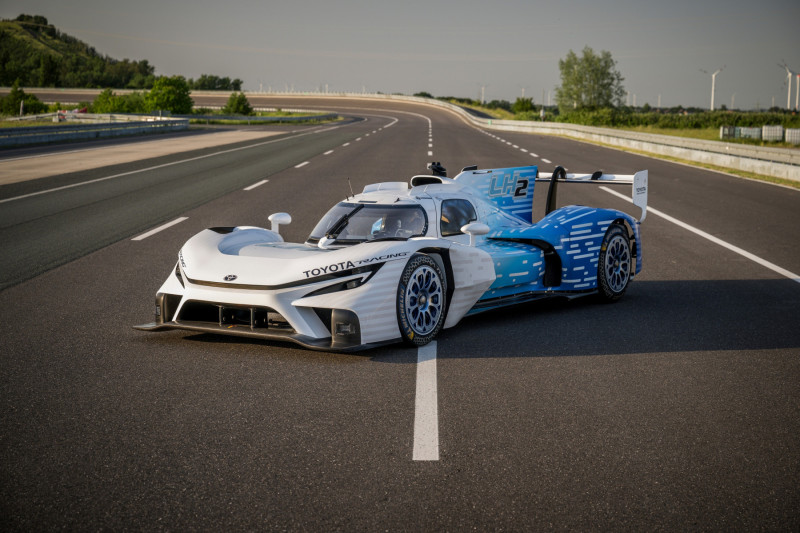
June 11, 2026When the roar of racing engines mixes with the hush of cryogenics, you know something special is about to happen. At the 94th running of the 24 Hours of Le Mans, Toyota Gazoo Racing Europe is set to showcase its revolutionary TR LH2 Racing Prototype with a series of demonstration laps on the full 13.626 km Circuit de la Sarthe. But don’t get it twisted—these aren’t competitive laps. They’re all about proving that liquid hydrogen storage and a hydrogen combustion engine can stand up to the grueling demands of a top-notch endurance race.
Le Mans as a Hydrogen Proving Ground
Le Mans has always been a testing ground for motorsport innovation, giving us everything from disc brakes to hybrid powertrains. This June, it’ll add another feather to its cap with high-profile demonstrations of liquid hydrogen-powered combustion technology. This project comes from a partnership between Toyota Racing and the Automobile Club de l’Ouest, who’ve been crafting a hydrogen roadmap since way back in 2018. Alongside timed laps scheduled for Thursday and Saturday of race week, you can check out the TR LH2 on static display at the ACO’s Hydrogen Village, where fans, partners, and policymakers can get an up-close look at hydrogen refueling concepts and cryogenic infrastructure.
Engineering Cryogenics on the Circuit
So, why go through the hassle of storing hydrogen as a liquid? It’s because to do so, you’ve got to cool it down to about minus 253 °C and keep it insulated in specially shaped tanks to minimize boil-off. Toyota’s unique cryogenic vessel fits nicely into the GR010-based prototype chassis and holds approximately 1.5 times the hydrogen compared to the older high-pressure gas cylinders, effectively doubling the car’s range between pit stops. A reliable pump keeps the engine fed at a constant pressure, and robust venting and monitoring systems ensure safety in those extreme cold conditions. Bottom line? This setup allows the car to cover more distance with fewer refueling interruptions than if it were using compressed gas.
Hydrogen Inside a Combustion Engine
Unlike your typical fuel cell setup, the TR LH2’s powertrain relies on a spark-ignited internal combustion engine that’s been specifically adapted for hydrogen. This means some key modifications, like high-pressure injection and custom fuel rails, plus combustion chambers tweaked to handle hydrogen’s unique properties—like its wide flammability range and rapid flame speed. Toyota’s engineers have worked hard on ignition timing, turbocharging maps, and air-fuel mixing to squeeze every drop of competitive power while keeping NOx emissions in check. So, while the prototype sounds and feels like a traditional race car on the track, it boasts the eco-friendly perk of not emitting any CO₂ from its fuel at the tailpipe.
A Decade of Hydrogen Experimentation
The TR LH2 demo is the culmination of several years of hard work. Toyota first tested a hydrogen internal combustion engine in Japan’s Super Taikyu series back in 2021, using 70 MPa gaseous hydrogen. By 2023, they shifted gears to liquid hydrogen tanks on the GR Corolla H2 Concept, boosting its endurance capabilities. The rally stage saw the GR Yaris H2 in action at the Ypres Rally, and the Rally2 H2 Concept tackled the challenges of Monte Carlo and Rally Finland. Not to mention, Le Mans hosted a hydrogen Corolla demo lap earlier this year, and the GR H2 Racing Concept hinted at the exciting possibilities of a future liquid hydrogen class in racing.
Shaping Future Regulations
The ACO and FIA are looking to roll out a dedicated hydrogen prototype category by 2028, with rules that will favor liquid hydrogen storage while also allowing room for fuel cells and combustion engines. By showcasing these demonstrations now, Toyota hopes to influence the regulations regarding tank integration, refueling protocols, and safety measures. They’re gathering early data on fueling speeds, reliability under sustained loads, and operational logistics to help shape future rules and encourage other manufacturers to jump on the hydrogen racing bandwagon.
Building a Hydrogen Infrastructure Ecosystem
But it’s not just about the cars on the track; the public visibility at Le Mans also extends to the Hydrogen Village exhibition. Here, fans can explore cryogenic filling stations, insulated transfer lines, and emergency response protocols. This real-world setup provides valuable insights into the refueling hardware and introduces various supply chain partners, from tank manufacturers to hydrogen producers. Companies investing in low-carbon hydrogen production and distribution have a fantastic platform to showcase their work, making a strong case for hydrogen refueling stations and broader infrastructure projects across Europe.
Business and Decarbonisation Strategy
Toyota’s approach to pursuing various powertrain pathways—including battery electric, fuel cell electric, and hydrogen combustion—reflects its broader vision for carbon neutrality. Motorsport not only serves as a testing ground but also as a marketing stage, allowing them to convey learnings into road-going GR models while signaling to investors, policymakers, and consumers that hydrogen is very much part of the conversation. If hydrogen internal combustion engines prove their worth in such a tough endurance environment, it strengthens the case for niche applications, especially in heavy-duty transport and performance vehicles where rapid refueling and high energy density are must-haves.
Challenges and Trade-offs
Of course, liquid hydrogen systems come with their own set of engineering and operational challenges. There are the energy costs linked to liquefaction, potential boil-off losses during storage, and strict safety requirements around extreme cold and flammability. Plus, combustion engines still churn out NOx, making emissions control an ongoing battle. While prototype demos might get people excited, scaling cryogenic hydrogen systems for road networks raises some serious economic and logistical questions that extend far beyond the racetrack.
Looking Beyond Le Mans
Le Mans has a rich history of milestones, but the real test will be how this technology transitions off the Circuit de la Sarthe. Toyota’s TR LH2 demonstration isn’t just about lap times; it’s about showing what the future could hold. As hydrogen infrastructure develops and regulations adapt to support a dedicated racing class, we’ll find out if liquid hydrogen combustion can stand alongside batteries and fuel cells in the quest for decarbonization. For now, Le Mans is set to host a quiet revolution in endurance racing—one that could reshape how we think about clean hydrogen news and hydrogen infrastructure strategies for years to come.


 With over 15 years of reporting hydrogen news, we are your premier source for the latest updates and insights in hydrogen and renewable energy.