Fuel Cell Capacity Growth: Bloom Energy’s Expanded Deal with Oracle
Bloom Energy has expanded its agreement to supply Oracle with up to 2.8 GW of fuel cell capacity for AI data centers, following deals with Brookfield and American Electric Power to advance clean, reliable distributed generation.
Talk about a game-changer! Bloom Energy Corporation just sealed an expanded supply agreement that could redefine how tech giants juice up their powerhouse computing rigs. In this latest Bloom Energy Oracle deal, Bloom will ship up to 2.8 gigawatts of fuel cell capacity to Oracle Corporation, turbocharging Oracle’s AI data center power and raising the bar for sustainable uptime. This announcement follows a $5 billion strategic partnership with Brookfield Asset Management and an earlier promise to deliver 1 gigawatt of fuel cells to American Electric Power. By cutting transmission losses and trimming carbon footprints from the ground up, companies are finally grabbing the wheel on their energy use—a shift that traditional grid power simply can’t match. All told, it’s a big boost for tomorrow’s clean energy infrastructure.
Fuel Cell Technology and the Bloom Energy Server
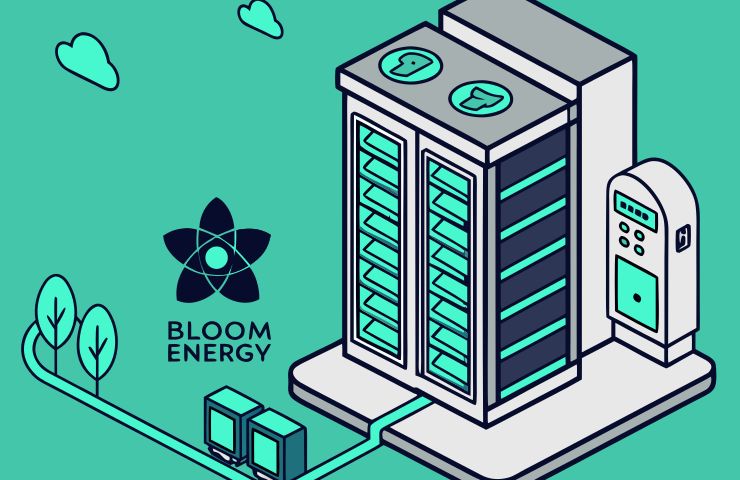
If you’re not yet familiar with solid oxide fuel cells, think of them as high-tech batteries that never need plugging in: they auto-refresh by converting chemical energy straight into electricity, often running on natural gas today with an eye on renewable hydrogen tomorrow. Here’s the lowdown: at roughly 800–1000 °C, fuel oxidizes at the anode while oxygen gets reduced at the cathode, and a rugged ceramic electrolyte shuttles oxygen ions between them, producing power, heat, and a puff of water vapor. What really sets the Bloom Energy Server apart is its all-in-one design—fuel cell stacks paired with fuel processing, thermal management, and power electronics, all skid-mounted for easy on-site setup. The result? Steady, reliable output and lower emissions, a serious upgrade over your typical gas turbine.
Expanding AI Infrastructure Energy Supply
Let’s talk numbers: modern AI workloads are energy guzzlers, and data centers can drain power lines like nobody’s business. With this expanded deal, Oracle is locking in up to 2.8 GW of fuel cell capacity from Bloom Energy—more than double the 1 GW order with American Electric Power. By co-locating these systems with its AI data center power operations, Oracle isn’t just reducing downtime risks; it’s also taming long-haul energy demands and inching closer to ambitious sustainability targets. In other words, distributed generation is no longer a nice-to-have—it’s quickly becoming table stakes for anyone racing to balance high performance with low emissions.
Strategic Partnerships and Market Validation
Deals of this scale are more than just flashy headlines—they’re proof that the market’s buying in. Last year’s $5 billion strategic partnership with Brookfield Asset Management put serious weight behind fuel cell–powered AI infrastructure, leveraging Brookfield’s capital muscle and project know-how. Meanwhile, the existing 1 GW agreement with American Electric Power shows utilities are eager to weave distributed generation into their energy mix. Taken together, these commitments make it clear: fuel cell systems have moved from pilot projects to mainstream commercial deployments, gaining backing from both institutional investors and forward-thinking utility customers eyeing economic and environmental gains.
Financial Performance and Leadership
On the financial front, Bloom Energy is finally showing signs of green—well, in data at least. In Q3 2025, the company reported a non-GAAP profit of $0.15 per share, outpacing analyst forecasts by roughly 50 percent and flipping from a $0.01-per-share loss a year earlier. Revenue hit $519 million, comfortably topping consensus estimates of $428 million, buoyed by strong order growth and expanded deployments. While GAAP net income remains in the red—Bloom is plowing cash into scaling manufacturing and R&D—margins are trending upward. This month, Simon Edwards stepped in as CFO, tasked with balancing capex with revenue growth. With multi-gigawatt contracts on the books, the path to stronger financials is coming into focus.
Historical Context and Industry Trends
Bloom Energy traces its roots to a 2001 Silicon Valley startup led by K.R. Sridhar, with a mission to commercialize solid oxide fuel cell technology. After going public in 2018, the company rode a roller-coaster of stock swings as markets weighed innovative promise against cost considerations. Fast-forward to today: AI-driven data center demand is skyrocketing, and organizations under pressure to decarbonize are hunting for alternatives to grid-only power. What began as fringe pilots are now solid entries in enterprise energy playbooks.
Impacts and Challenges
Deploying nearly 4 GW of fuel cells across Oracle, AEP, and Brookfield initiatives isn’t a walk in the park. Scaling up production, ensuring supply chain resilience, and nailing installation logistics are all make-or-break factors. Missed deadlines could dent credibility with marquee customers. Plus, while Bloom’s servers emit fewer pollutants than conventional turbines, they still rely mostly on natural gas. Real sustainability gains hinge on a switch to renewable hydrogen or integrating carbon-capture strategies down the road. On the flip side, distributed fuel cells cut carbon intensity vs. grid power, bypass transmission bottlenecks, and boost resiliency against outages. They also spur local job creation in clean-energy manufacturing and service sectors. As AI workloads expand, on-site or near-site power won’t just be smart—it’ll become essential, upending the old utility-customer relationship.
Conclusion
At the end of the day, the energy equation for AI is shifting in real time. With Bloom Energy set to deliver 2.8 GW of fuel cell capacity to Oracle, along with heavyweight backing from Brookfield Asset Management and American Electric Power, we’re witnessing rock-solid validation of distributed, lower-emission power for high-performance computing. Sure, scaling challenges and fuel sourcing questions remain, but the momentum is undeniable: fuel cell technology is stepping into the limelight as a key enabler of the AI-driven future. As the world races to balance voracious compute demands with sustainability goals, this real-world solution is charging ahead—and it’s kicking the carbon challenge to the curb.