Non-Precious Metal Catalyst Breakthrough Accelerates Green Hydrogen Production
KIMS unveils a new non-precious metal catalyst for water electrolysis, using iron substitution to boost performance and cut costs, paving the way for cheaper green hydrogen.
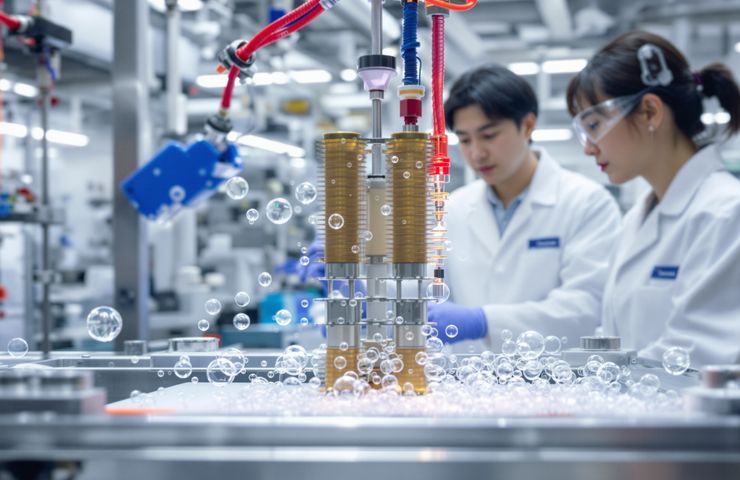
Remember when heavy industry and transport were scrambling for greener alternatives? Well, the Korea Institute of Materials Science just dove in feet-first, kicking off a project to craft a high-performance non-precious metal catalyst for water electrolysis. Their goal? To make green hydrogen production both scalable and kind to your budget. It’s a move that meshes perfectly with global decarbonization efforts and South Korea’s push to hit carbon neutrality by 2050.
Solving real-world problems in hydrogen production
We all know hydrogen is the buzzword in the world of clean energy. From heavy industry to transport and power plants, it’s got everyone talking. But here’s the hitch: those precious metal catalysts that make electrolyzers hum come with hefty price tags. Industries that need low-cost, high-volume hydrogen have been waiting on this. The fix? Swap out scarce platinum-group metals for more common, wallet-friendly alternatives that deliver similar punch. By tapping into South Korea’s top-tier materials research, KIMS is tackling this challenge head-on.
Think about data centers humming off the grid or factories cranking away in places where the power’s not rock-solid. A cheaper catalyst translates into more affordable green hydrogen for those setups that truly need it. Cutting catalyst costs is like giving operators an instant break, and it could jump-start adoption in regions where energy security and decarbonization can’t wait.
And it doesn’t stop at fixed installations. This approach could pave the way for more hydrogen fueling stations—ideal for heavy-duty trucks and maritime fleets. Fewer catalyst swaps, lower maintenance bills—it’s a recipe for bringing clean energy to remote corners where laying pipes and cables is a headache. In short, this project serves up practical solutions to real-world challenges.
How the iron-substituted catalyst works
At the core of this effort is an iron-substituted catalyst carefully engineered to tweak two critical features: lattice distortion and oxygen vacancies. According to KIMS, slipping iron into a transition metal oxide framework creates just the right amount of strain and defects. Those tweaks help electrons and molecules hit the gas pedal during both the hydrogen evolution reaction and the oxygen evolution reaction, all while staying rock-solid over long runs.
So what’s iron up to? First, it ramps up the number of active sites where water splits into hydrogen and oxygen. Second, it fine-tunes the catalyst’s electronic profile, lowering pesky energy barriers. That tag-team of mechanical strain and vacancy engineering is shaping up to be a winner in the world of non-precious metal catalysts.
Even better, this design plays nice with both alkaline and proton exchange membrane (PEM) electrolyzers. That flexibility means manufacturers won’t have to reinvent the wheel—existing systems can slot in the upgrade with minimal fuss, speeding up demo projects and real-world pilots.
Historical context and evolving technologies
Believe it or not, water electrolysis dates back to the 1800s, powering lab experiments long before green hydrogen hit the mainstream. For decades, though, high energy demands and steep material costs kept commercial roll-out on the back burner. Fast-forward to today: research into perovskites and transition metal oxides is shining a spotlight on non-precious metal catalyst innovation. Meanwhile, anion exchange membrane (AEM) electrolyzers—highlighted in the EU’s Hydrogen Roadmap and South Korea’s Hydrogen Economy Roadmap—are carving out fresh pathways for advanced catalysts to find their footing.
South Korea’s 2019 Hydrogen Economy Roadmap laid down bold targets for ramping up domestic green hydrogen output and building out the necessary infrastructure, including support for institutes like KIMS. Riding on past breakthroughs in nanomaterials and catalyst design, they’ve been primed to hunt down cost-saving swaps for platinum-group metals. This new iron-based formula? It feels like the next chapter, blending global know-how with local industrial strength.
Made in South Korea, made for South Korea’s future
This isn’t just a lab-side experiment—it’s a springboard for homegrown economic growth. By keeping production local, KIMS aims to trim supply chains, spark new roles in R&D and manufacturing, and lay the groundwork for a thriving green-tech sector. The mantra? “Made in South Korea, made for South Korea’s future.” It’s all about putting homegrown solutions on the fast track.
On the ground, KIMS is teaming up with SMEs around Daejeon. That local network should stir job growth across the supply chain—think equipment makers, maintenance crews, and system integrators. Government funding and industry backing are lining up too, clearing the runway for this tech to blast off from lab benches to factory floors.
Environmental and economic impacts
Imagine slashing the cost of electrolyzer catalysts so dramatically that green hydrogen becomes a mainstream player. The International Energy Agency reckons that could dodge up to 8 gigatonnes of CO2 emissions per year by 2050. And since iron’s the star of the show, the lifecycle footprint of these catalysts is a fraction of what you’d see with precious metals—no energy-intensive mining or heavy refining required.
On the financial side, cheaper catalysts mean lower CAPEX and slimmer OPEX for hydrogen projects. Shorter payback times, longer service intervals—operators can expect better project bankability and a drop in the price of green hydrogen.
There’s also a neat bonus for grid management: pair water electrolysis with solar or wind farms, store surplus power as hydrogen, and you’ve got a flexible buffer. It’s a savvy way to turn renewable ups and downs into a reliable energy reserve.
Looking ahead
So, what’s on the horizon? Up next is scaling the iron-substituted catalyst process, slotting it into full-size electrolyzer prototypes, and teaming up with industry partners for field trials over the next year.
Key milestones include proving durability under nonstop operation, fine-tuning manufacturing steps for consistent output, and getting the official thumbs-up from regulators. Hit those targets and KIMS will win over customers and draw fresh investment.
If these trials back up the lab results, this technology could move fast into widespread use, opening the door to high-volume green hydrogen production. It’s a clear example of focused research solving real-world challenges and how public-sector drive can light the way to clean energy.
Source: Korea Institute of Materials Science, FuelCellsWorks (link)