Hydrogen Production: How the EU CBAM Definitive Regime Is Reshaping Trade
The EU’s Carbon Border Adjustment Mechanism entered its definitive stage on January 1, 2026, reshaping hydrogen production, trade and carbon pricing at the border.
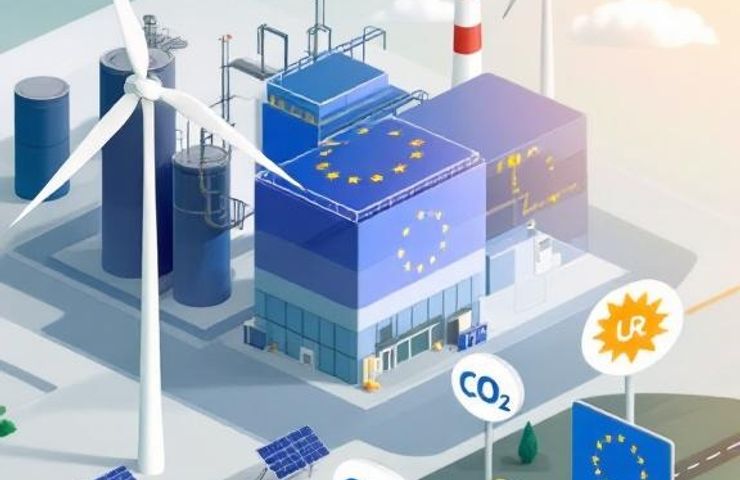
Ever thought about what happens when you slap a carbon price on stuff at the border? That’s exactly the splash the EU’s Carbon Border Adjustment Mechanism (CBAM) is making on sustainable energy trade. As of January 1, 2026, CBAM graduated from trial-run status and is now fully in action. Simply put, products like hydrogen—an essential piece of the hydrogen production puzzle—need a carbon fee attached, which means anyone in the global supply chain has to build those costs into their pricing or watch their competitiveness slip.
From ETS to CBAM: The Policy Evolution
Back in 2005, the EU rolled out its Emissions Trading System (ETS), becoming the world’s first large-scale cap-and-trade scheme. It successfully nudged down emissions within the bloc, but it also sparked worries about carbon leakage—companies relocating to regions with weaker climate rules. After heated debates, policymakers agreed on CBAM in July 2020, with the European Parliament confirming it in 2021. A three-year data-collection phase (2023–2025) then kicked off, setting the stage for today’s hard-launch.
CBAM’s Definitive Regime Unpacked
Here’s the gist: if you’re importing cement, iron & steel, aluminium, fertilisers, electricity or hydrogen into the EU, you must now purchase CBAM emission allowances that match the embedded CO₂ in your products. These certificates trade at the same going rate as ETS allowances, folding carbon costs into the final price tag. By phasing out free ETS permits domestically, the EU makes sure local producers aren’t undercut by cheaper, carbon-intensive imports.
Reporting and Methodology
Non-EU manufacturers have to put an EU-approved monitoring system in place, tallying up Scope 1 emissions (direct process) and Scope 2 emissions (purchased electricity) over a 12-month period. Every quarter, they submit detailed reports to their EU importers—laying out the embedded CO₂ and any carbon taxes already paid back home. Accuracy matters, since each CBAM certificate represents one tonne of CO₂.
Technical Dive: Allowance Pricing and Market Mechanics
CBAM certificates move in lockstep with ETS allowances. Importers calculate the CO₂ per unit—say, per kilogram of hydrogen or per tonne of steel—then buy the equivalent number of certificates. As the EU tightens its overall emissions cap, allowance prices are expected to climb, which in turn magnifies CBAM’s effect on imported goods. And over time, sectors like chemicals, glass and more could be rolled into the scheme.
Why Hydrogen Production Matters
Including hydrogen from day one signals how crucial it is for industrial decarbonization. Hydrogen is key to cleaning up heavy transport, industrial heat and other hard-to-abate applications. By pricing carbon on hydrogen imports, the EU effectively hands a prize to low-carbon pathways:
- Location Shift: Developers are pairing electrolysers with offshore wind, solar parks or hydropower to slash energy-related emissions.
- Pathway Pivot: Grey hydrogen (no carbon capture) now risks hefty CBAM fees, while blue hydrogen (with capture) and green hydrogen (powered by renewables) come out ahead.
- Trade Form Adjustments: From compressed gas to liquid or carrier molecules, exporters are testing delivery modes that play best with carbon accounting.
Early Market Signals
Industry chatter suggests that about three months in, hydrogen spot prices stabilized, which is a solid hint that traders and producers have already baked carbon border adjustment costs into their deals. Since detailed volatility or price-band data isn’t publicly available, analysts are piecing together insights from market commentators.
Global Supply Chain Dynamics
CBAM is already reshuffling supply chains in real time:
- Competitive Advantage: Suppliers in regions with cleaner power grids—certain U.S. states or parts of Scandinavia—face lower CBAM fees, making them hot picks for EU off-take agreements.
- Compliance Complexity: Non-EU firms are beefing up data systems to meet the EU’s monitoring demands, which brings extra admin, audit risks and higher costs.
- Investment Redirect: We’re seeing a surge in electrolyser orders, renewable capacity deals and joint ventures, all aimed at stacking up low-carbon credentials for the EU market.
Sector Spotlight: Electrolyser Manufacturers
Electrolyser makers have never been busier. Clients want turnkey modules that reliably deliver low-carbon credentials under CBAM scrutiny. It’s already driving consolidation, as big players snap up niche suppliers to offer full-package solutions.
Investor Perspective
In finance circles, CBAM compliance is now front and center in due diligence. Sustainability-linked loans hinge on hitting carbon-intensity targets, and equity investors favor projects with transparent emissions reporting. In this post-CBAM world, proving low-carbon performance is pretty much non-negotiable if you want funding.
Economic and Emissions Impact
A recent study from the Vienna Institute for International Economic Studies finds that CBAM delivers modest net welfare gains for the EU and EFTA—but it also nudges real wages down slightly. On the global stage, CO₂ emissions drop only marginally, since some production shifts to regions outside the EU. The hydrogen value chain feels the impact in three clear ways:
- Burgeoning demand for low-carbon electrolyser capacity.
- Top-tier pricing for renewable power tied to hydrogen projects.
- Grey hydrogen plants scrambling to add carbon capture or risk exclusion.
Global Policy Ripples
The EU’s move hasn’t gone unnoticed. Canada, the United States, Australia, the United Kingdom and Türkiye are all kicking the tires on their own border carbon adjustment plans. Without a harmonized standard, exporters could end up navigating a patchwork of differing rules—adding complexity and cost to trade.
Parallel Trends
Meanwhile, across the Atlantic, U.S. policymakers are toying with voluntary carbon adjustment schemes tied to incentive programs. How these credits will mesh with the EU’s mandatory CBAM certificates is still an open question—one that both investors and producers are watching closely.
Looking Ahead
As Q2 2026 CBAM reports land on the Commission’s desk, expect a thorough review of effectiveness, compliance costs and possible expansions. That analysis could spark the next wave of global carbon policies or lead to tweaks in CBAM itself. For anyone in hydrogen production and beyond, the takeaway is clear: low-carbon credentials aren’t just a sustainability goal—they’re the ticket to staying in the game.