Hydrogen news
Gemini announces autonomous hydrogen fuel cell truck fleet target of 2025
The cleantech company will be launching a fleet of H2-powered self-driving vehicles in 3 years. Gemini Motor Company has been developing autonomous, zero-emission hydrogen fuel cell truck models and has now announced its intention to launch an entire fleet by 2025. The first prototype vehicle is already being built and is expected to begin testing in 2023. Gemini’s first product is called the RoboTruck. The autonomous fuel cell truck or referred to as self driven trucks, are expected to have a range as high as 1,400 miles. Moreover, its refueling time will be less than 20 minutes. As the vehi…
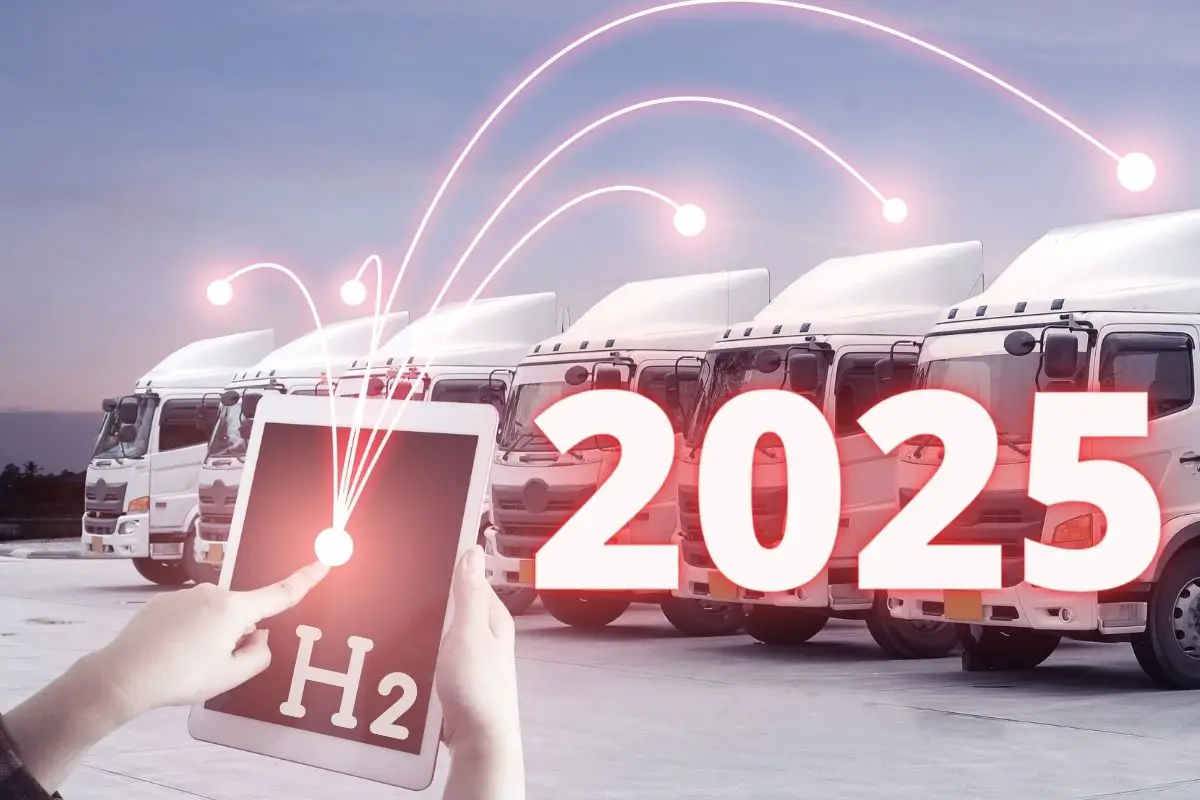
The cleantech company will be launching a fleet of H2-powered self-driving vehicles in 3 years.
Gemini Motor Company has been developing autonomous, zero-emission hydrogen fuel cell truck models and has now announced its intention to launch an entire fleet by 2025.The first prototype vehicle is already being built and is expected to begin testing in 2023.
Gemini’s first product is called the RoboTruck. The autonomous fuel cell truck or referred to as self driven trucks, are expected to have a range as high as 1,400 miles. Moreover, its refueling time will be less than 20 minutes. As the vehicle will not require a driver, the RoboTrucks fleet will be able to continue operating 24 hours per day, every day of the week. This would quadruple the unit’s operational efficiency when compared to conventional vehicles driven by humans. Furthermore, the vehicle would no longer require a driver cabin, which would substantially reduce capital costs when production begins at volume, mitigating the additional expense associated with the computing equipment and AV sensors. “The combination of L4/L5 autonomy and zero-emission ‘long-range’ powertrains will transform the future of transportation in ways we can only imagine,” said Gemini co-founder and CEO Alex Rafiee. “For the first time, we can accelerate decarbonization in transportation by combining two technologies that enable our zero-emission fleet to maximize utilization up to 97 percent of the time in a 24-hour day. This level of extreme utilization dramatically reduces CO2 emissions, shipping costs and freight congestion, all at once.”
20,000 of this autonomous fuel cell truck model would achieve the environmental impact of 3 million battery electrics.
According to Rafiee, by adding 20,000 of the RoboTrucks to the roads, the shipping industry would achieve the same environmental impact advantage that it would take 3 million new battery electric passenger vehicles to match on American roads.[aweber listid="6179904" formid="1469020671" formtype="webform"] The company’s approach is highly focused on software that brings together sensor fusion with self-learning. The Gemini AI makes it possible for the vehicles to operate entirely autonomously, including predictive maintenance and the maximization of fuel efficiency. Equally, they are expected to adhere to the highest road safety standards. The company is currently working with AV partners to develop the fuel cell truck AV stack, which will begin its early testing before the end of the summer. More about self driving truck technology... https://youtu.be/Lon1vRv2wQ8
 Can combustion engines run on hydrogen? We’re addressing questions like these on HFN – Many are wondering...
How efficient are hydrogen combustion engines? There are huge possibilities, lots of avenues to explorer and then there are many that just flat disagree and wonder why people are even trying! One argument is, if there was nothing here, why would the largest car manufacturer in the world, Toyota, put so much time into the H2 combustion motor?
Check out these articles showing their trials and results: Toyota News Today. Learn more about How companies are already converting semi trucks to clean H2. Also, make sure to visit our H2 Learning Center and don’t forget to grab your copy of our free ebook, Hydrogen Today and Tomorrow, sign up below and help support the burning questions of tomorrow power.How was this article?
Thanks for the feedback!